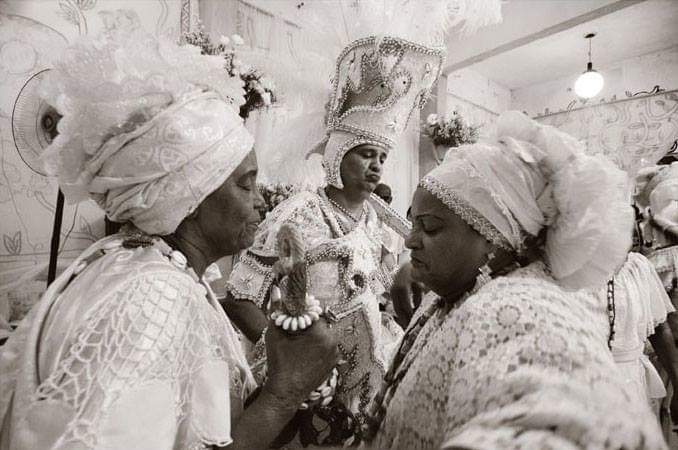
Queen Elda

Yalorixá, queen and soul of the Nação do Maracatu Porto Rico.

Elda Ivo Viana

A warrior queen

Dona Elda, Mãe Elda, Elda d’Oxóssi, Queen Elda, priestess Elda Viana, Elda de Porto Rico, Elda da Macaia do Oxóssi: titles that both hide and reveal a warrior woman who, for more than 40 years, was queen of a great baque virado nation.

Born in the Mangabeira neighborhood, in Casa Amarela, Recife, she was the daughter of evangelical parents, devotees of the Assembleia de Deus. At 17, already married and living in Rio de Janeiro, she discovered umbanda and then candomblé, passing through the nagô, angola and jeje nations. Back in Recife at the end of the 60s, she was initiated in the nagô nation in the 70s and, in the 80s, in the jeje nation, by Babalorixá Raminho de Oxóssi. That is why she said her terreiro follows a jeje-nagô line. Before that, she learned the first secrets of Ifá from King Eudes Chagas, her spiritual grandfather.

She was crowned on October 8, 1980 by canon Miguel Cavalcante, at the Church of Nossa Senhora do Rosário dos Homens Pretos: the last maracatu queen crowned inside a Catholic church. She passed away in 2025, leaving her legacy alive in every baque.

A life for the Nação

Journey

1955

In Rio de Janeiro

Begins her religious path, in umbanda and in candomblé angola.

1980

Coronation

Crowned queen at the Church of Rosário dos Homens Pretos.

1981

First parade

Takes Porto Rico to the streets with 14 alfaias, 1 gonguê, 3 taróis and 4 mineiros.

1983

First title

Recife Carnival champion, repeating the feat in 1984 and 1985.

1985

Urso Zé da Pinga

Founds the Urso Zé da Pinga in Pina, with the children of the Ylê, linked to the Jurema Sagrada.

1989

Europe

The Nação represents the culture of Pernambuco on a tour of Europe.

1991

BBC documentary

She is the great star of The Actress, the Bishop and the Carnival Queen.

1999

Her son on the apito

Mestre Chacon officially takes over the apito and starts sharing the leadership of the Nação with her.

Innovations

The queen who transformed maracatu

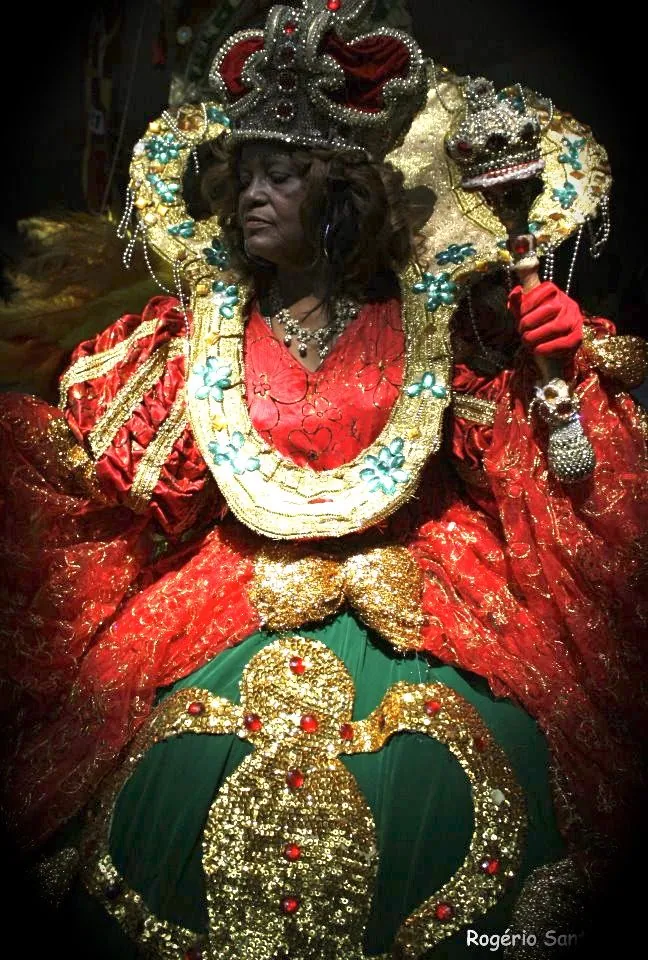
The maracatu she inherited had no more than 12 to 14 drums, a snare and a gonguê, a small court and an old banner. With early help from folklorists, she held her coronation and took the maracatu to the streets, but did not let them hold her back: she invited Raminho de Oxóssi to be her king and brought the costumes closer to the luxury and sparkle of the samba schools.

She introduced choreographed dance groups into the parade and built partnerships to make the procession grander. After three years, the Nação began winning almost every Carnival, and when it lost it came second. The other nations started following in her footsteps.

Hooped skirt Children's court Sparkle and luxury in the costumes Cloth witch doll Dance groups in the procession Drumming School

"When my mother took over the Maracatu, there was no hooped skirt, she created it. There was no children's court, my mother added it. There was no sparkle, my mother brought the sparkle."

Mestre Chacon Viana

"As Elda Viana innovated in her parades and swept the championships, the other maracatus tried to imitate her."

Ivaldo Marciano de França Lima, historian
Babá Chacon, Yalorixá Elda de Oxóssi e João Jhadyel
Babá Chacon, Yalorixá Elda de Oxóssi and João Jhadyel
Mother of the community

Seamstress, teacher, queen

A civil servant for 22 years, she worked at the Assis Chateaubriand school, in Brasília Teimosa, as caretaker and teacher. At home, in Bode, she ran a small tutoring school, teaching the four operations and multiplication tables. From tutoring to the Drumming School was a short step: the children of the 80s are today great batuqueiros of the Nação.

She bought her barracão (the community hall) by selling seafood on Pina beach. For years she sewed the Nação's costumes, and in several documentaries she appears at her sewing machine. Cheerful and dramatic, she loved singing boleros. The neighbors complained when there was no rehearsal or party at the barracão.

Mother of five, among them Mãe Leu da Oxum, Pai Jará and Mestre Chacon, she saw grandchildren and great-grandchildren grow up inside the Nação.

Interview

Dona Elda in her own words

Mother of her own children and of dozens raised inside the Nação, a teacher who taught many children in the neighborhood to read and a retired civil servant, Mãe Elda devoted her life to social work, showing that through art and culture we can have a better world. In this interview, she talks about what maracatu means to her.

What is maracatu to you?

“A spiritual nation, of African origin, it is nagô, nagô… It is candomblé, it is a rhythm to lose ourselves on the avenue, whoever says it isn't is lying. Dona Santa, the owner of Elefante, the oldest of the nations, already manifested as Oxum on the avenue.”

What is your first memory when people talk about maracatu?

“It is Seu Eudes Chagas. He taught me everything: about the doll, the cowrie-shell divination, the wisdom. I didn't go to see him dead, nor to the funeral. I couldn't. Everything I learned was from him.”

What was it like in the old days?

“When I first came to the avenue, children were forbidden to parade, there were only elderly people, with long chitão skirts covering their feet. I remember Seu Luiz Mãozinha, the best of all, who had only one finger. When I arrived, I brought in the children's court. Now it is too much: floats, court like a municipal ball, it looks more like a samba school. That is not maracatu.”

What are the duties of a queen?

“To respect the origin of the orixá, to worship the saints as you love yourself, to work with love and always serve others. If you have two loaves of bread, eat one and give the other away.”

And what is profane and what is religious?

“Profane, I don't know what that is. Religious is when the bass drum beats, you get goosebumps and that feeling in the soul. That is maracatu. And baque virado, you hear, my dear? Maracatu is candomblé, it is for us to lose ourselves on the avenue.”
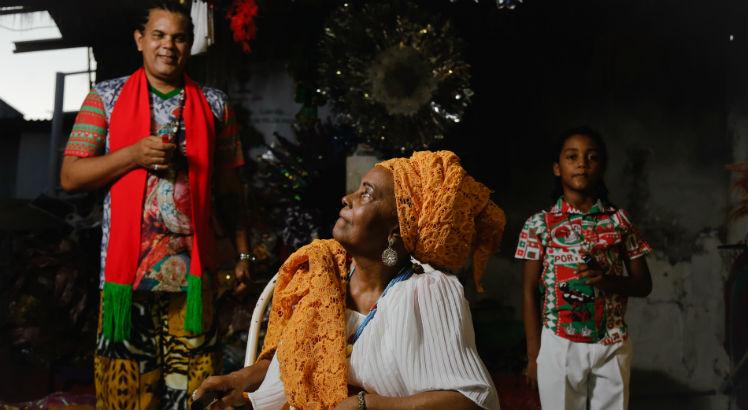
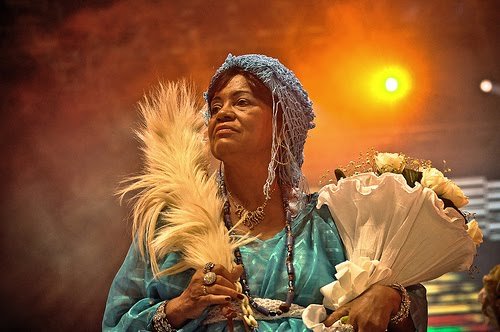
Mãe Elda on stage.

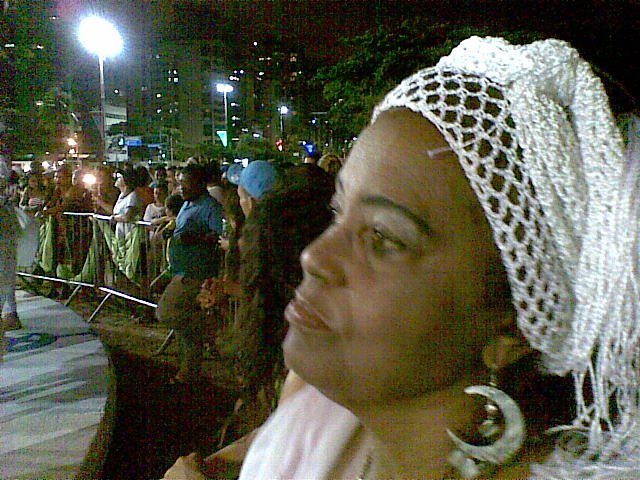
Mãe Elda following the procession.

Mãe Elda beside Naná Vasconcelos, the world-renowned percussionist who led the opening of the Recife Carnival, at the event that continues to this day as Tumaraca.

The Queen in photos

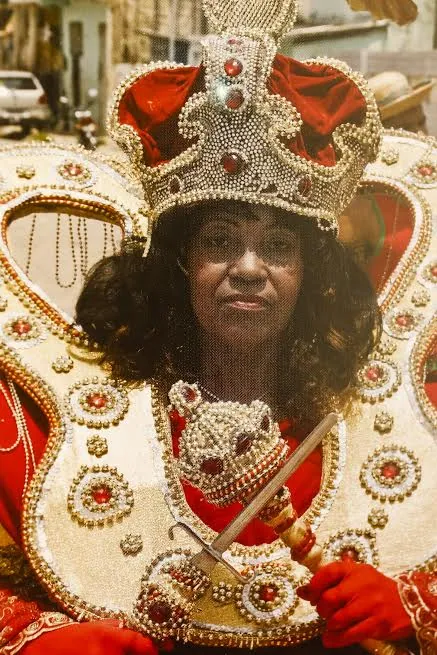
The Queen. Elda Viana wearing the crown of the Nação, in a photo released when Porto Rico was honoured at the 2016 Recife Carnival. Source: ClickRec.

In the cortejo. Queen Elda with the embroidered royal mantle and the sceptre.

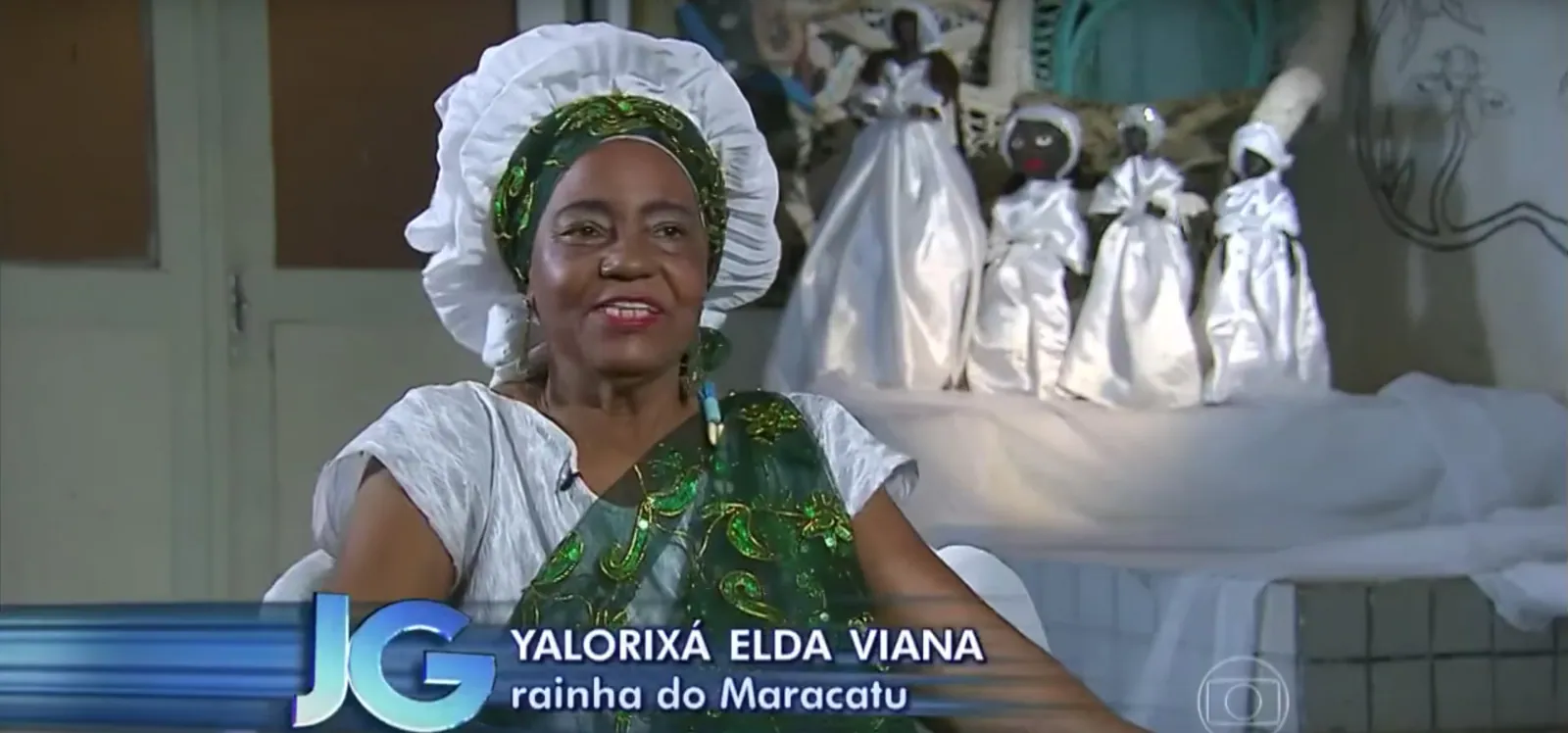
Jornal da Globo. Mãe Elda talks about the importance of the calungas, with the dolls dressed in white behind her. Source: TV Globo.

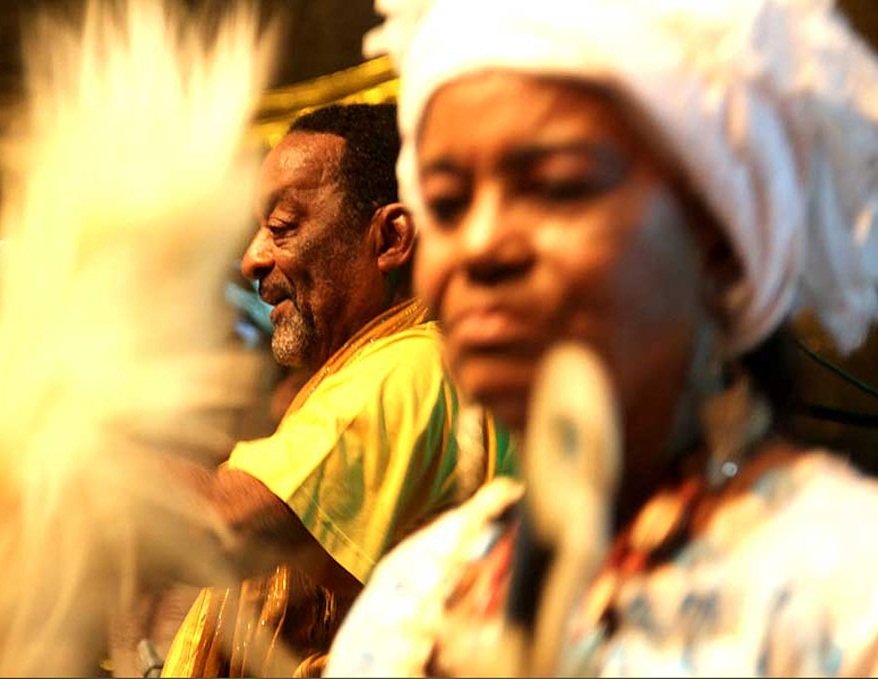
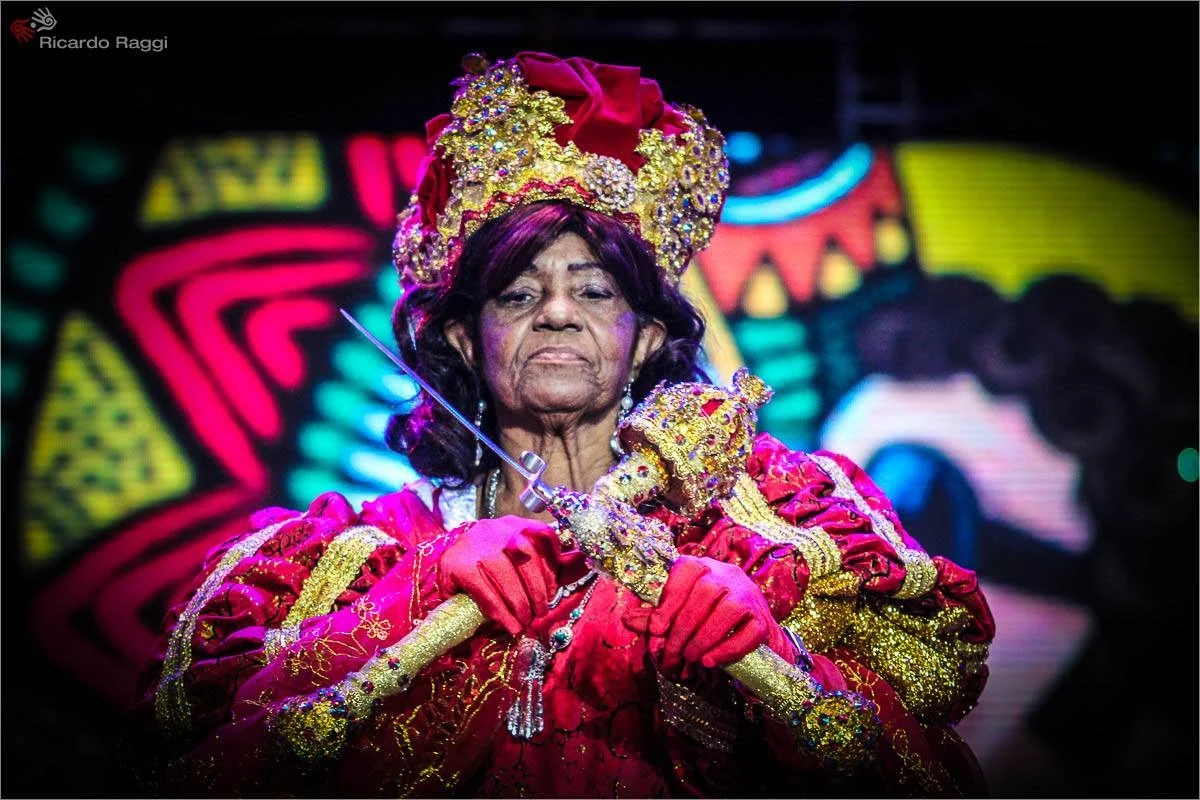
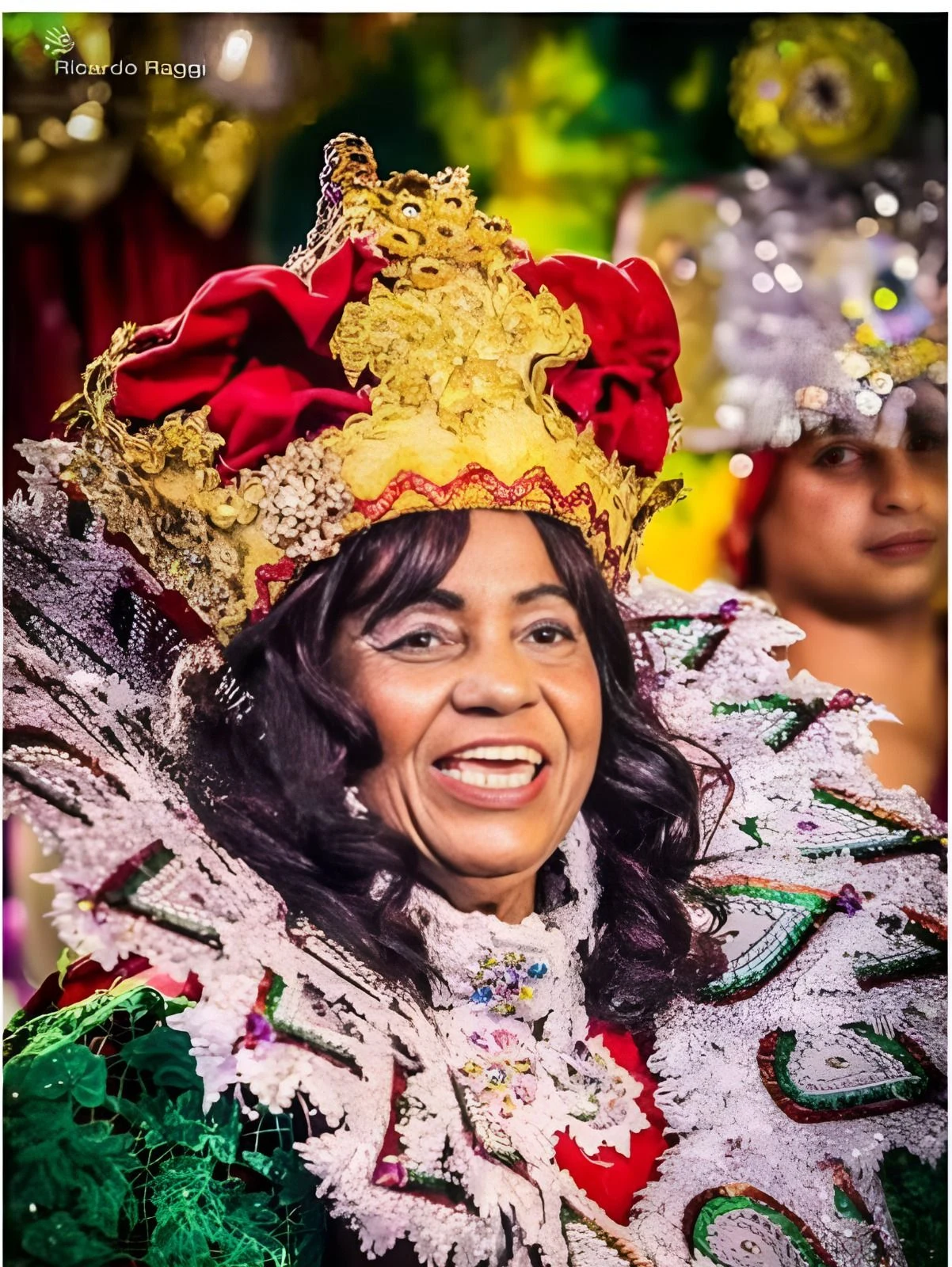
The crown and the scepter. Mãe Elda at a Nação performance. Photo: Ricardo Raggi.

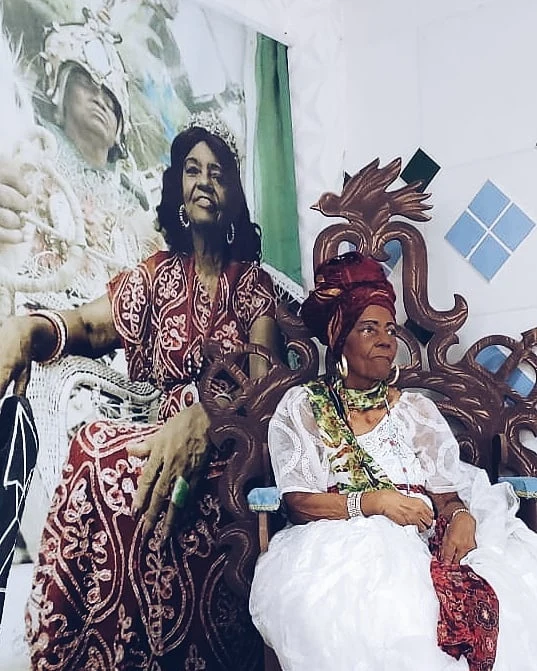
On the throne. Mãe Elda in white, beside a large portrait of herself.

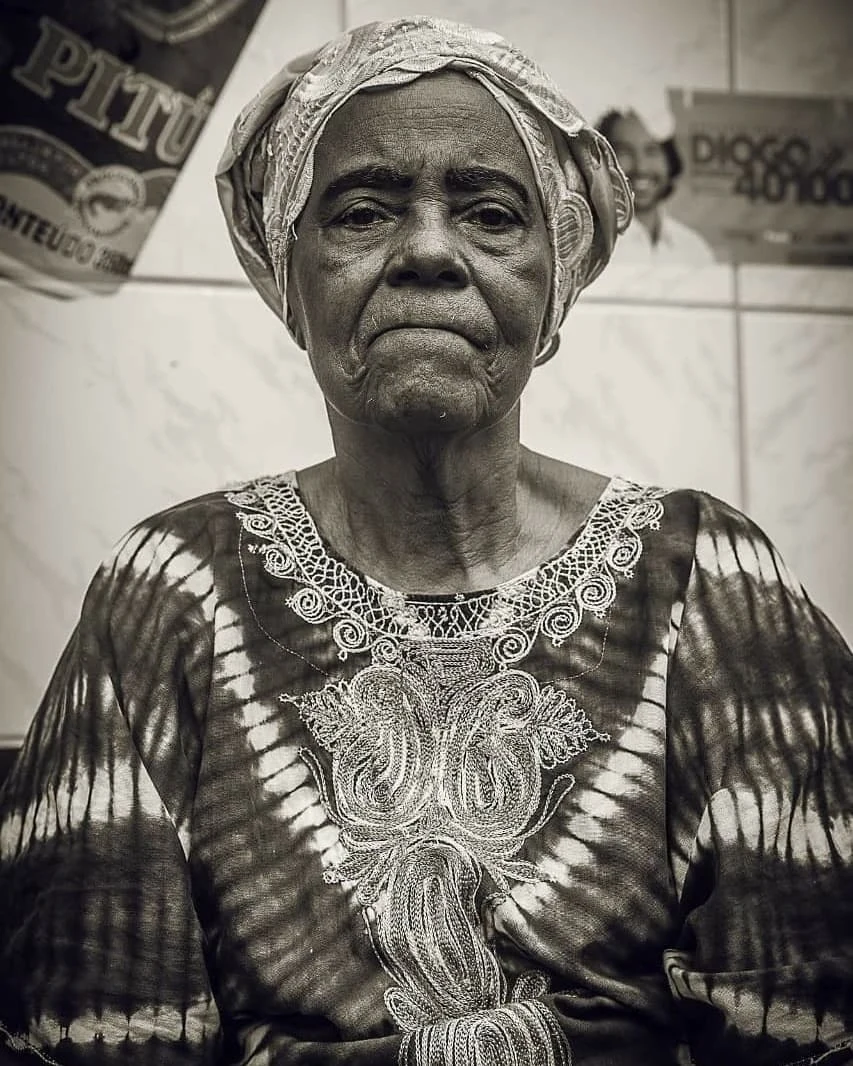
Portrait. Mãe Elda in a head wrap and embroidered tunic.

The Queen smiles. Elda Viana with the golden crown in the procession. Photo: Ricardo Raggi.

Words of Mãe Elda

"If it isn't for love, it doesn't move forward. I don't have a house, the maracatu does. I have the community inside my home. When I see that maracatu batuque in the street, it almost hurts, I cry with emotion."

Elda Viana

"If today the work of candomblé is for me to go to church, to receive mass, the priest's blessing, then that was my work today."

Elda Viana, in the BBC documentary (1991)
Yalorixá Elda de Oxóssi e Yakekerê Leu da Oxum

"Before the avenue, we have to take great care of Exu, because Exu is the owner of the Carnival play. He is the one who keeps evil away from us, so that we can have a good celebration."

Elda Viana, in an interview with Janote Pires Marques (2002)
Sung by the Nação

Loas for Mãe Elda

Respeito à Minha Majestade

Mestre Chacon

100 anos de tradição

Tenily e Augusto Menezes, 2016

Linda Beleza

Nathalia e Mestre Chacon

Dois Guerreiros de Fé

Ryan do Alfaia da Praia, 2020

Porto Rico faz terra tremer

Mary de Xangô, 2020

Tambores de Resistência

Cláudia Viana e Mestre Chacon, 2020

Mãe Elda reinou

Jhadyel, 2020

"Mãe Elda é nossa rainha, Tatá Raminho é nosso rei. Olha o respeito à majestade, chegando onde eu cheguei."

Respeito à Minha Majestade, loa by Mestre Chacon

Sources: Gloria Pereira da Cunha, Nação Porto Rico website; Ivaldo Marciano de França Lima, doctoral thesis; Claudilene Silva, Sem elas não haveria carnaval (Fundação de Cultura da Cidade do Recife, 2011); ABZ Koslinski; interview with Elda Viana by Janote Pires Marques (2002).