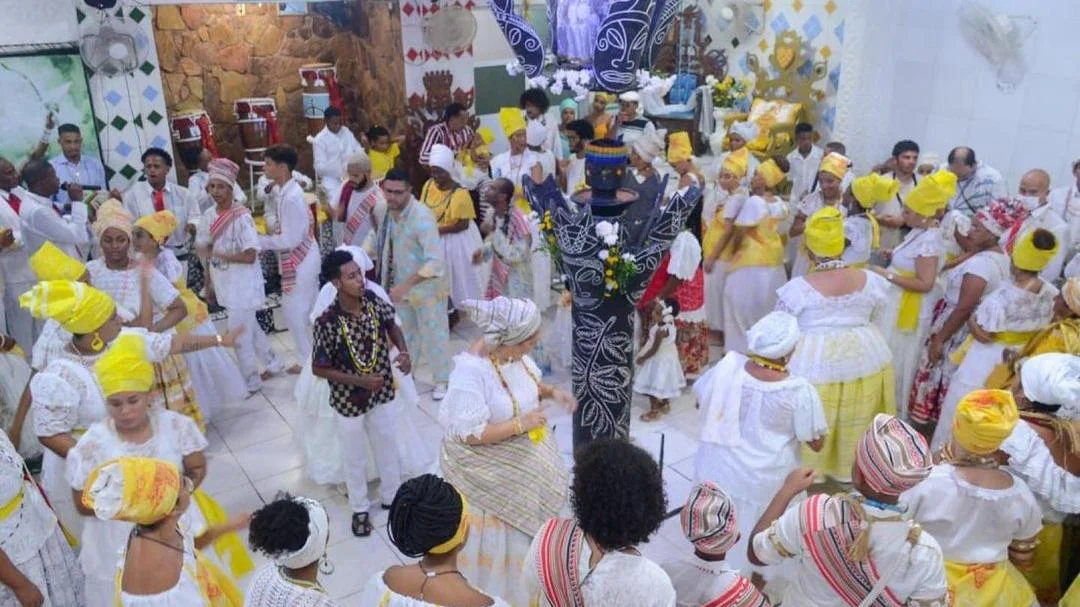
Ilê Axé Oxóssi Guangoubira, the Macaia de Oxóssi.
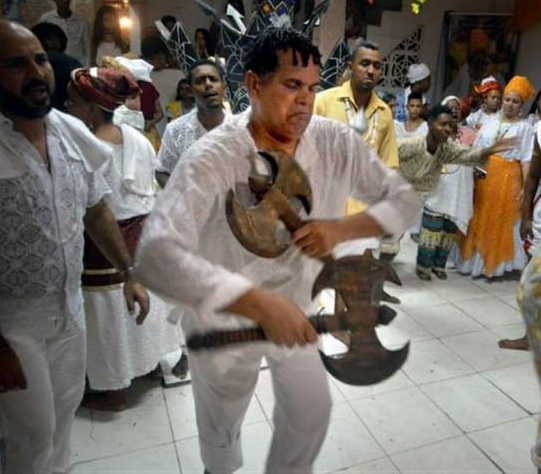
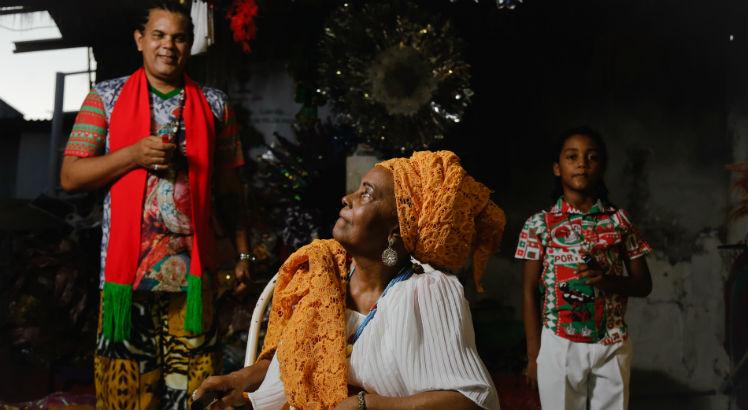
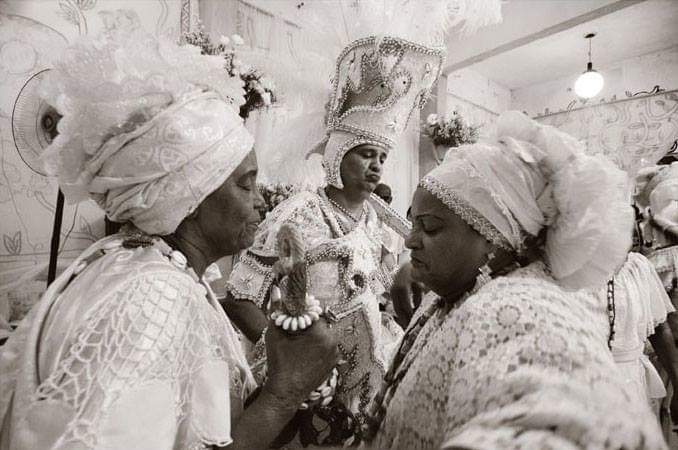
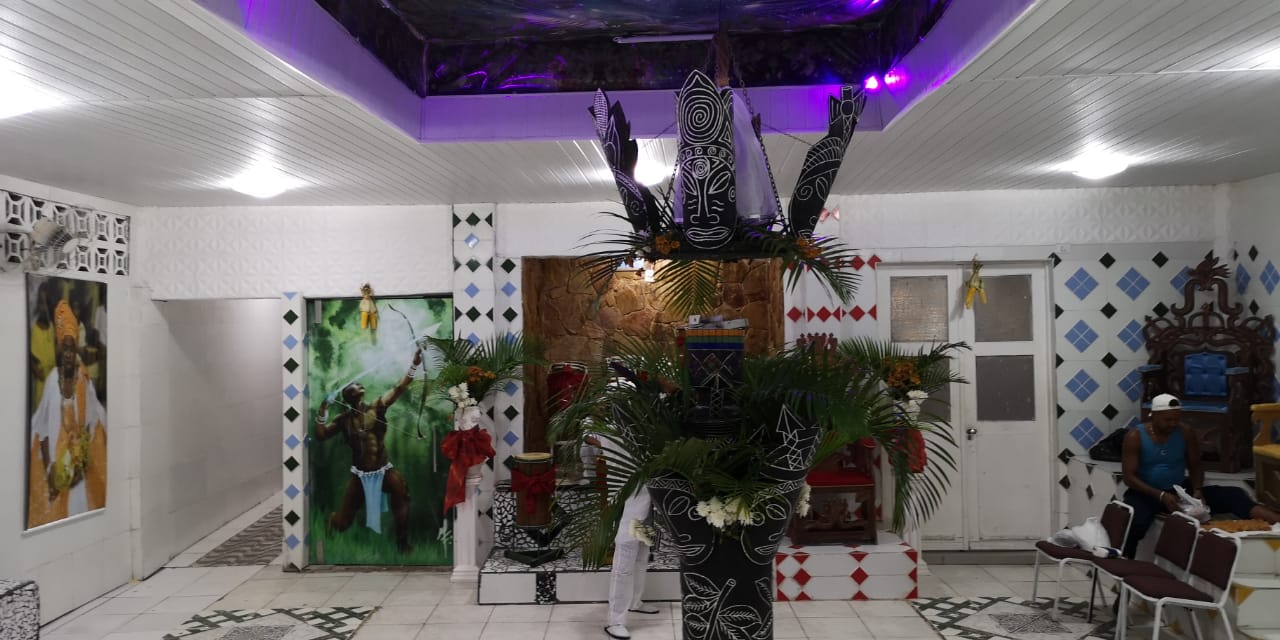
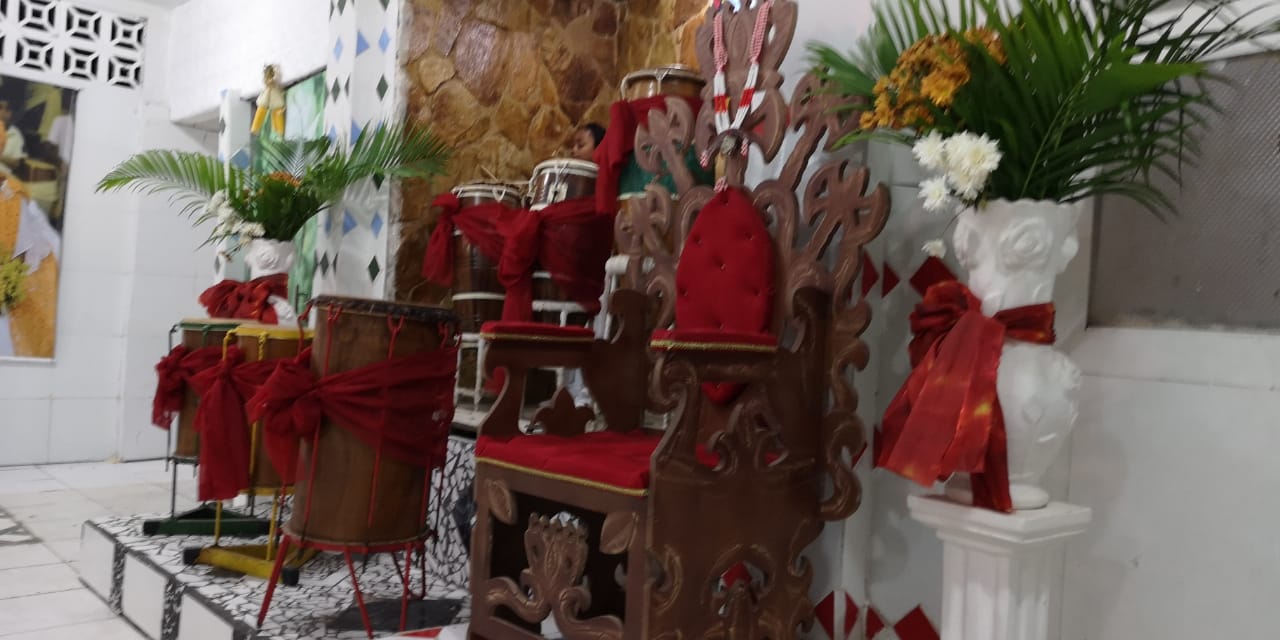
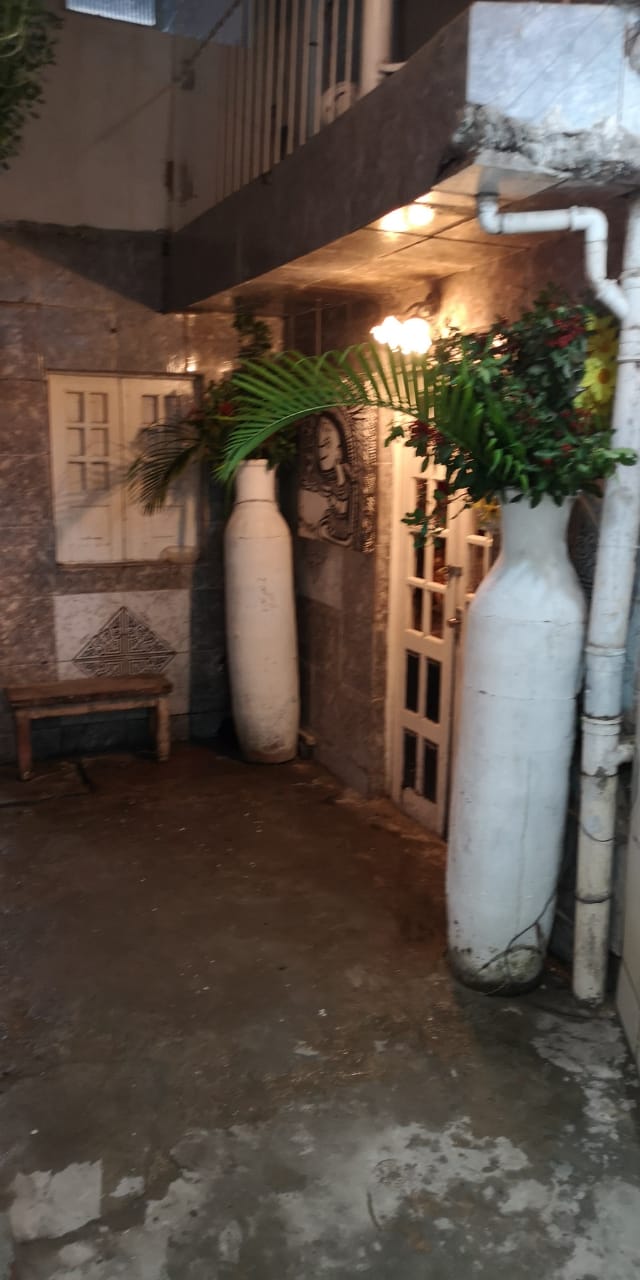
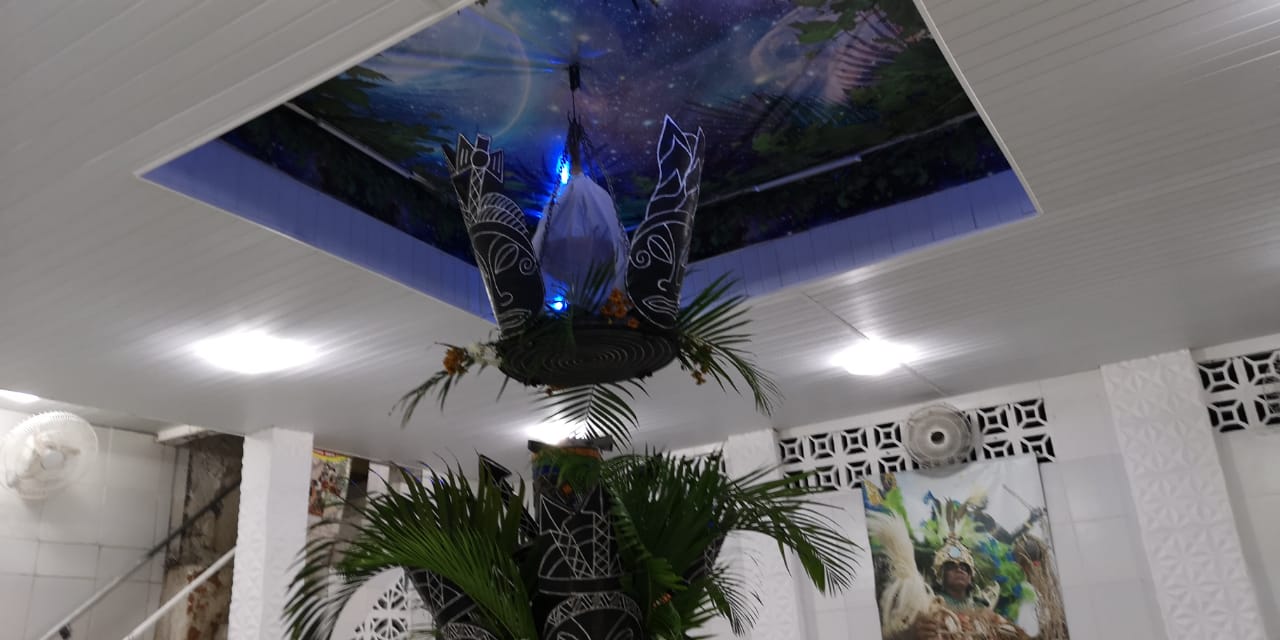
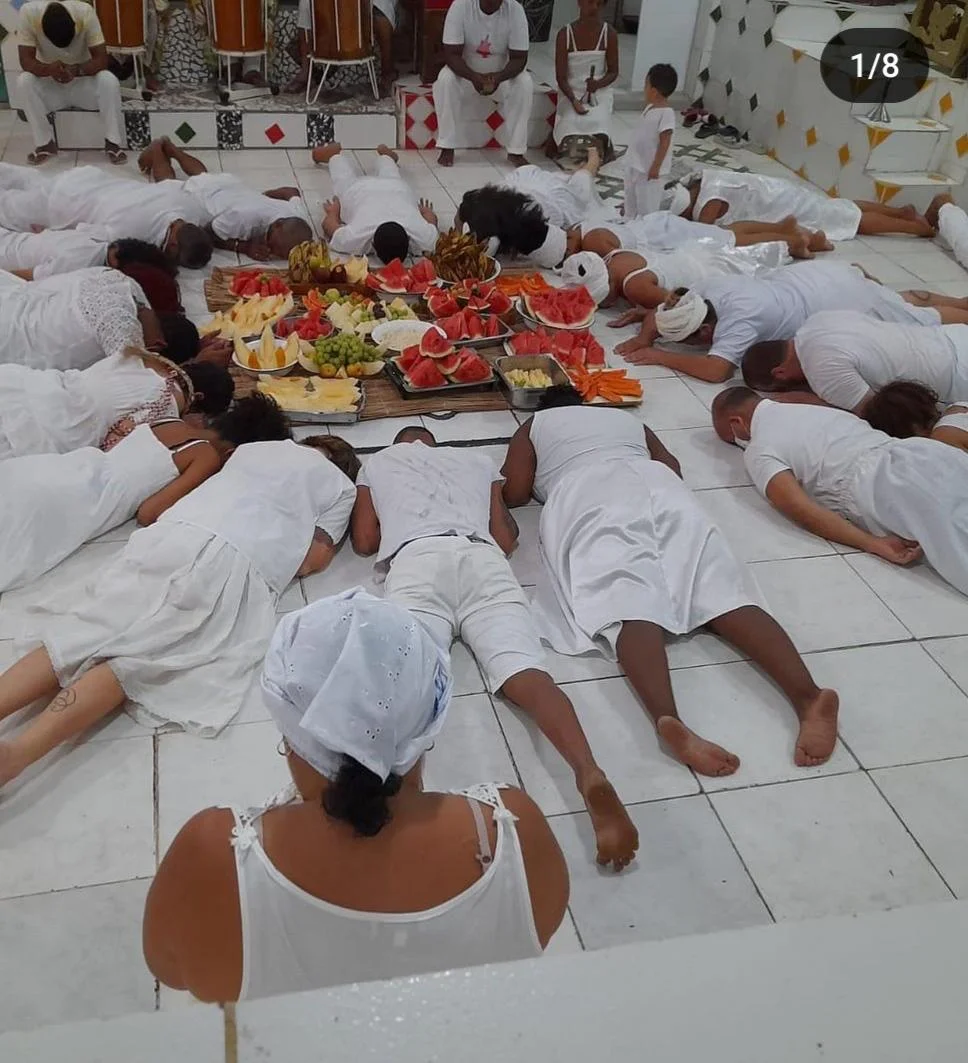
In the Comunidade do Bode, at Rua Eurico Vitrúvio, 483, in Pina, in the south of Recife, stands the Macaia de Oxóssi, the candomblé house that has spiritually sustained the Nação do Maracatu Porto Rico for more than 50 years. Today the terreiro follows a jeje-nagô line.
It was there that Mãe Elda built, with her own work, the headquarters that takes up a whole block of the neighborhood: home, barracão and house of the Nação, where hundreds of maracatu costumes and props are kept.
"I am Queen Elda of the Nação de Maracatu Porto Rico and also Iyalorixá of the Macaia de Oxóssi. I am the only Queen crowned inside the Church of Nossa Senhora do Rosário dos Homens Pretos."
Elda Ivo Viana began her religious path in 1955, at age 17, in the São Cristóvão neighborhood of Rio de Janeiro, in umbanda and candomblé angola, and later moved to candomblé nagô and jeje. Iyalorixá, queen and lifelong president of the Nação, she was the last queen crowned inside a church: on October 8, 1980, by canon Miguel Cavalcante. After that, the Archdiocese of Olinda and Recife no longer allowed coronations in churches.
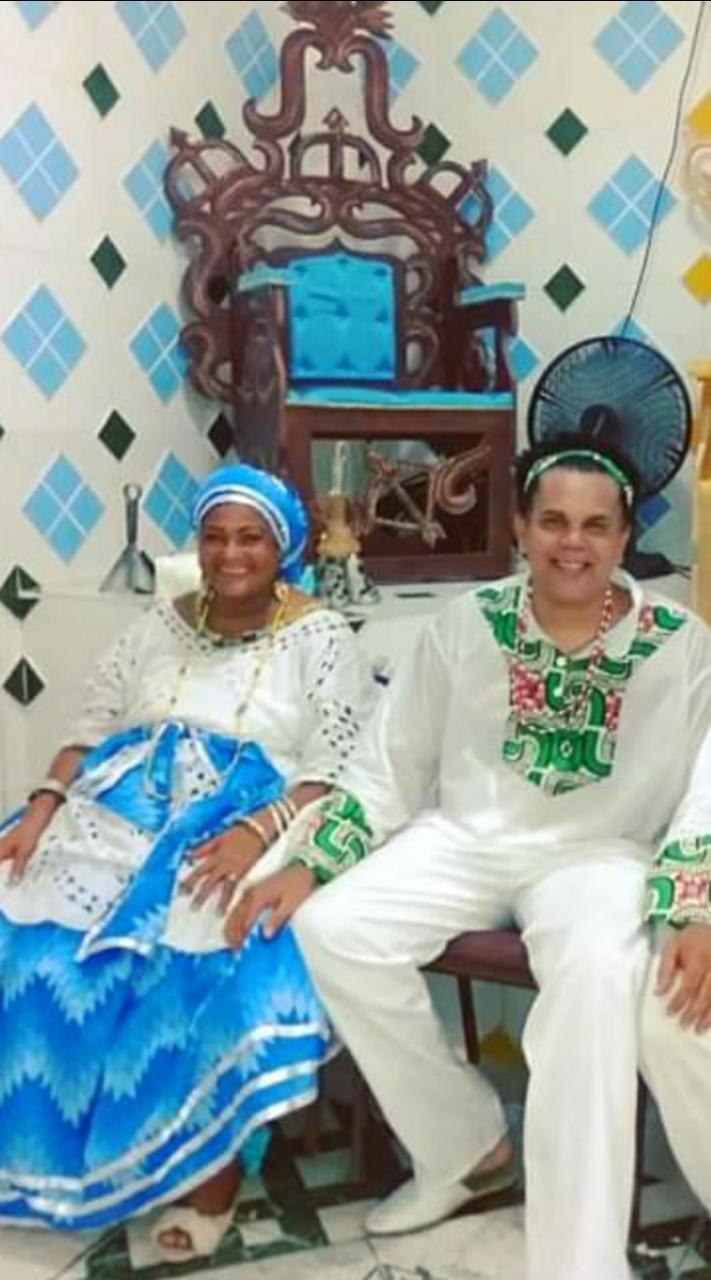
Edileuza Lira da Silva was born on 25 September 1955 in Rio de Janeiro. A daughter by blood of Mãe Elda, she was chosen in 1962, at age 7, by Oxum, the orixá who rules her Orí. Initiated in umbanda and Angola candomblé, she began to worship the Nagô and Jeje nations when she came to Pernambuco. She was the Yakekerê, the Ylê's Mãe Pequena, and Princess of the Nação. Today she is Ialorixá of the Ylê, Queen of Nação do Maracatu Porto Rico and president of Urso Zé da Pinga.
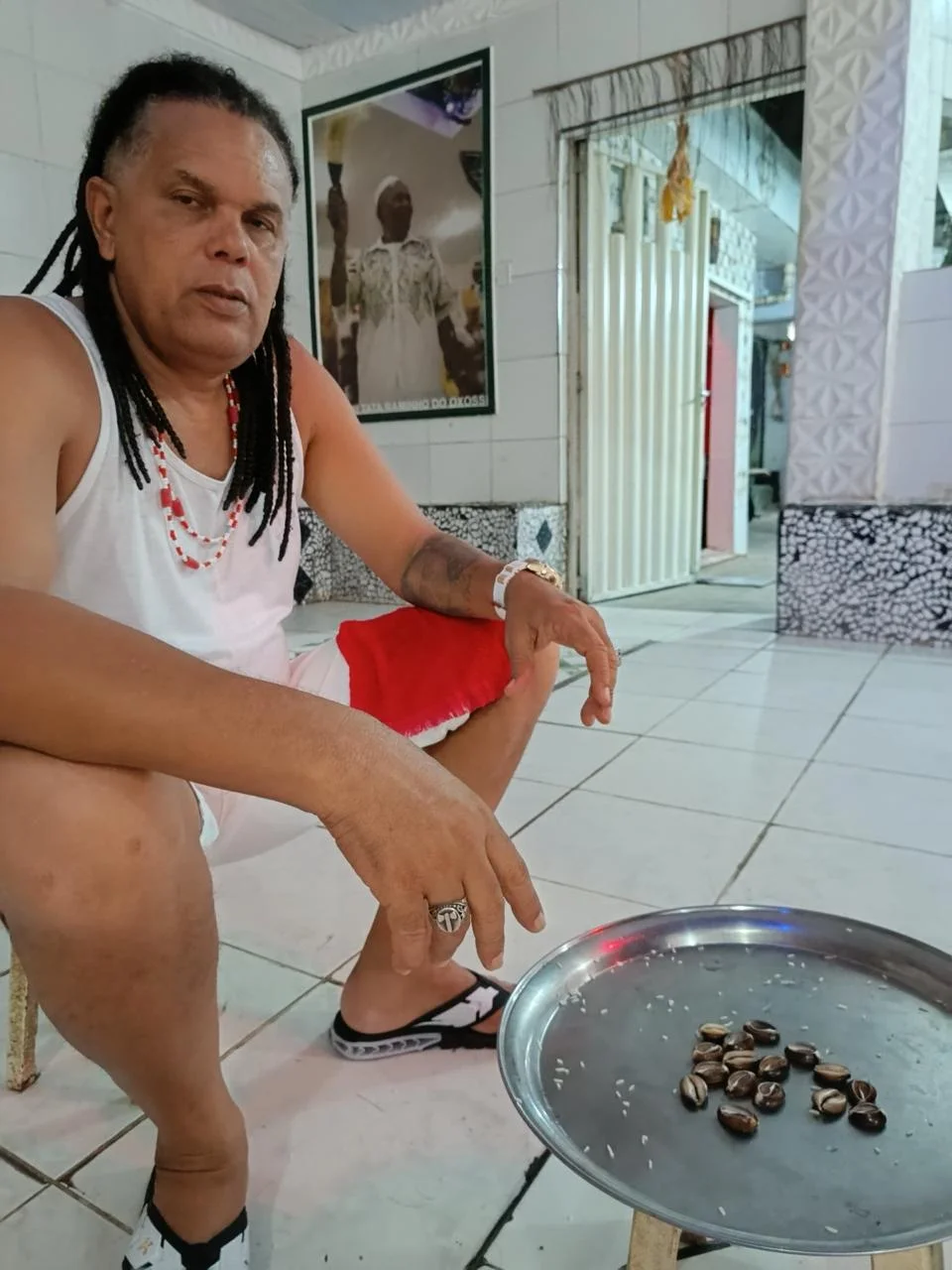
Jailson Viana Chacon was born in Recife on February 6, 1969 and, from his mother's womb, was chosen for the Axé. His Orí is ruled by Xangô. His spiritual parents, Tata Raminho de Oxóssi and Mãe Mana de Xangô, lead the Roça de Oxum Opará e Oxóssi Ibualama, two of the greatest references of candomblé in Pernambuco. Alongside his sister, Mãe Leu, he takes care of the spiritual side of the Macaia de Oxóssi.
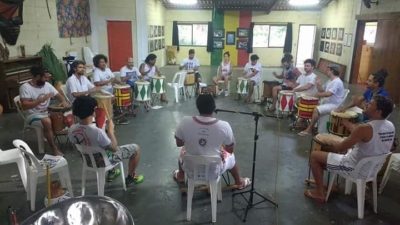
The Ilú Orchestra was born from the wish to show Brazil and the world the universe of the sacred music of the candomblé terreiros, carried by the ilús typical of the Nagô Nation, with the zuelas, chants, prayers and laments of Recife's Xangô. The idea is to bring to theaters and public spaces a culture that has resisted for centuries without the recognition it deserves.
Directed by Babalorixá Chacon Viana, it brings together ogãs, percussionists and educators from many parts of Brazil, divided into sections of melê, biancó and yan, who play, sing and lead the dance. Other instruments join those of the terreiro, without losing the foundations. The meetings take place at Casa de Cultura Tainã, in Campinas (SP).
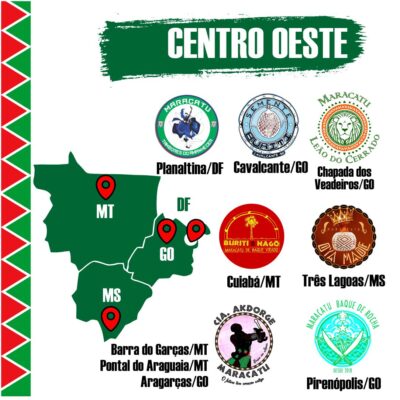
Spread around the world, the sons and daughters groups of Porto Rico study and represent the Nação, showing the roots of Pernambuco and the identity of baque virado. Some play more than one nation, others follow only Porto Rico's baque.
There are children groups in the North, Northeast, Southeast and South of Brazil, as well as in the United States, Europe and Asia. Others are still taking shape and will soon be part of this map.
The Macaia de Oxóssi is a house with open doors and always well visited. Here we keep the memory of some of the visits that honored us.
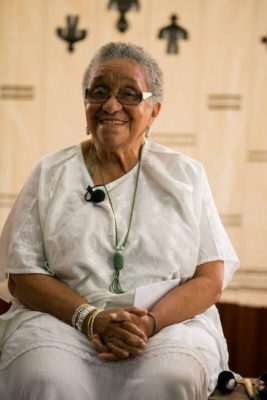
Nancy de Souza, Ebomi Cici de Oxóssi, was born in Rio de Janeiro in 1939 and is one of the greatest storytellers of Afro-Brazilian culture. In her youth she studied languages and came to speak Russian, Italian, French and Spanish. In 1964, amid political persecution, she left school and student activism. She already attended candomblé and, at a difficult time in her life, decided to devote herself to the orixás, where she found strength. When she met Pierre Verger, Pai Fatumbi, she learned her own history as a person and, above all, as a Black woman.
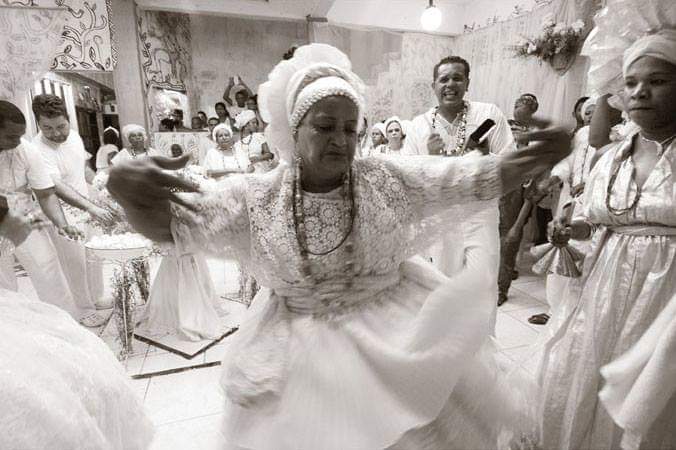
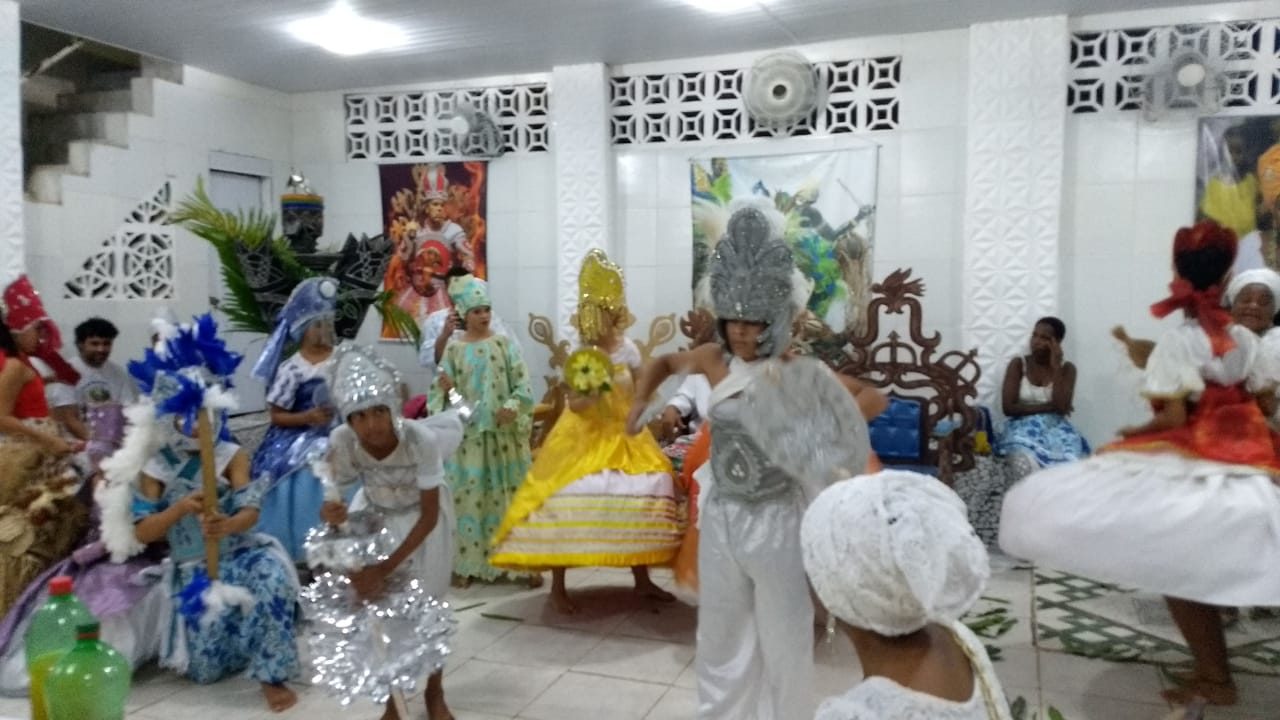
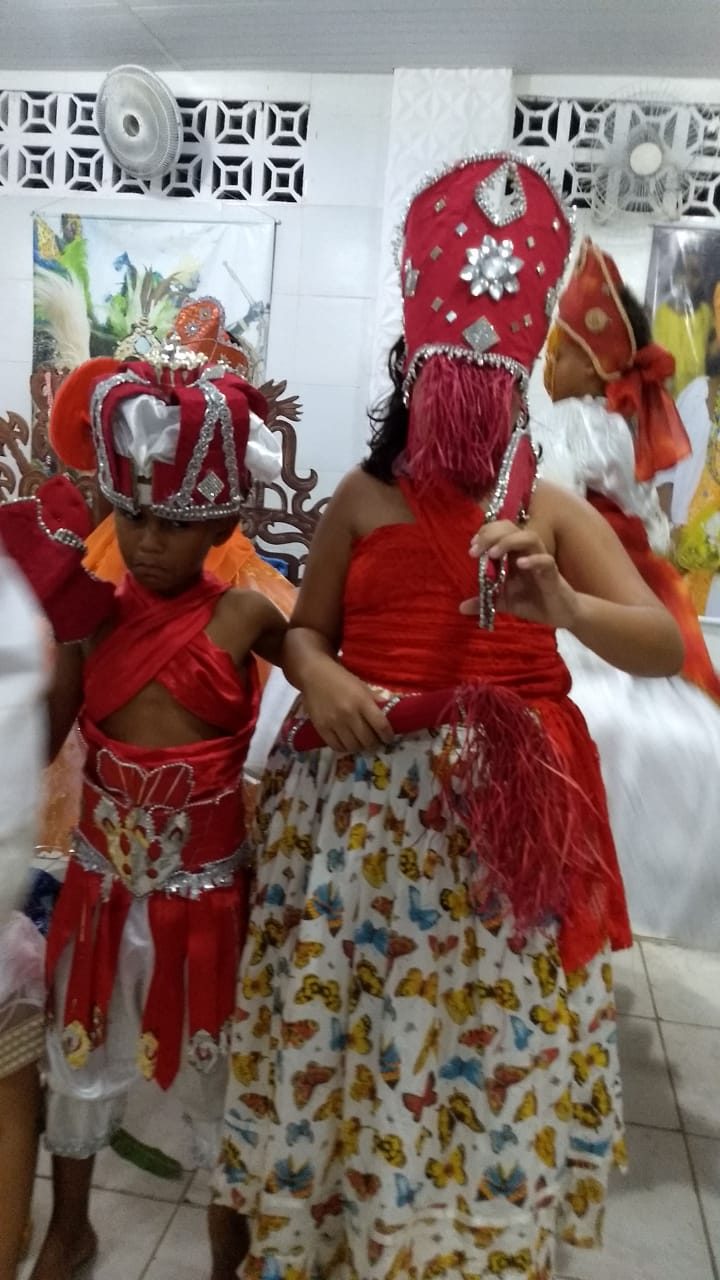
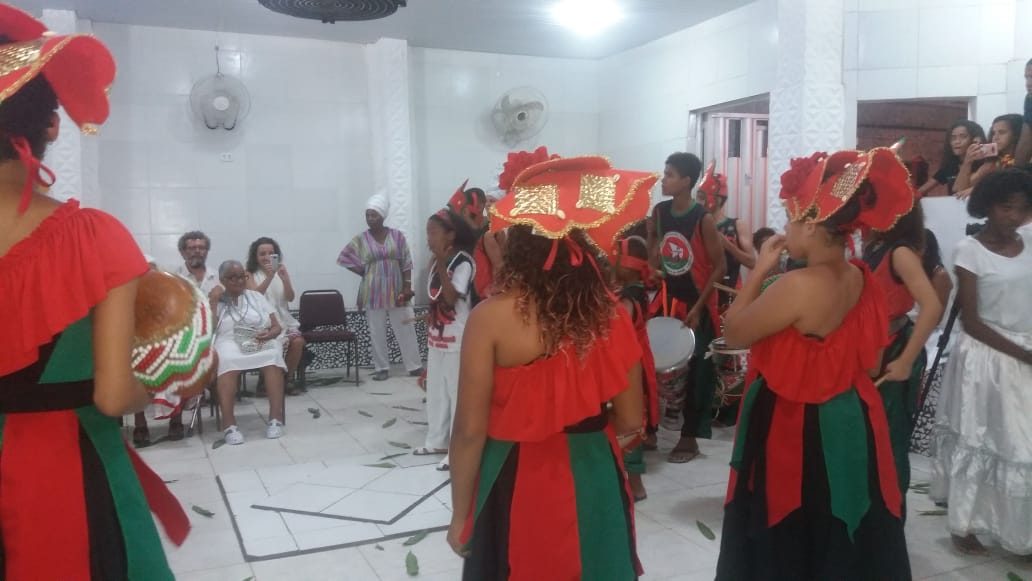
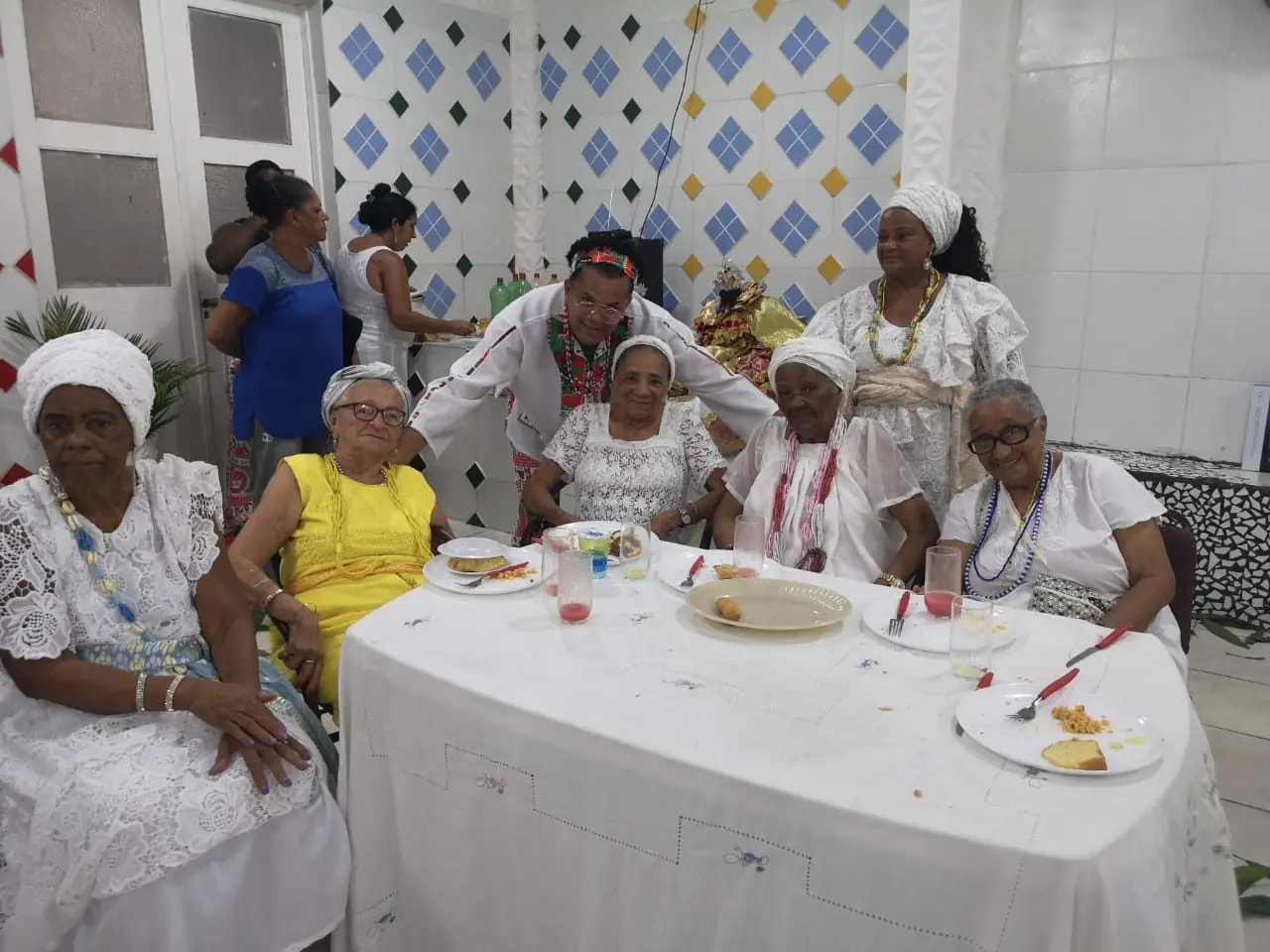
On May 25, 2019, Ebomi Cici visited the Macaia de Oxóssi together with some of the Mothers of Pina: Ya Elda de Oxóssi, Ya Enézia de Oxum, Ya Helena and Ya Laura de Xangô. To welcome her, the children of the Nação staged the xirê of the orixás and the Baque Mirim performed, with Babalorixá Chacon de Xangô and Yakekerê Leu de Oxum.
"I tell my stories to children. If they talk about Snow White, Sleeping Beauty, I tell the stories of King Ogum, Queen Oxum, the hunter Oxóssi."