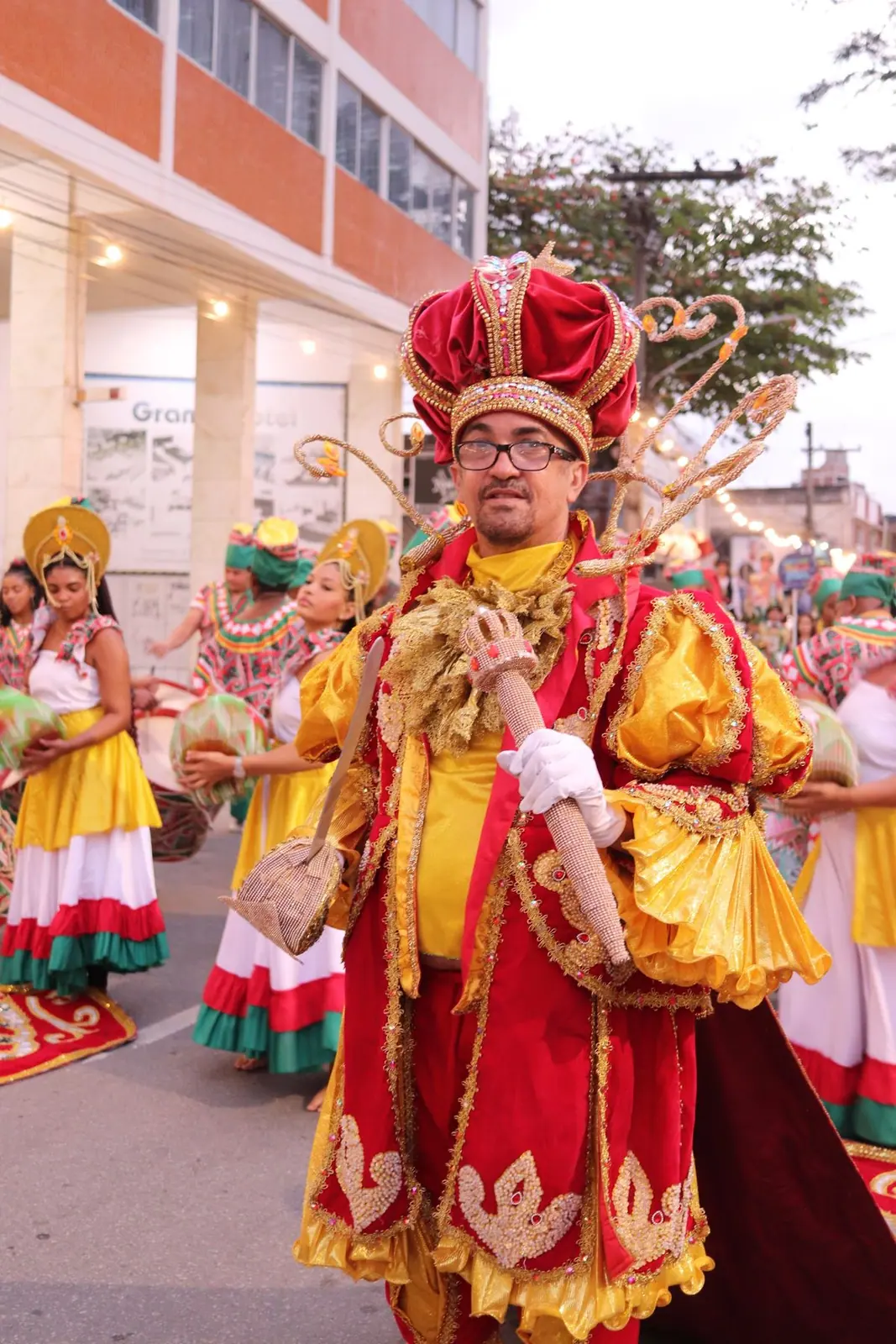
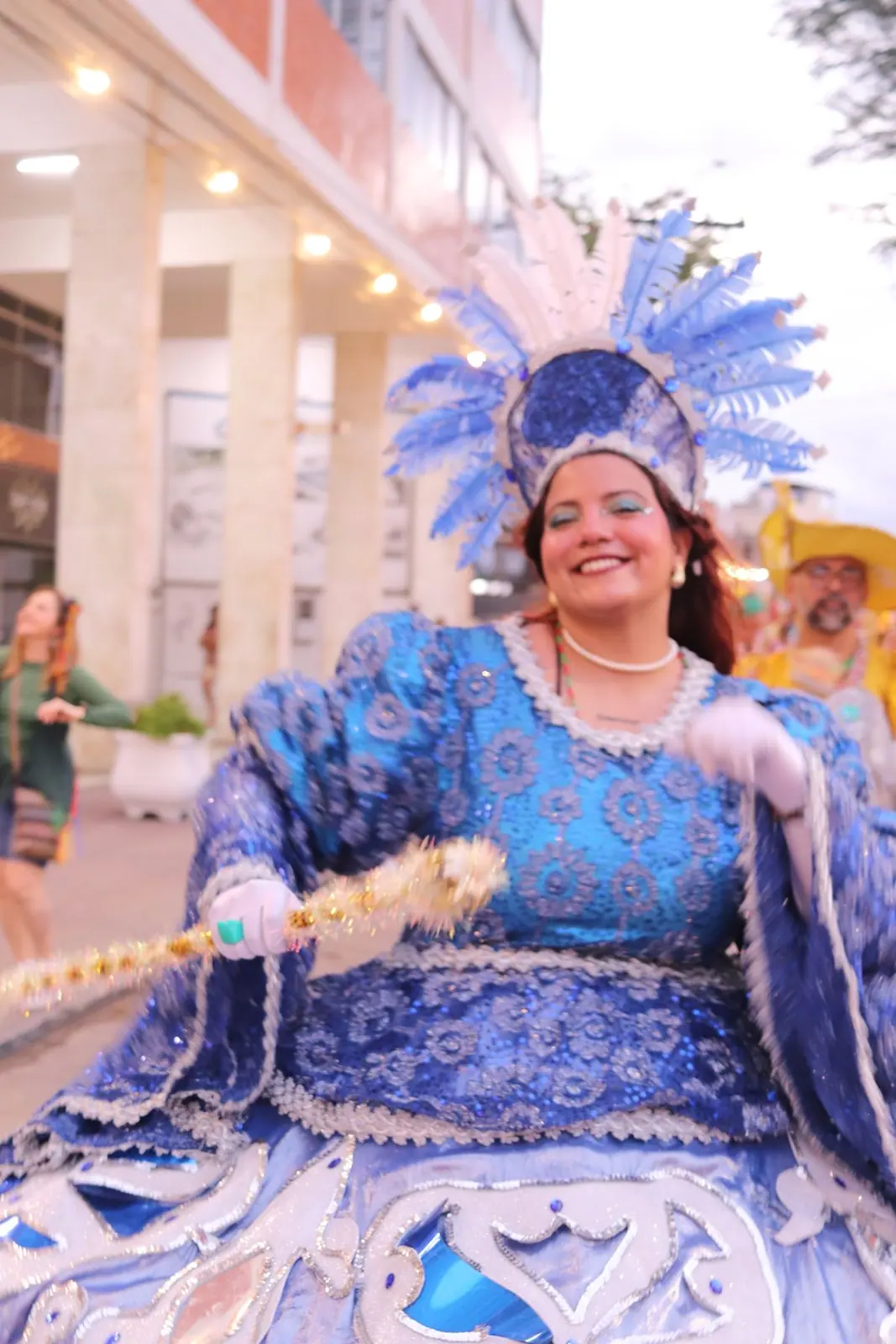
King, queen, ladies, baianas and calungas: who is who in the procession of maracatu de baque virado.
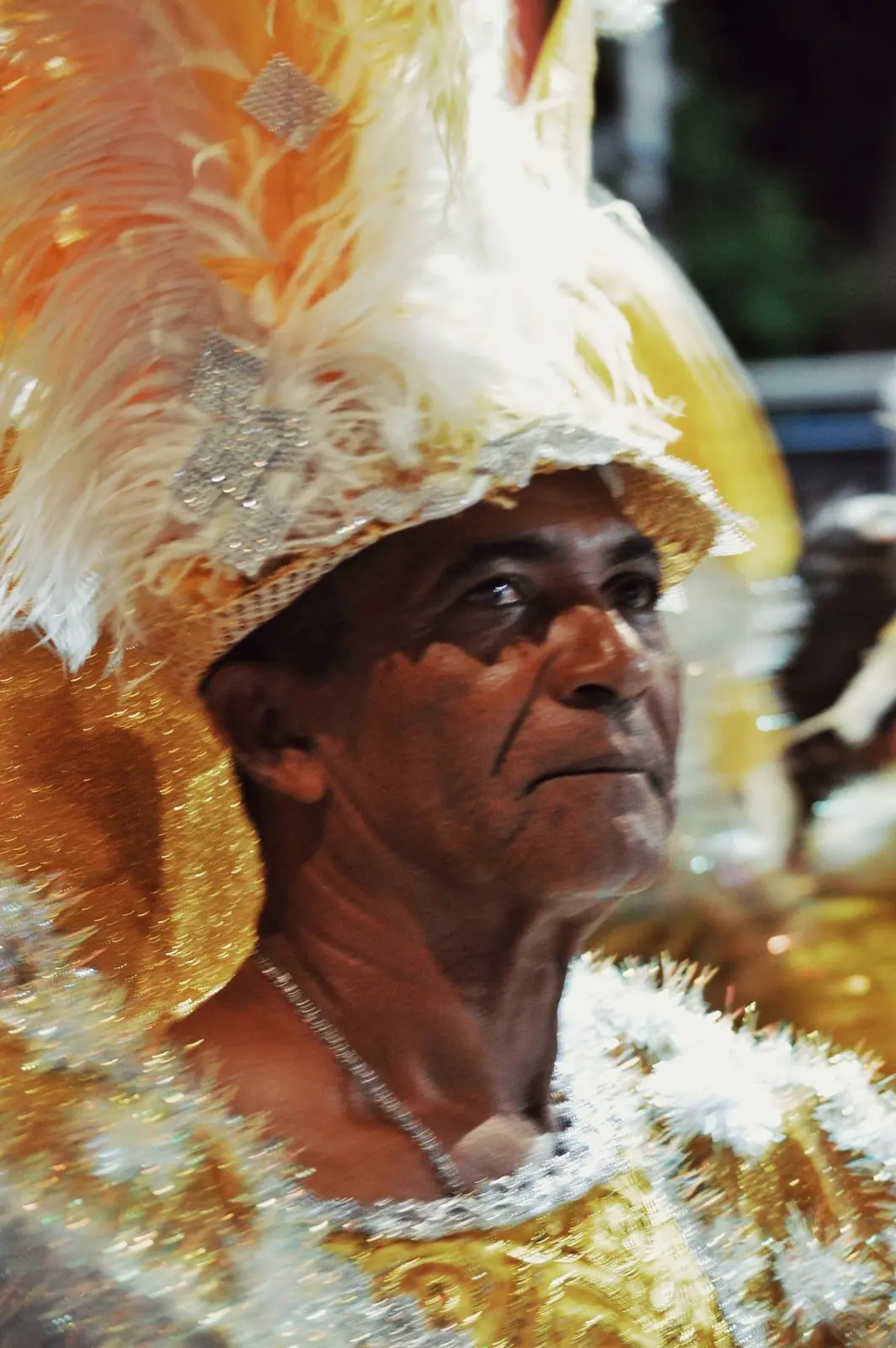
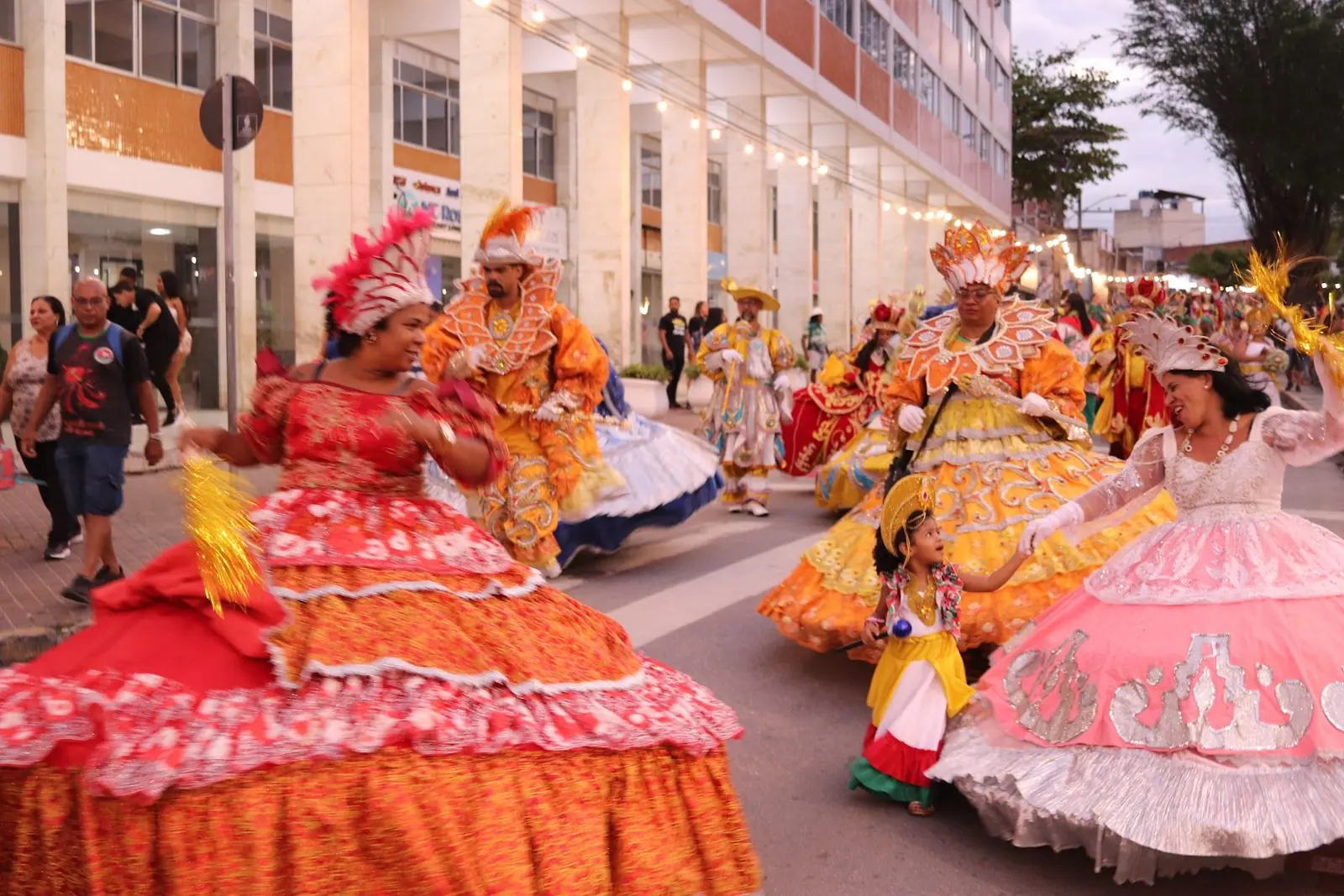
The Royal Court is made up of everyone who takes part in the great parade led by the royal couple. The court and its guests present themselves to the people as if they were on their way to a grand celebration.
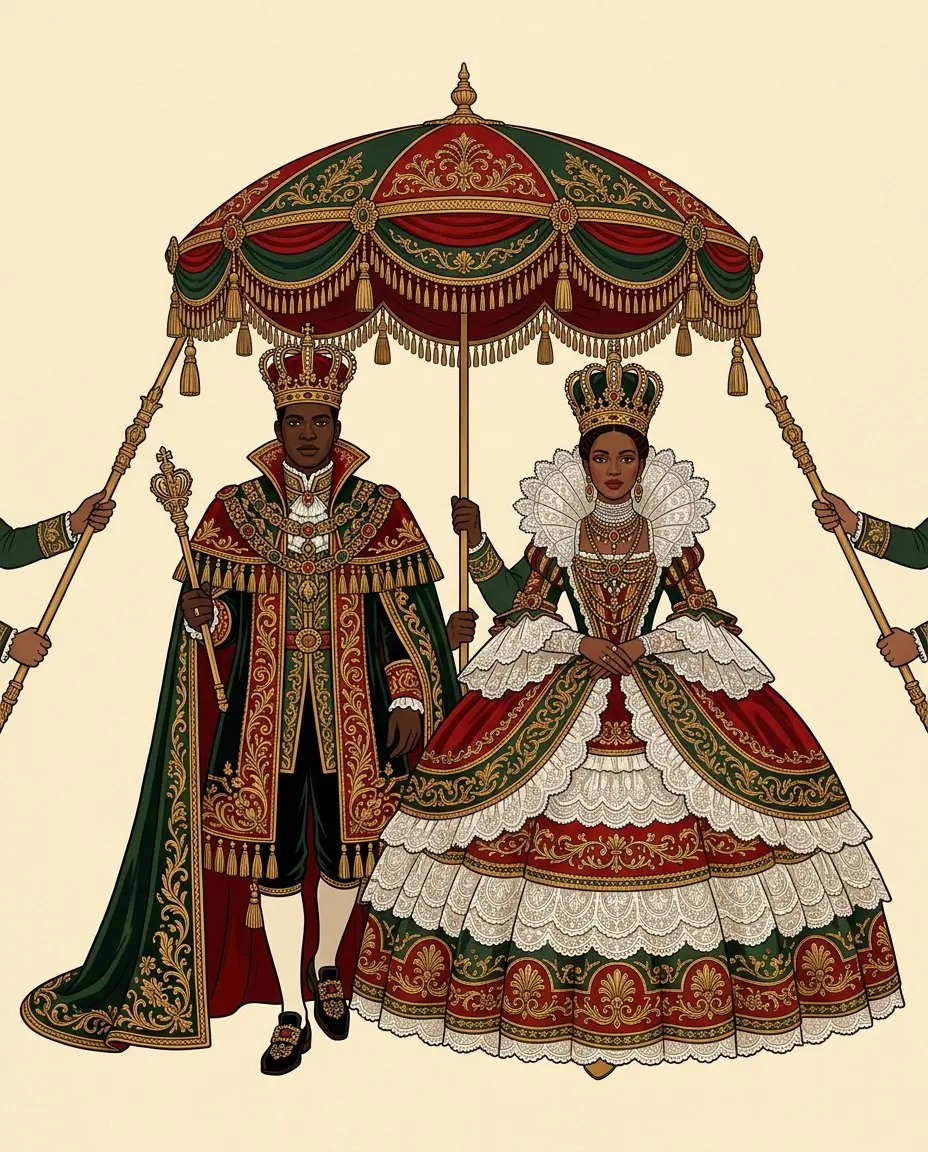
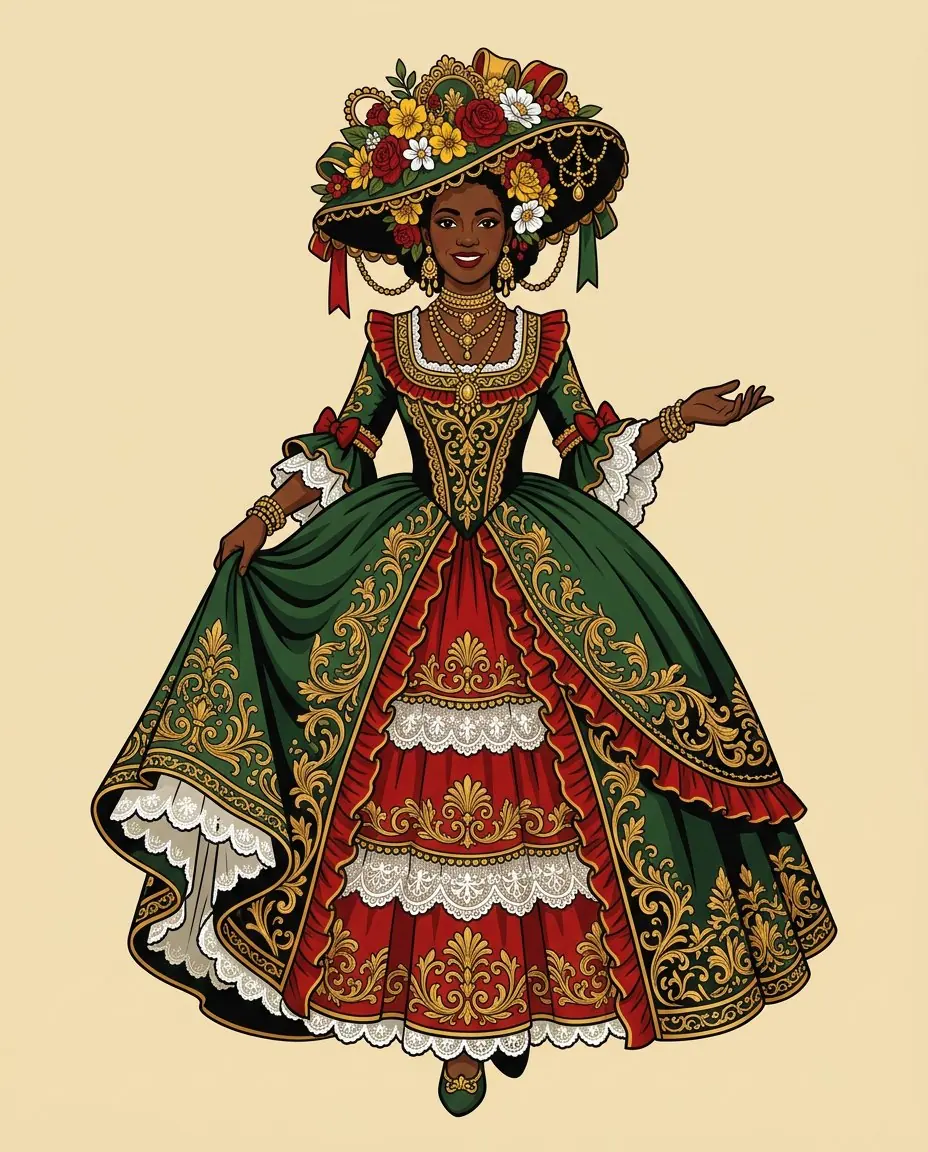
Before the royal couple come the prince and princess, duke and duchess, marquis and marchioness, count and countess, as well as guests from other kingdoms: ambassador and ambassadress, consul and consul's wife. Last of all, closing the court, come the queen, or empress, and the king, or emperor, sheltered by the pálio, an imposing parasol.
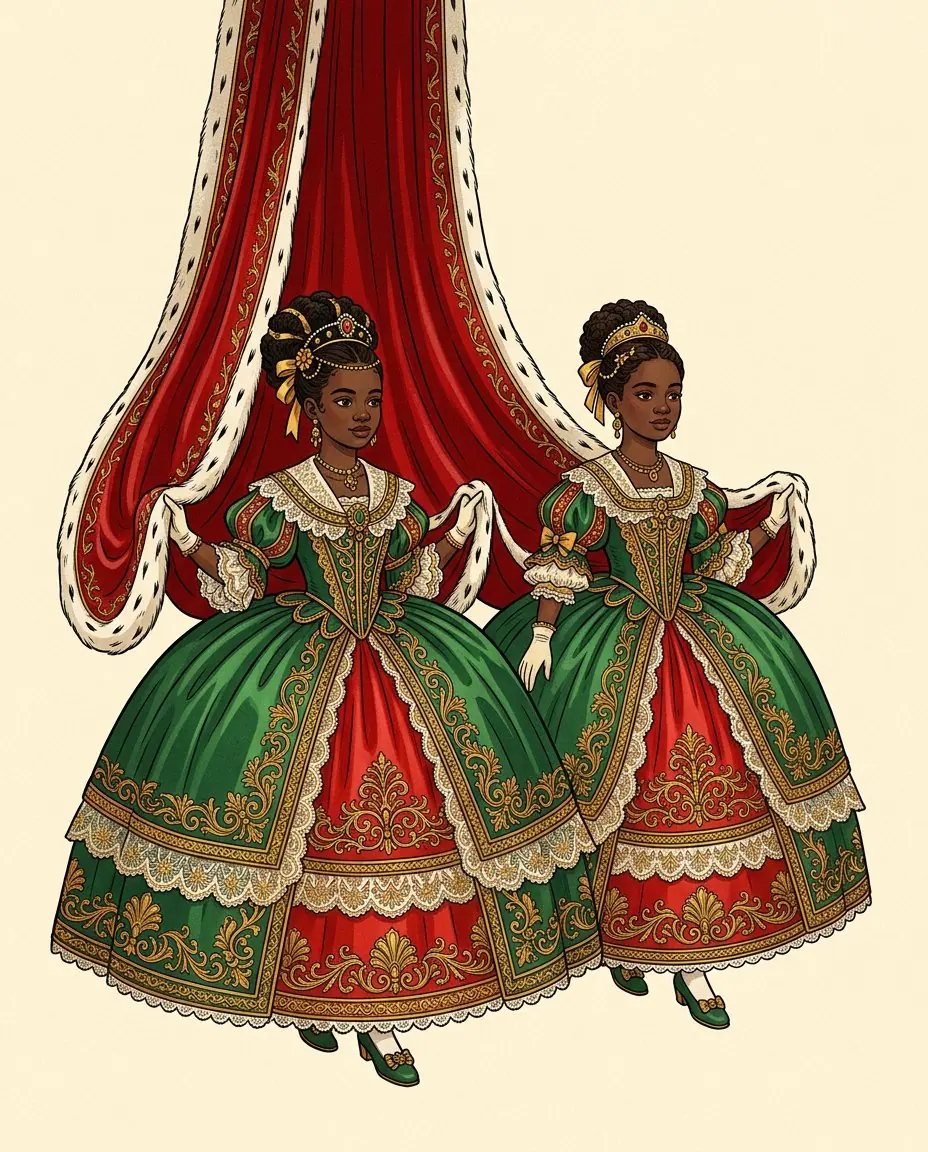
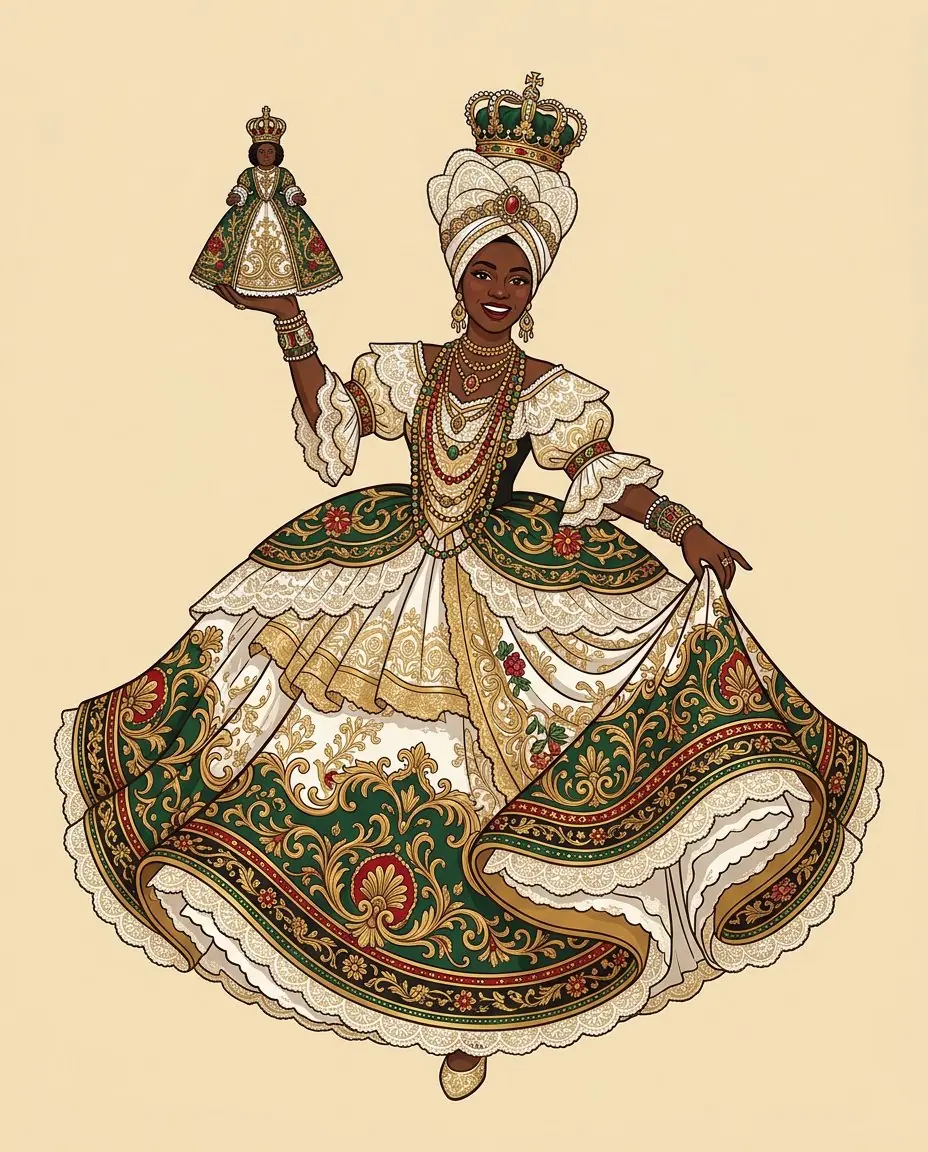
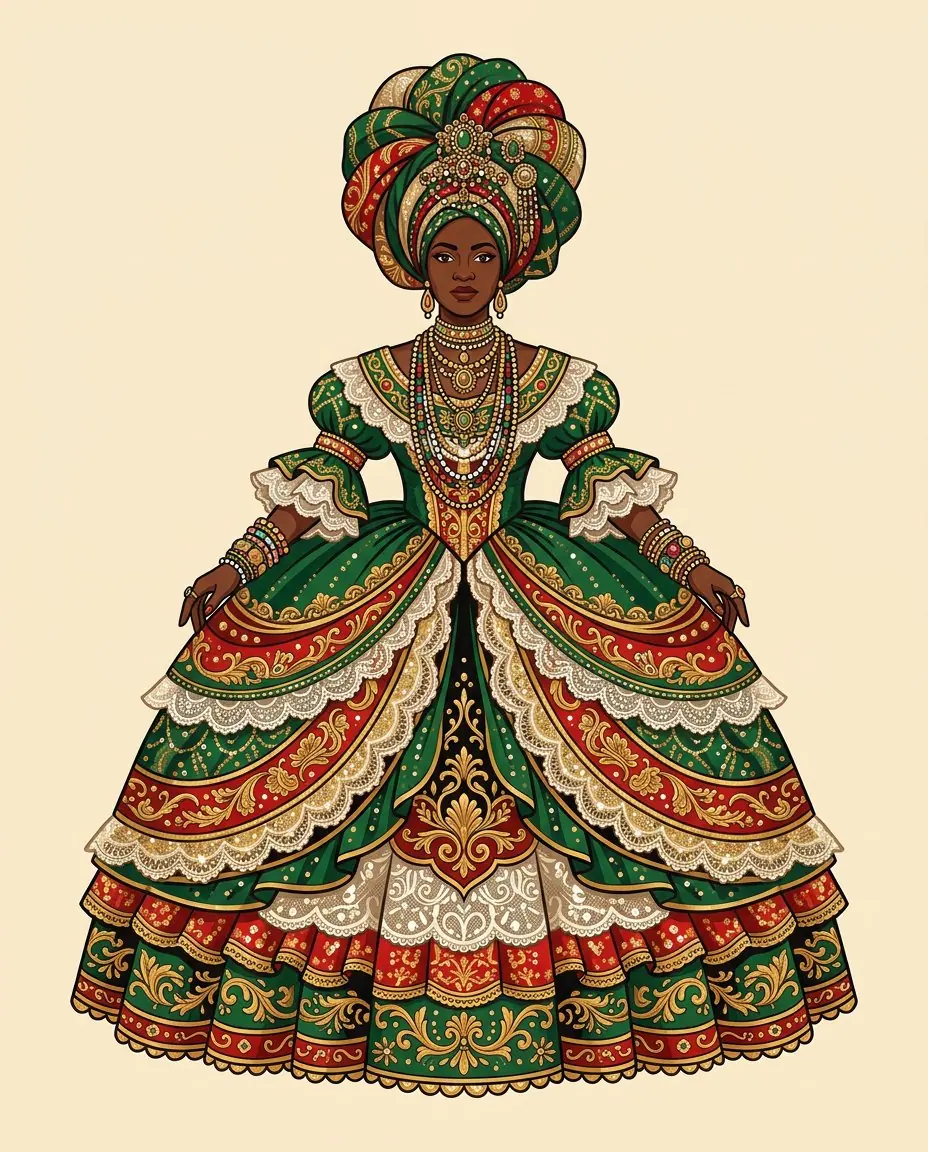
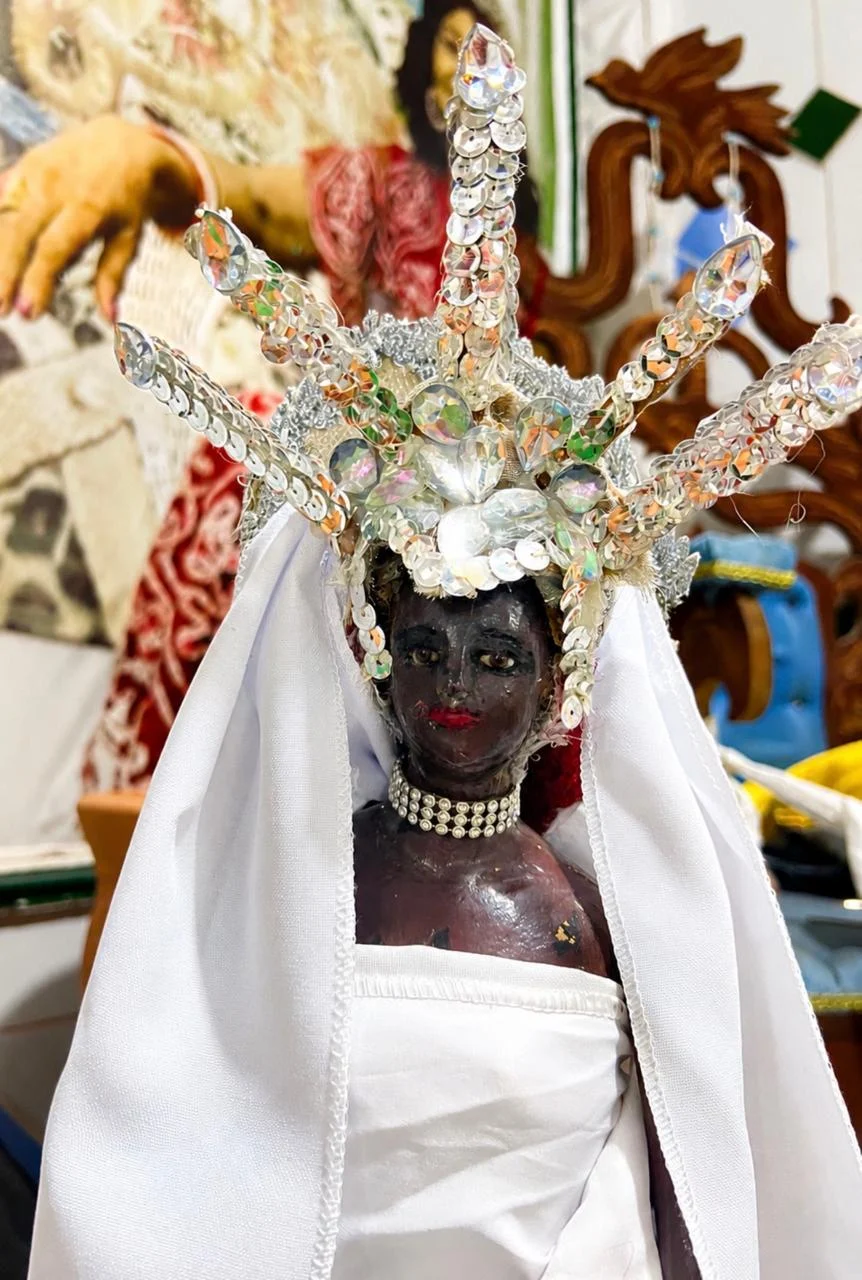
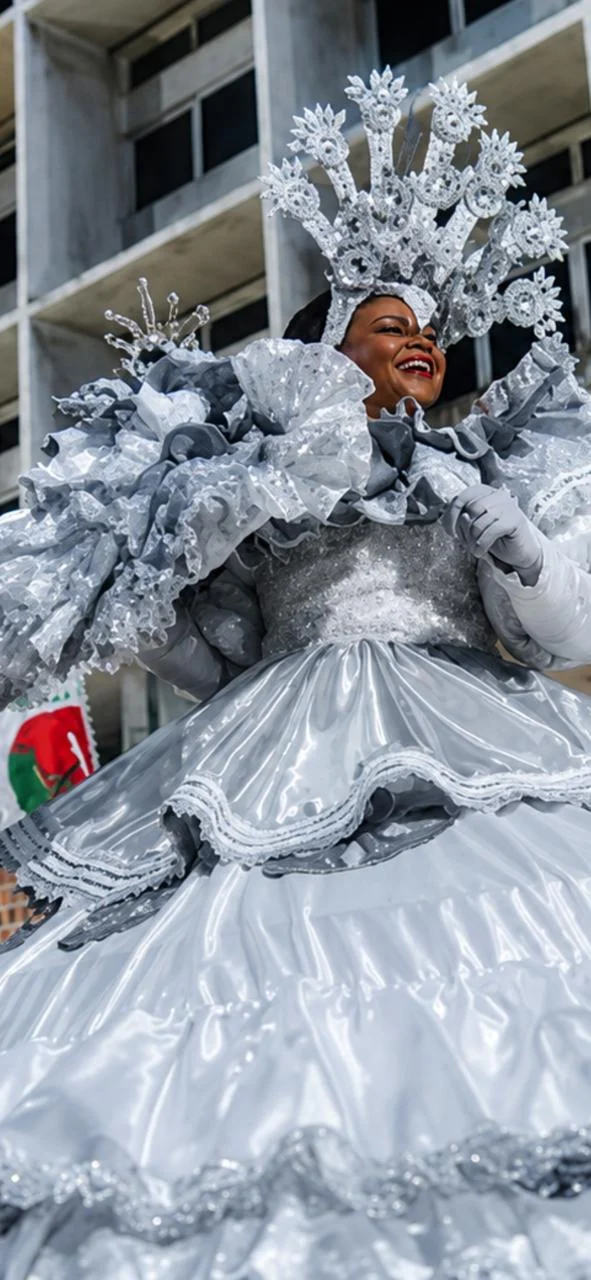
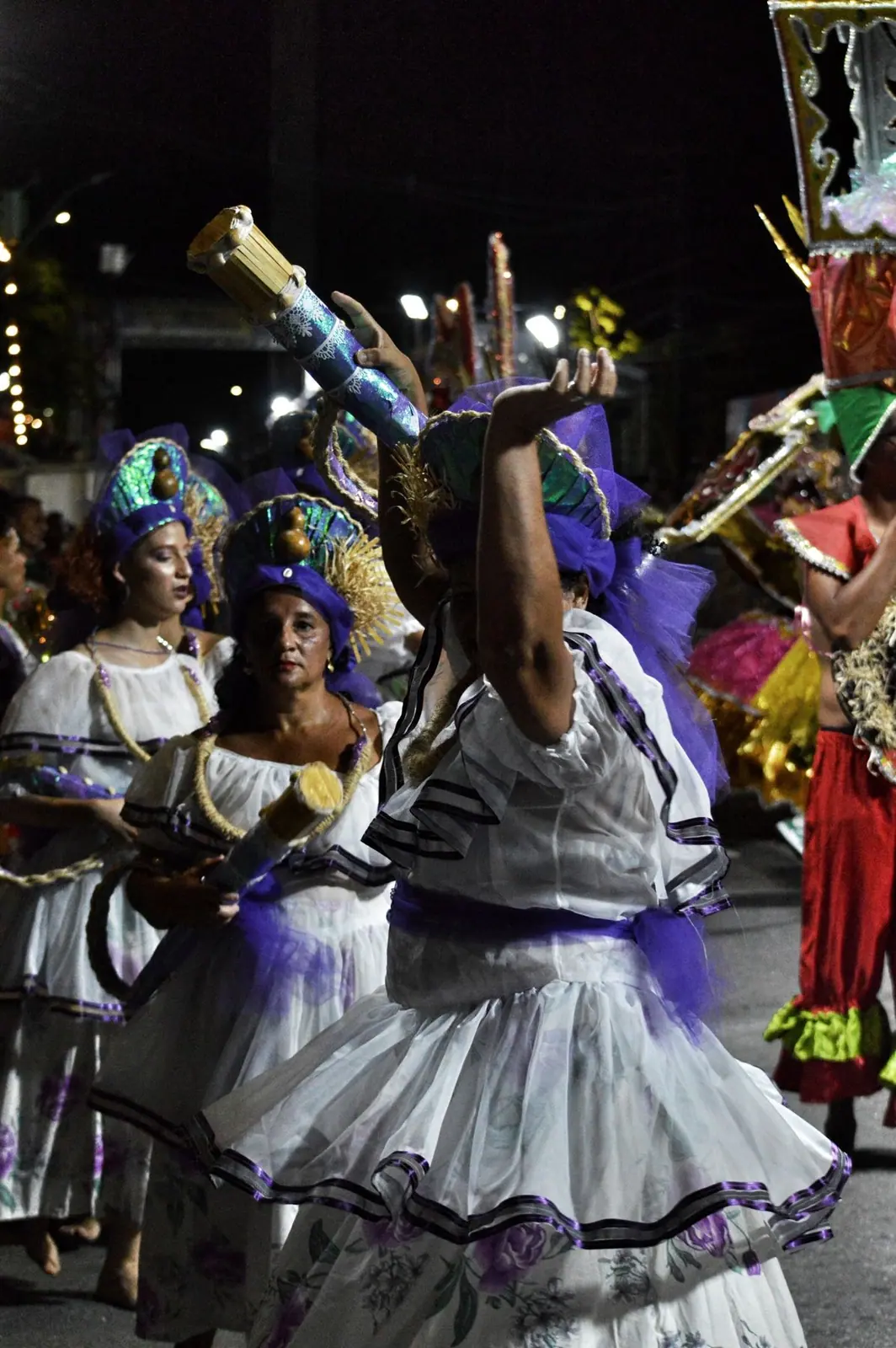
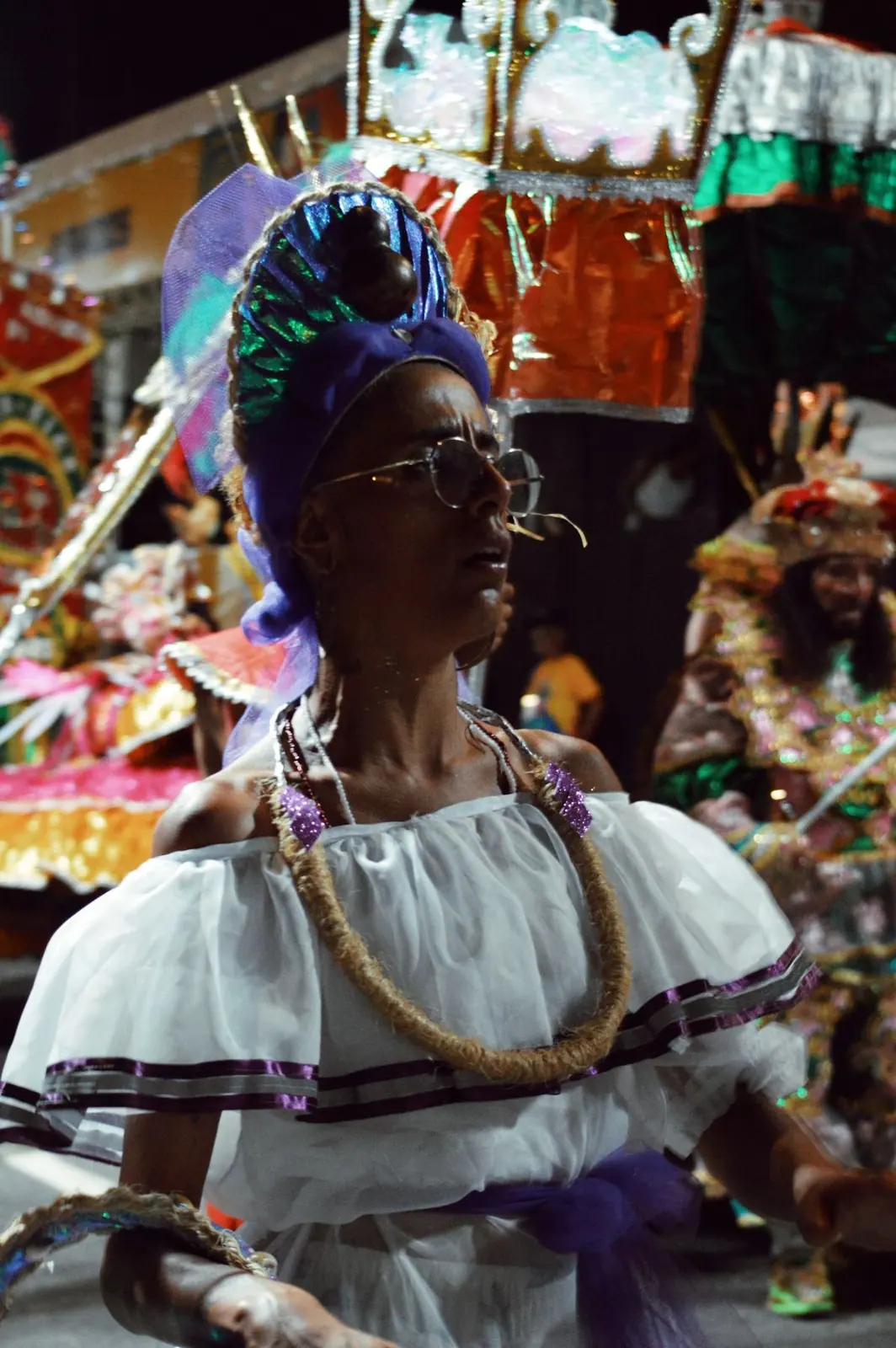
To the sound of the batuque, the orchestra of this noble court, and the singing of the mestre, the Damas do Paço spin with the calungas, entities of the waters and of the eguns, and others follow them, entities or people.
“Nagô, nagô, nossa rainha já se coroou!”
Maracatu loa
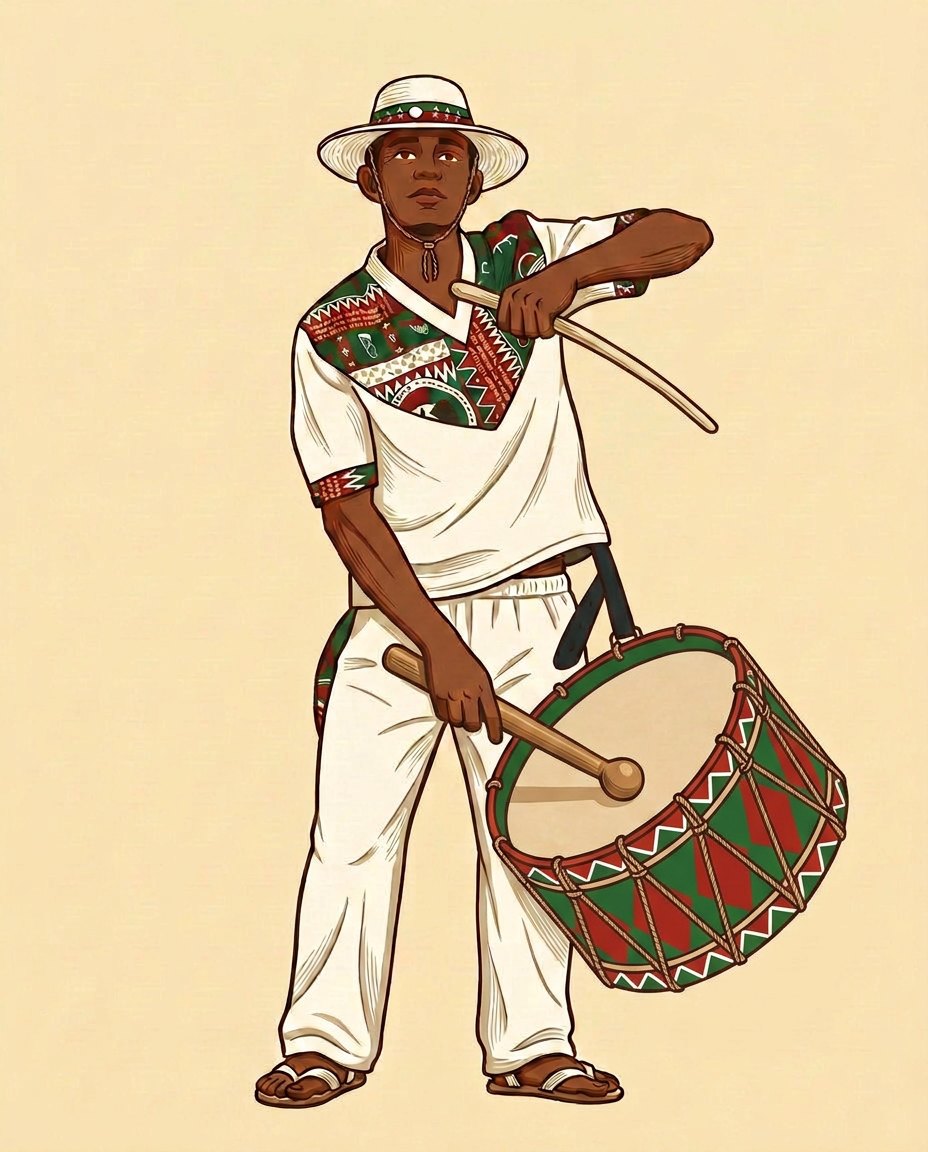
Every figure in the procession has its place and meaning. Some guard what is sacred, others display the luxury of the court, all walking together to the sound of the baque.
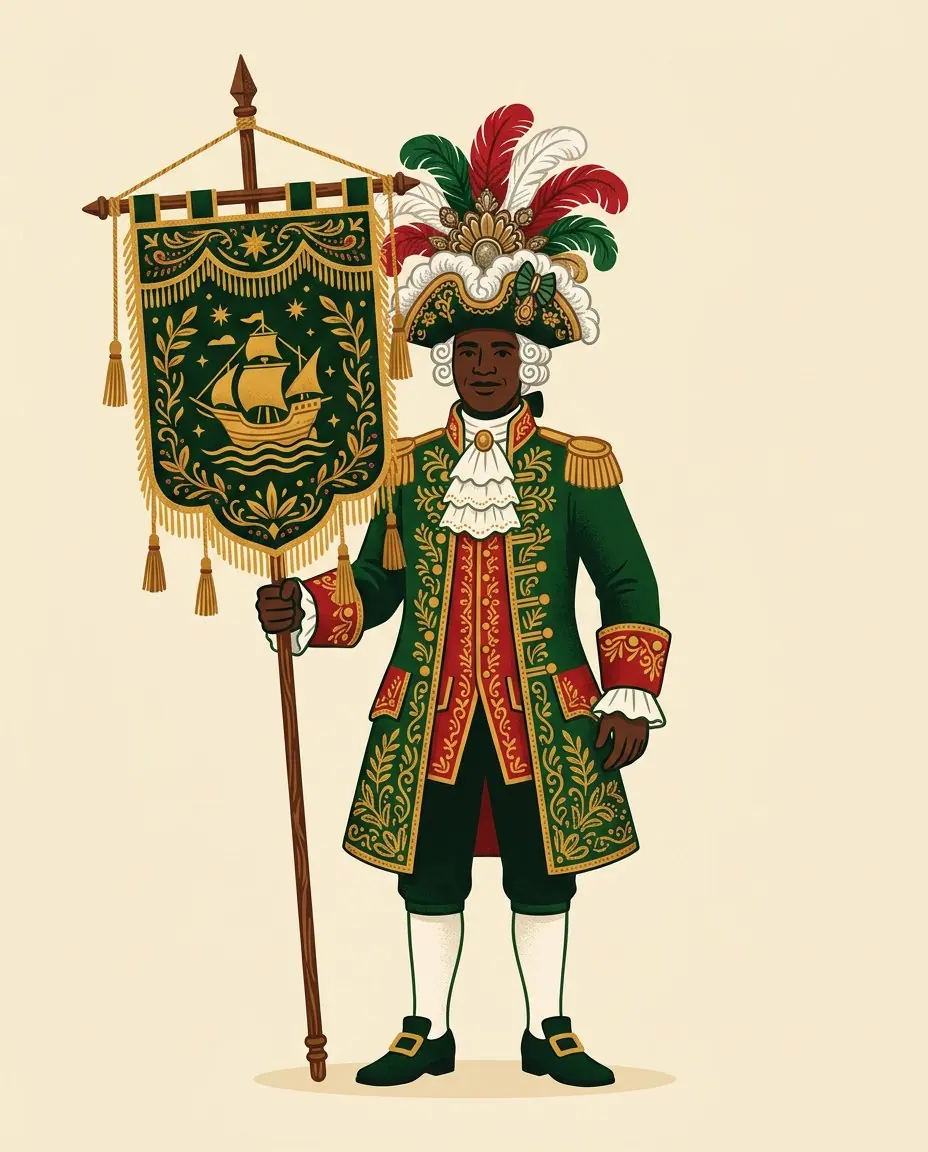
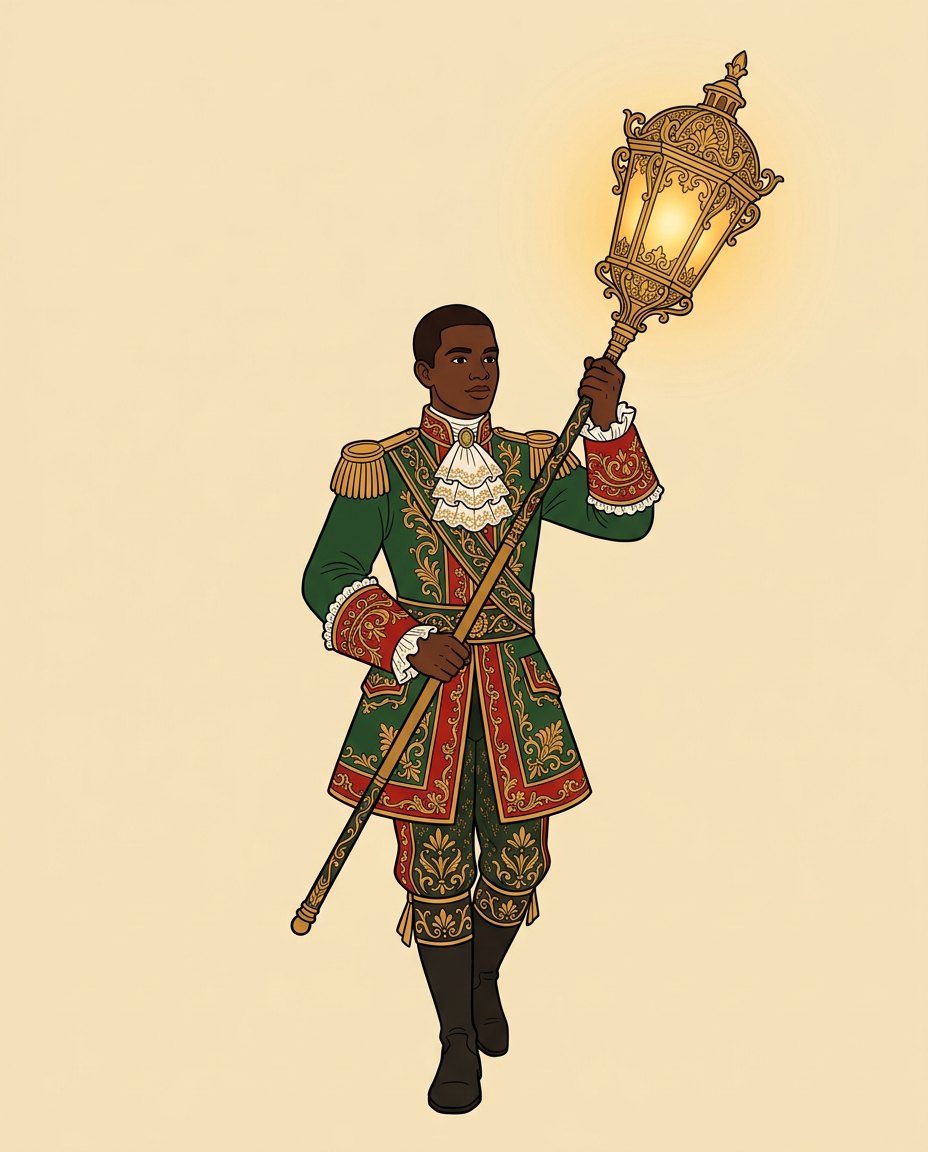
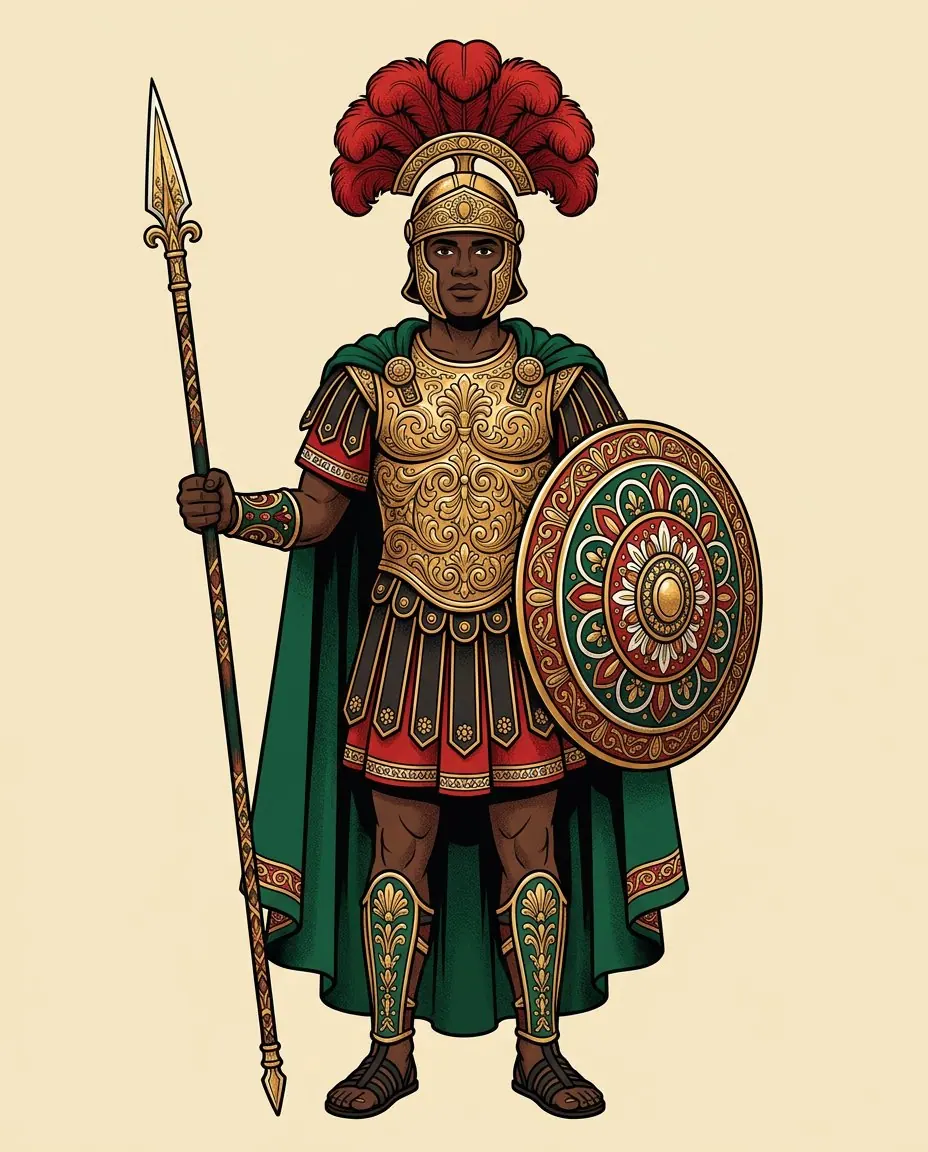
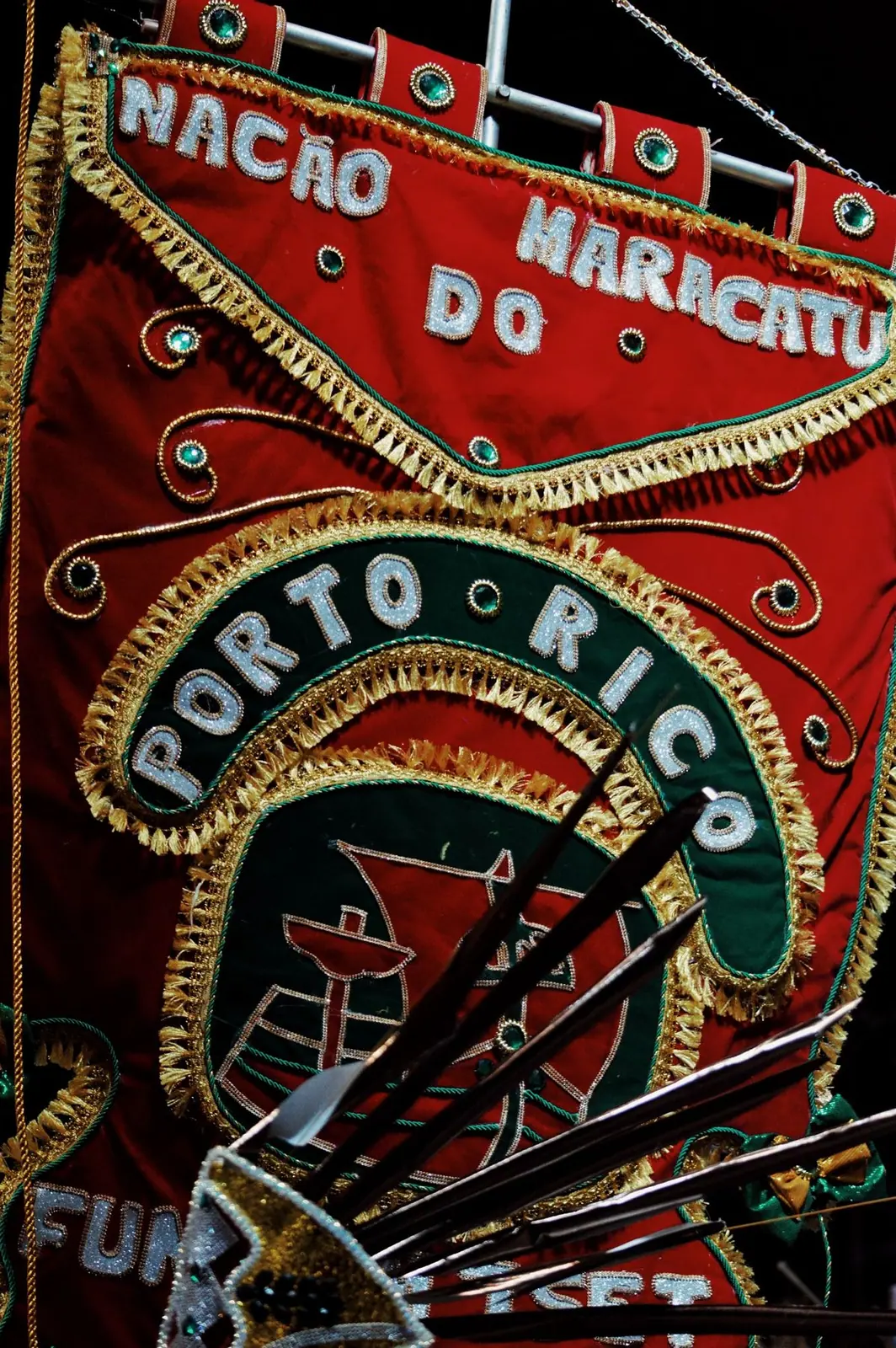
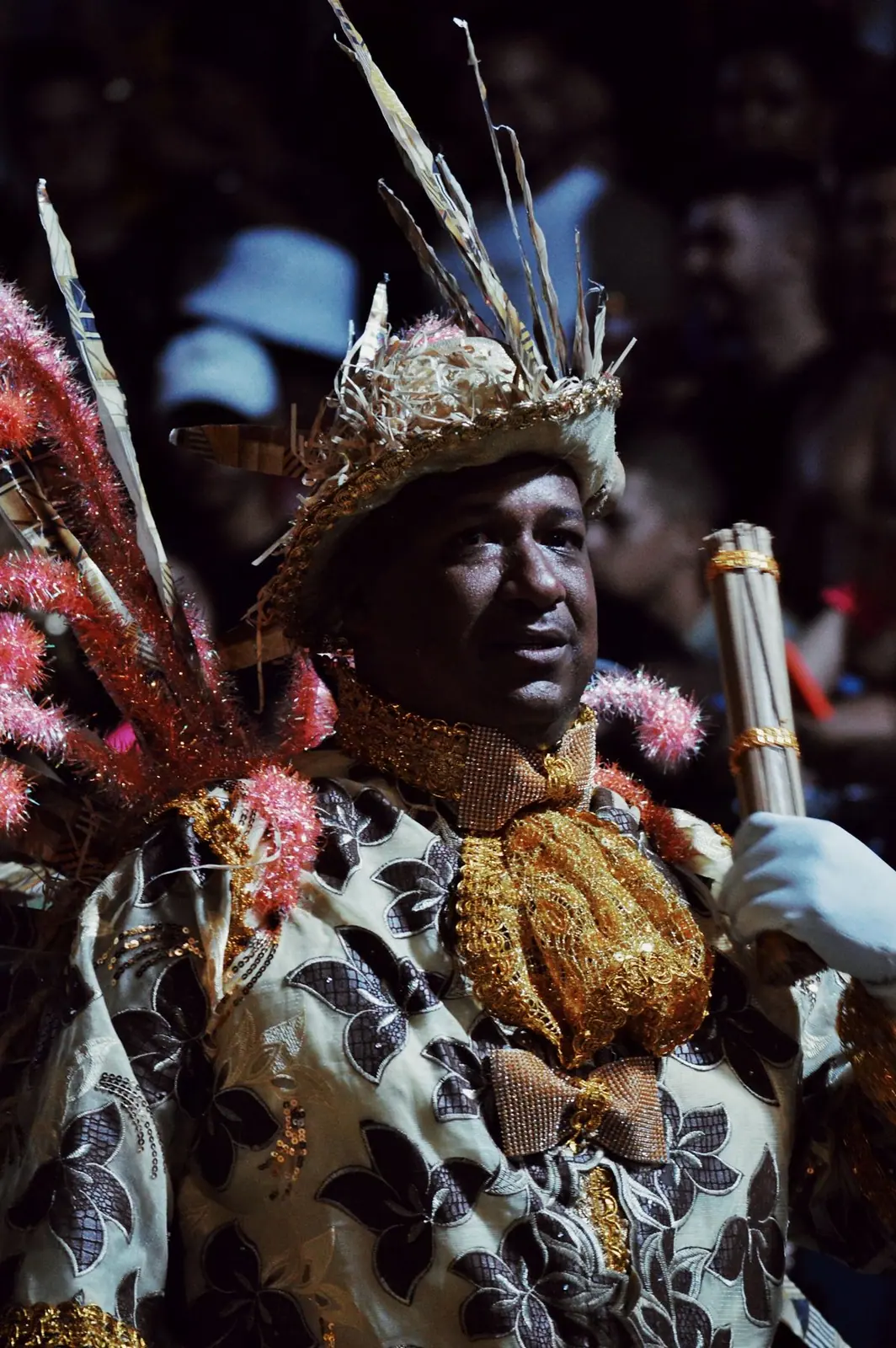
Opens the procession. Dressed as a regent, he carries the estandarte, the banner of the maracatu.
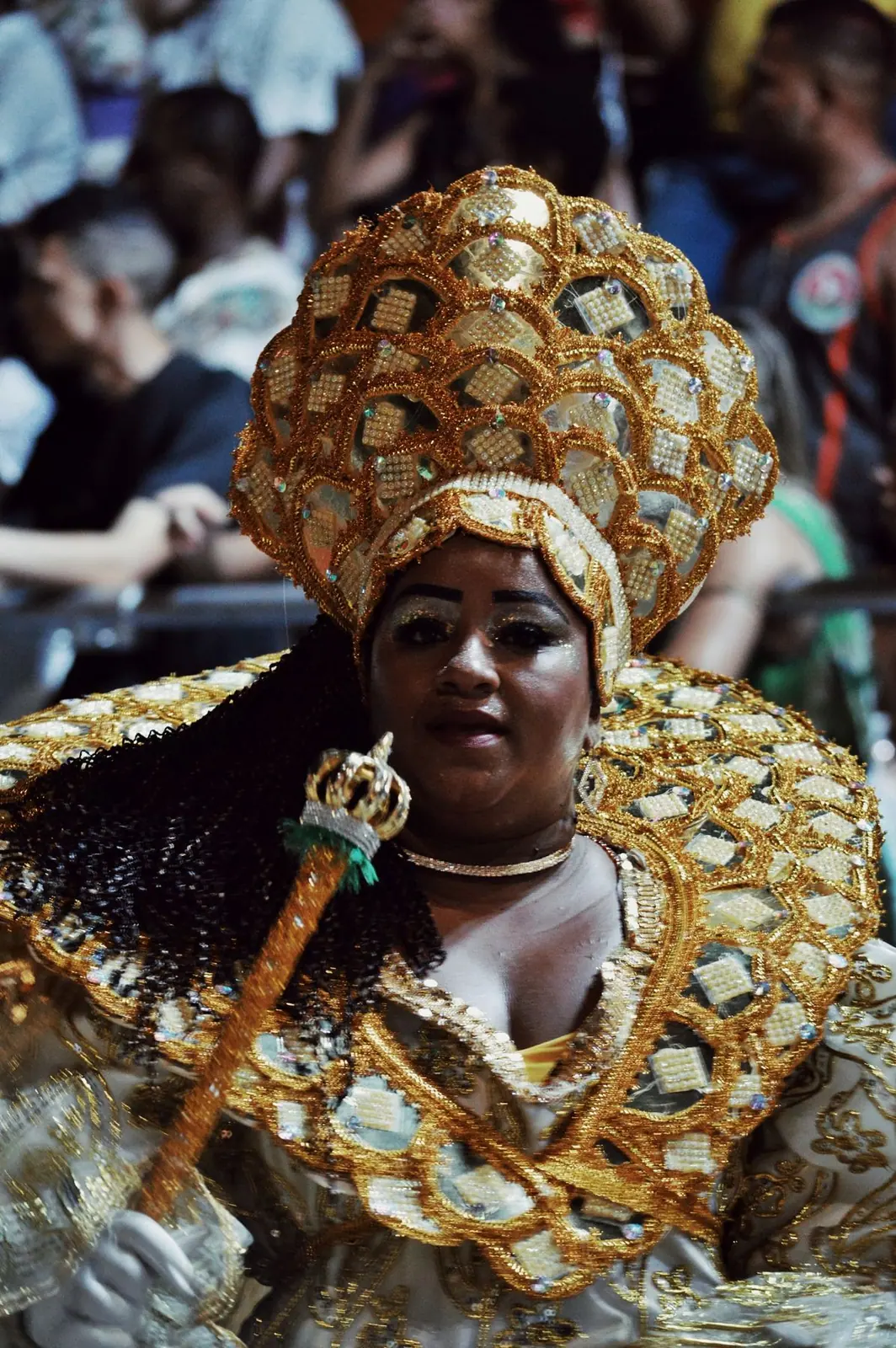
The central figures of the procession. They are the last of the court in the parade: they come under the pálio, closing the royal procession.
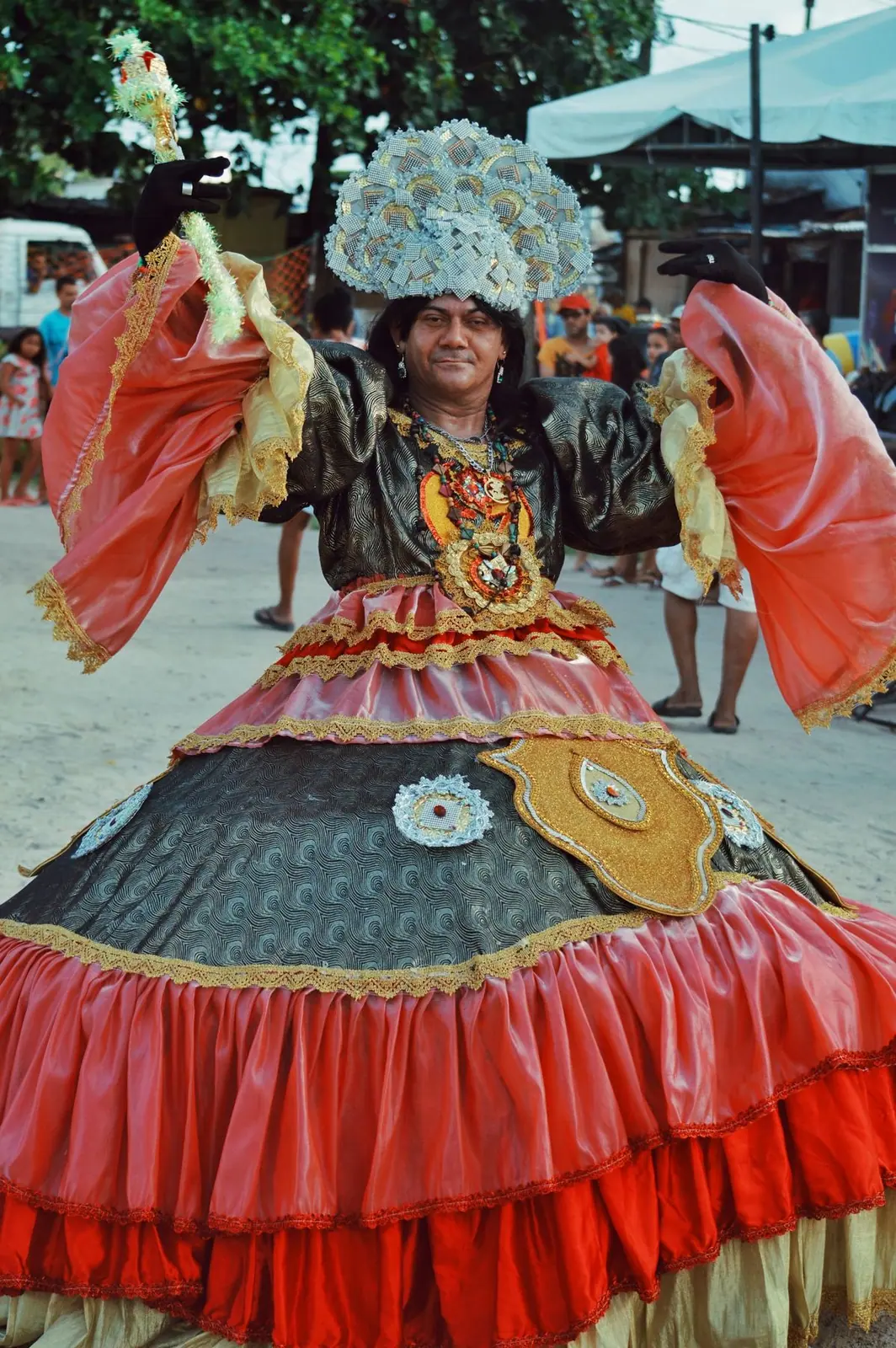
A character of enormous importance in baque virado. There can be one to four, and they are the ones who carry the calungas.
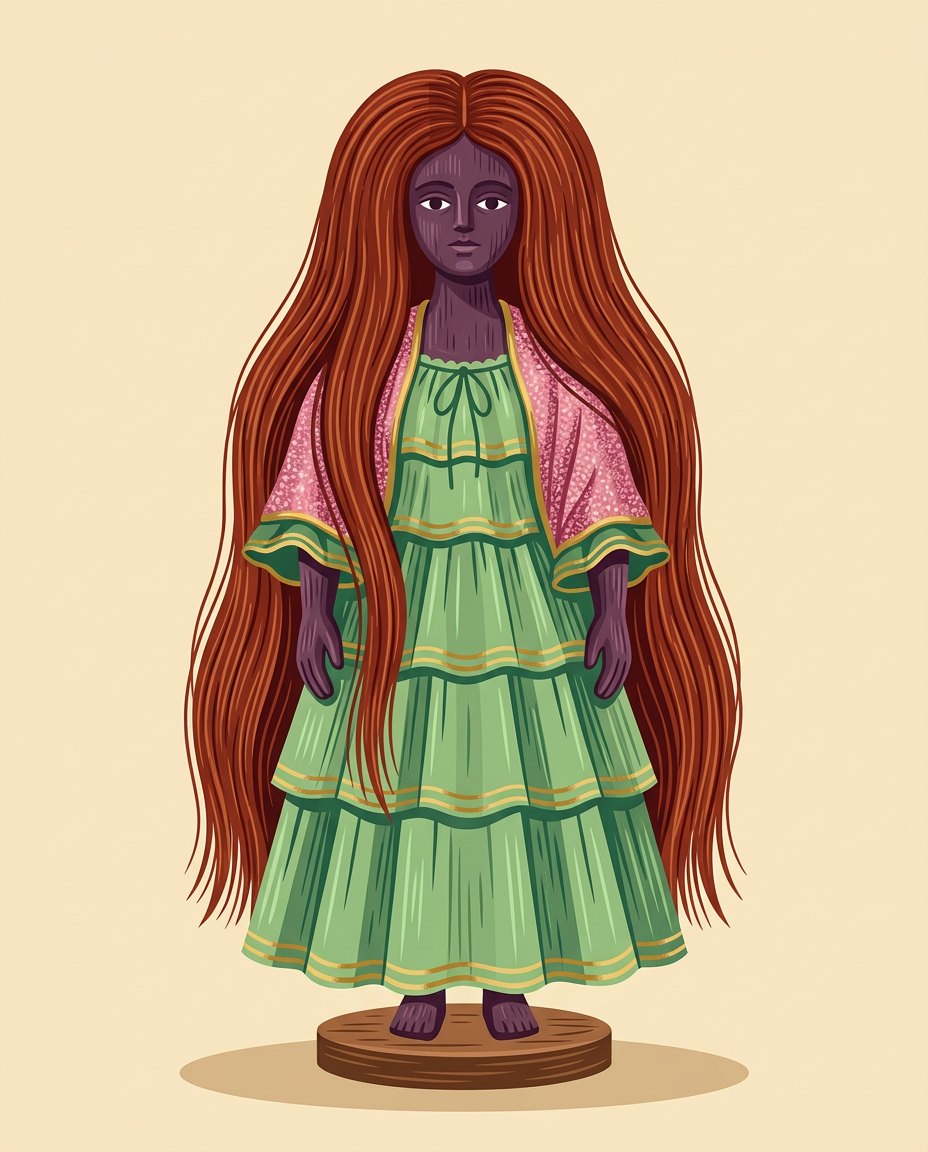
Sacred elements of Pernambuco's candomblé: dolls made of wood or cloth that represent the eguns, the dead. Dona Júlia, Porto Rico's calunga, was made by Eudes Chagas in honor of Dona Santa, the legendary queen of the Nação Elefante.
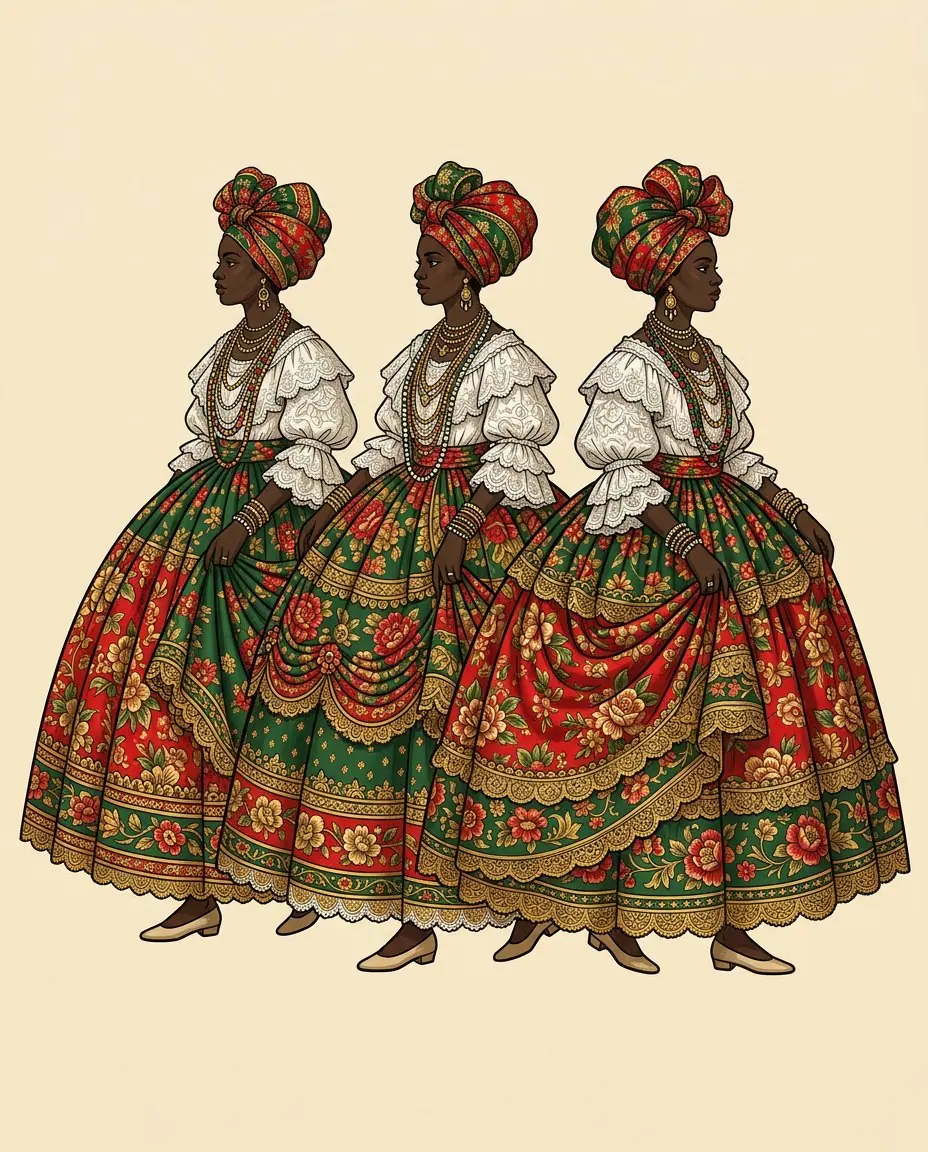
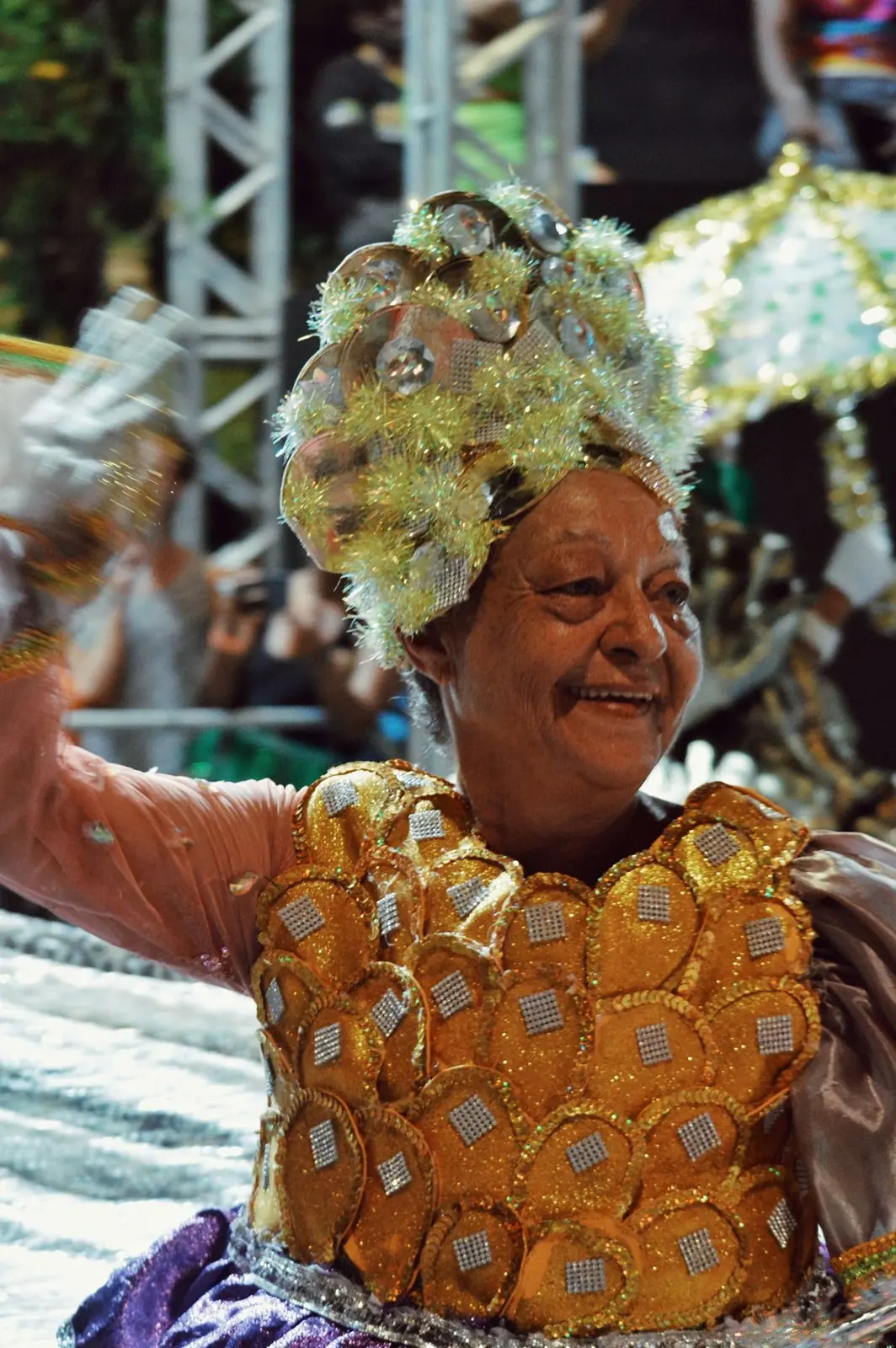
Walk in rows along the sides of the procession, in matching outfits made of chita fabric.
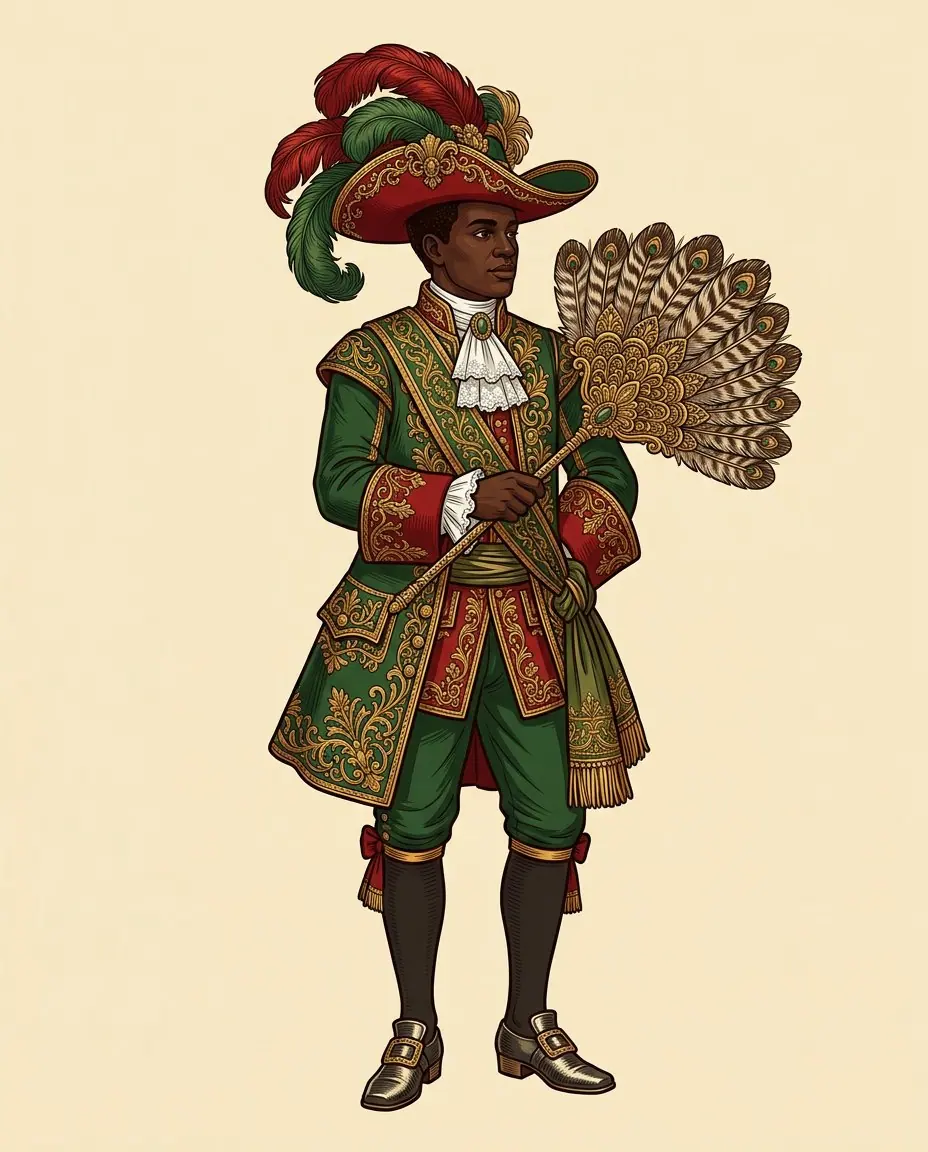
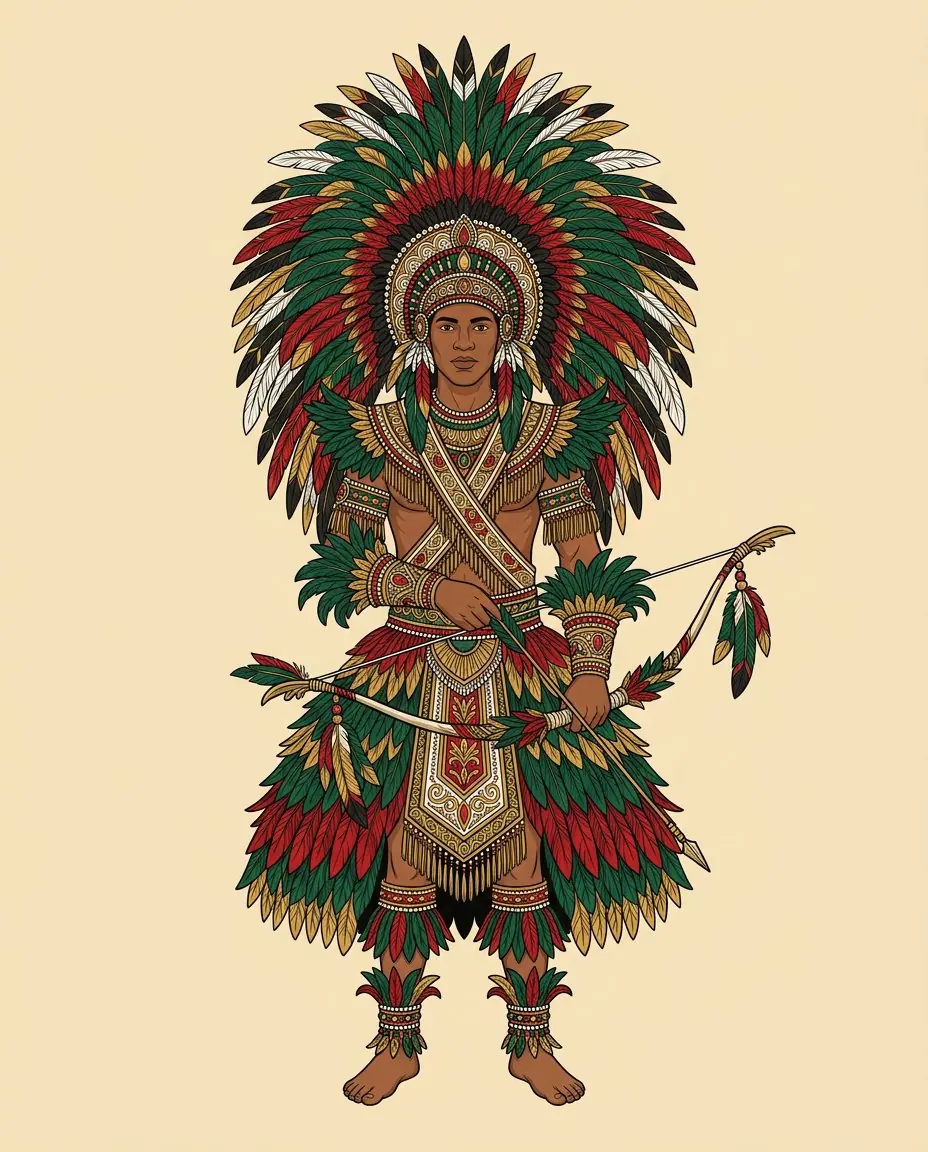
Represents the Indigenous peoples and carries a bow and arrow. Recalls the wisdom of Indigenous peoples and the protection of the forest spirits.
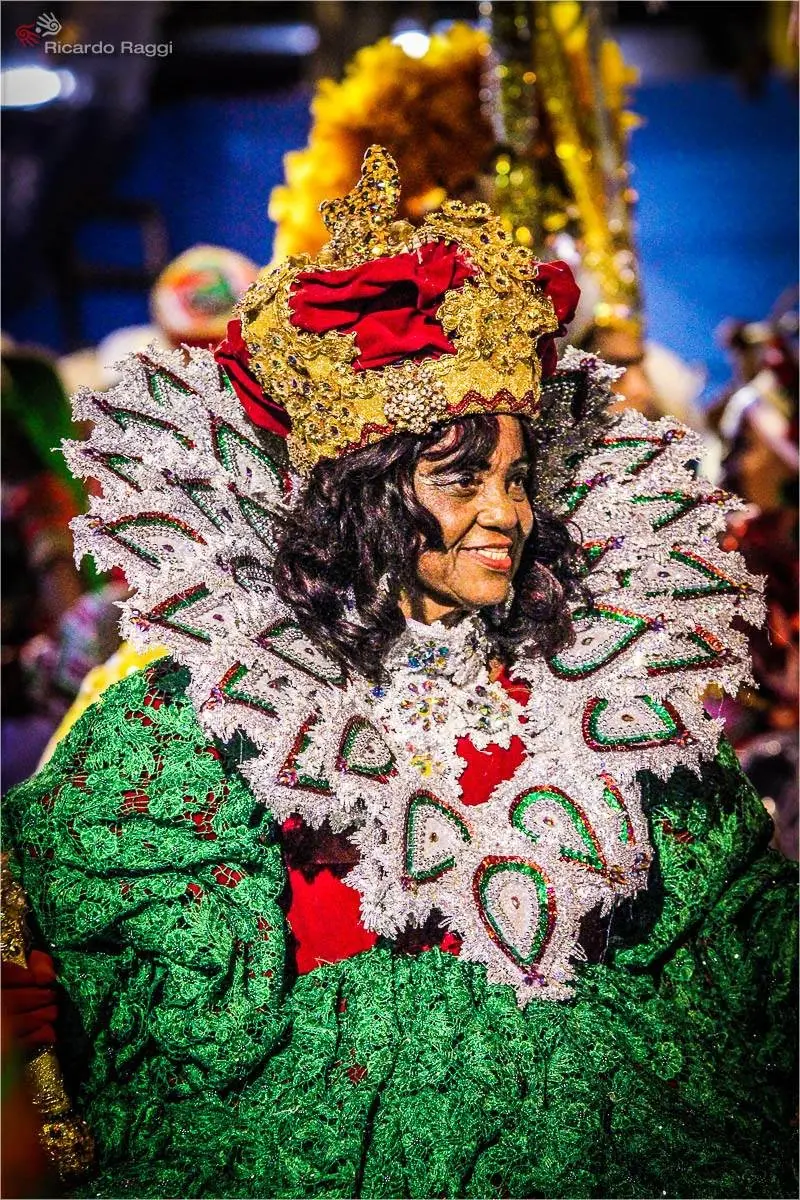
Porto Rico's queen and king were crowned inside the Catholic Church, as was once done in the coronation of the Kings of Congo, a practice brought to Brazil by the Portuguese and tolerated by slave owners.
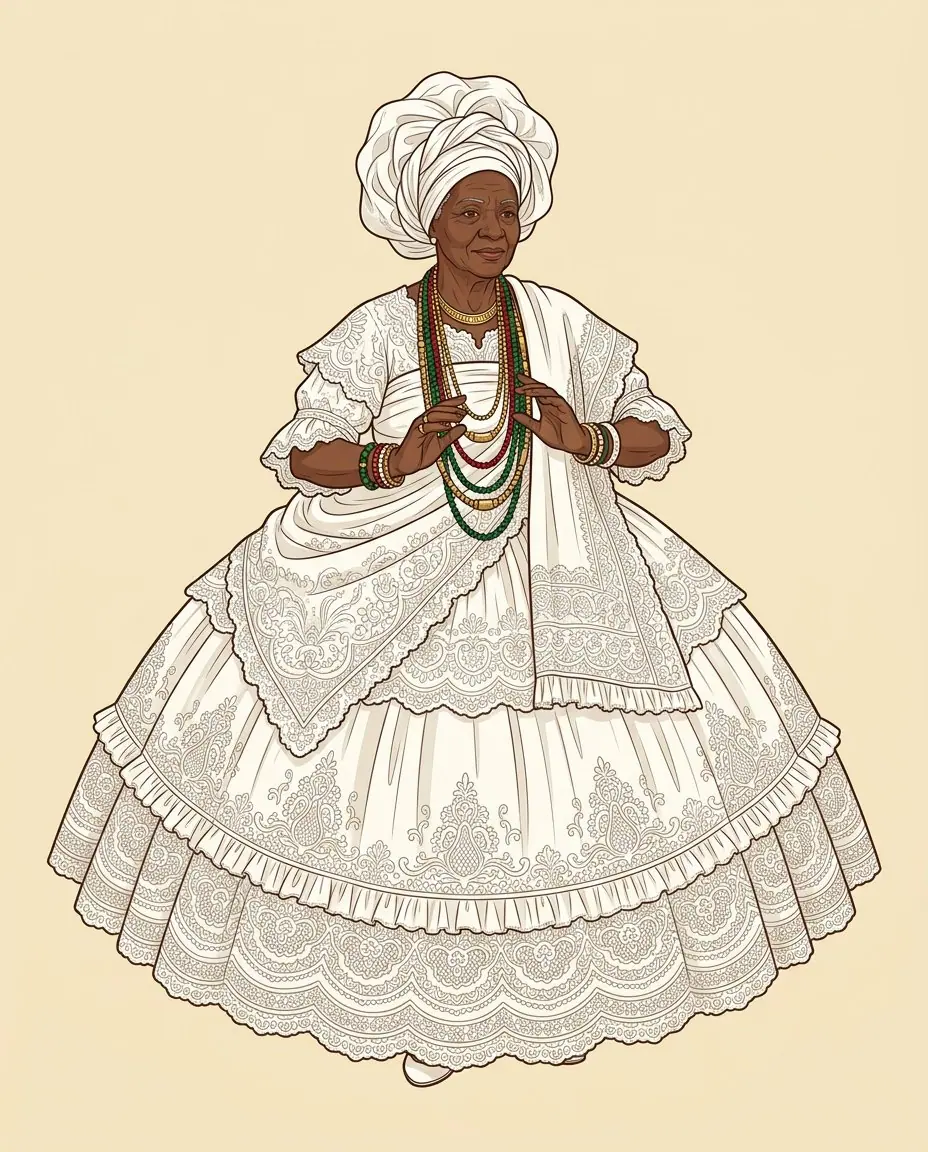
Crowned by canon Miguel Cavalcante on October 8, 1980, at the Church of Nossa Senhora do Rosário dos Homens Pretos, in downtown Recife. “I am Queen Elda of the Nação do Maracatu Porto Rico and also yalorixá of the Macaia de Oxóssi. Since I was 17 I have known my religiosity and candomblé: first umbanda, then nagô, angola and finally jeje, where I have found fulfillment for more than 43 years. I am the only queen crowned inside the Church of Nossa Senhora do Rosário dos Homens Pretos.”
Crowned by father Rinaldo on April 2, 2009, at the Church of Nossa Senhora das Graças, in the Convent of São Félix de Cantalice, in Pina. A native of Pernambuco, he says: “Living my life and my religion, I learned to admire the wonders of nature linked to the orixás. I keep growing, loving my spiritual life, where I feel fulfilled, with much axé and pride.”
“Porto Rico tem um cortejo real. Quando chego na rua, saravá a nação!”
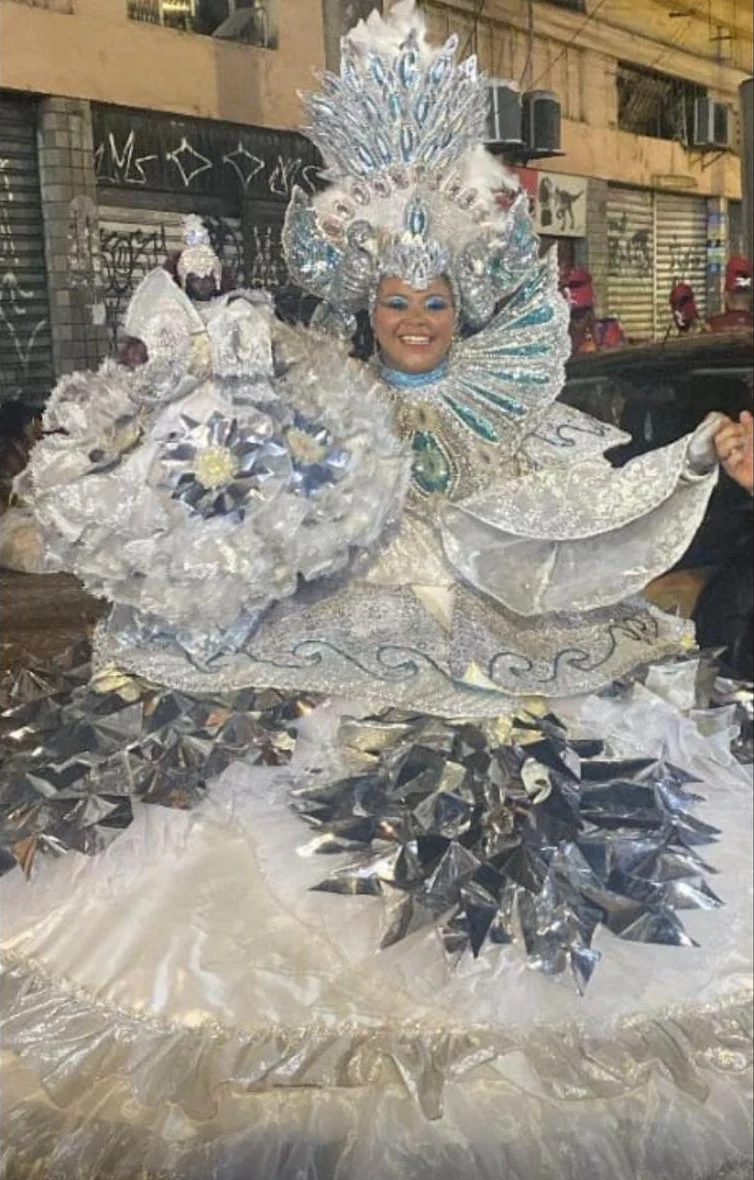
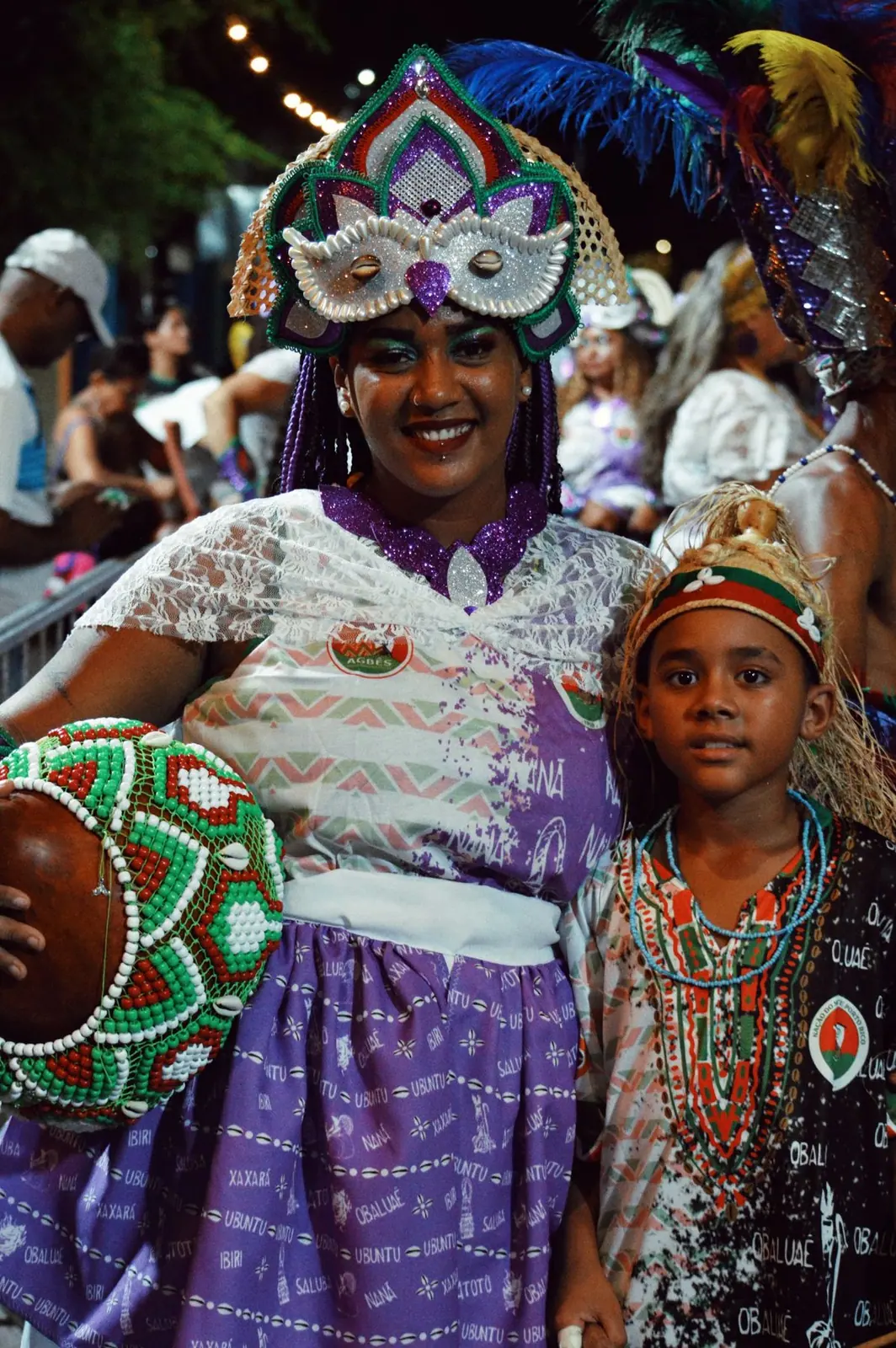
Keke is the Dama do Paço of the Nação do Maracatu Porto Rico. She carries the calunga Dona Júlia, the sacred doll that protects the procession and receives religious care before every parade.
Carrying the calunga is one of the most demanding roles in maracatu de baque virado. At Carnival, the Dama do Paço category can even decide the title between the nations.