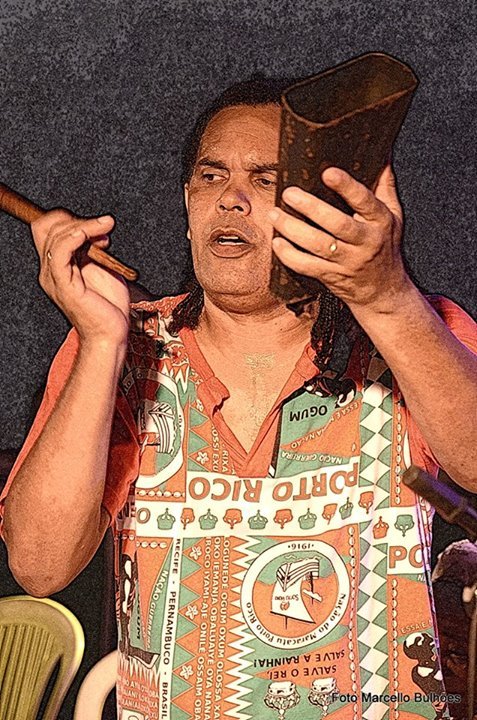
Mestre Chacon

Mestre, Babalorixá and guardian of the Baque das Ondas.

Jailson Viana Chacon

The mestre of the Baque das Ondas

Mestre Chacon was born in Recife on February 6, 1969, son of Queen Elda. He came to know maracatu at age seven, going with his mother to her Ifá lessons with King Eudes Chagas. “Eudes talked about maracatu and I, still a child, listened closely. My mother started parading as a baiana and I as an indigenous character.”

From his teenage years he led the Nação in performances as assistant drum director, back when the term mestre was not yet used. He became contramestre in 1987 and, from 1989, was already serving as assistant director of the batuque. In 1999, he officially took over the Porto Rico's apito and began leading the batuque. He is also Babalorixá of the Ylê Axé Oxóssi Guangoubira, a son of Xangô Aganju, and manager of the Núcleo Afro at the Fundação de Cultura da Cidade do Recife.

He brought into baque virado the candomblé rhythms played for the Orixás and created the conduções, breaks and paradas that give Porto Rico its unmistakable sound.

He was general coordinator of the revival of the Noite do Dendê, which is now part of Pernambuco's official calendar. Outside the terreiro, he works for URB, Recife's urban development company, and is a composer, singer, instrumentalist, teacher and cultural producer.

Recognized as a Master of Popular Culture, he guides many groups in the South and Southeast of Brazil in music, culture and religion. He is percussionist and musical director of the group Mazuca da Quixaba and created, with musicians from Rio de Janeiro, an ilú orchestra, the main drum of Pernambuco's Xangô, which started meeting at Fundição Progresso, in Lapa. In every Porto Rico performance, a Nação he has been part of since boyhood, he leads as mestre of the apito and singer.
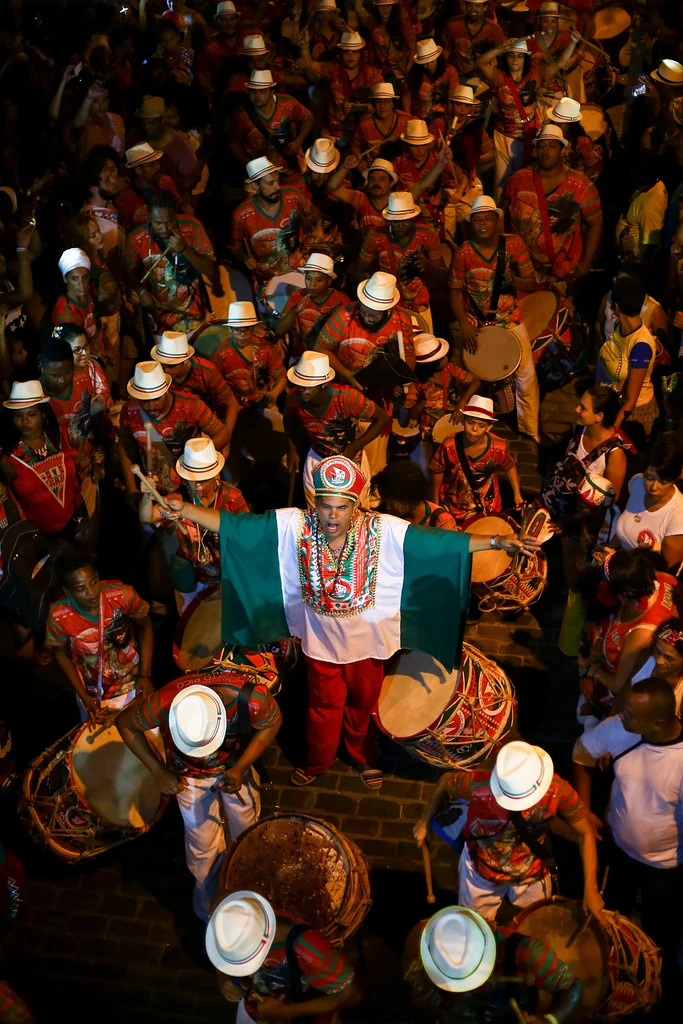
Mestre Chacon de braços abertos, com bata verde e branca e apito, no meio dos batuqueiros do Porto Rico de chapéu branco
Mestre Chacon leading the Porto Rico's batuque
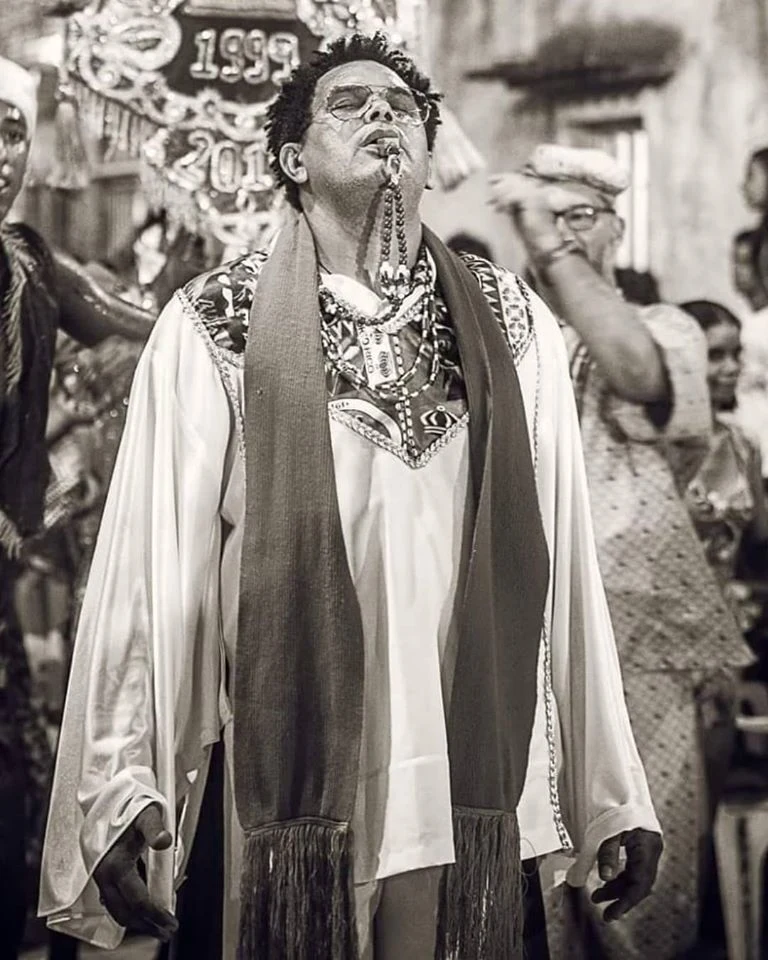
Mestre Chacon de olhos fechados, tocando o apito, com bata branca e estola, diante do estandarte da Nação
Mestre Chacon on the Porto Rico's apito
In the Mestre's words

O Baque das Ondas

“Porto Rico's baque is called Baque das Ondas because of its cadenced form, which recalls the beating of the sea waves. It is the only nation that uses atabaques. I was criticized a lot for that, but researchers say the hand drum was an instrument present in maracatu in the old days. Anthropologist Katarina Real, Guerra-Peixe and Leonardo Dantas report that maracatu used funnel-shaped instruments, played by hand or with a stick, as well as triangles, alfaias, zabumbas and the tin horn. Our baque has many variations and rhythms of the orixás, and the toadas speak a lot about religion.”

“In the view of the Nação Porto Rico, candomblé and maracatu are not separated, they walk in the same direction, they breathe the same air. The ogãs of the terreiro are the batuqueiros of the maracatu.”

“In other nations they usually separate: maracatu is profane, the nação is religious. At Porto Rico there is no such separation. Dona Ivanise, founder of the Nação Encanto da Alegria, used to say that maracatu was her religion. And there really is no way to separate them.”

“

In the Nação, 90% of the batuqueiros are locals from the community, and 70% are connected to the religion.

Mestre Chacon
“

The mestre de apito carries the same responsibility as an ogã alagbê: he must have deep knowledge of, and commitment to, what will be sung and played.

Mestre Chacon
Journey

Across Brazil and the world

1999

Leads the Nação on a tour of Italy, Belgium, Spain, France and Germany, with workshops in Berlin and Cologne

2004

Leading the Nação at the opening of the Museu Afro Brasil, in Ibirapuera, with Gilberto Gil and President Lula

380

batuqueiros from 9 countries at the European Maracatu Gathering, in Paris (2010)

2013

With the Nação at Lenine's show and on Claudia Leitte's Axémusic DVD

  • 1999: officially takes over the apito and begins leading the batuque.
  • 2002: produces the CD No Baque das Ondas, with support from SIC-PE, and takes part in the Mercado Cultural and the National Culture Conference, in São Paulo.
  • 2003: steps up workshops and talks in Recife and other states: in São Paulo, at Lar do Ícaro and Casa da Cultura; at the Maracatu Percussion Festival in Itu (SP); in Rio de Janeiro, at Fundição Progresso and with the group Rio Maracatu; and in Brasília, at the federal university.
  • 2004: begins researching the history of the Nação and creates a teaching method for maracatu covering the music, the foundations, the religiosity of candomblé and the groups' commitment to the nations. Gives talks at the Congress on Afro-Pernambucan Cults (SESC-PE) and at the Culture Forum of the Rural and Federal universities of Pernambuco, and workshops in São Paulo and at the Encontros festival in Itu, in June and October. On October 23, takes the Nação to the opening of the Museu Afro Brasil, in Ibirapuera Park, with Minister of Culture Gilberto Gil and President Lula, and gives workshops to the invited groups. Leads batuqueiros at the closing of the Aracaju Arts Festival, with Naná Vasconcelos, and at the Rec Beat Festival. Takes part in the research for the Batuque Book, by Climério de Oliveira and Tarcísio Resende, a songbook of maracatu de baque virado and baque solto.
  • 2005: after playing in France in August, the Nação goes to the Brazil-France Festival in Paris, with 20 members, representing Afro-Pernambucan culture. Performs at the Festa na Arcádia, in Casa Forte; at the tribute to the Noite dos Tambores Silenciosos in Ibirapuera Park (SP), in November; at Black Consciousness Day in Olinda, on November 20; and at the São Cristóvão Festival in Aracaju, in December. Porto Rico is one of the three nations studied in the book and DVD Batuque Book, Maracatu do Recife, launched at the Museu do Forte das Cinco Pontas. In March, a workshop in Jaboatão dos Guararapes on the history of maracatu and its main rhythms.
  • 2006: artistic producer of the group Mazuca da Quixaba and in charge of percussion production for the CD of the group Andaluza. Makes guest appearances on the CDs of the group Sagrama and of MC Dolores, and tours Santa Catarina, São Paulo and Rio de Janeiro with workshops.
  • 2007: workshop tour of the South and Southeast in July and August.
  • 2008: workshops at the first European Maracatu Gathering, in Nantes, France, with 215 batuqueiros from 7 countries. In Brazil, workshops in São Paulo, at Bloco de Pedra, and in Curitiba.
  • 2010: in July, leads the second European Maracatu Gathering in Paris, with 380 batuqueiros from 9 countries. Produces the CD A pisada é essa, by Mazuca da Quixaba, sponsored by Funcultura, and gives workshops in the South and Southeast.
  • 2011: the Nação is champion of the Recife Carnival. In August, tours the South and Southeast with the project Na Gira com o Mestre and, on August 19, takes part in the 1st Santos Maracatu Gathering (SP), with groups connected to Porto Rico. In September, produces the 2nd Noite do Dendê, with more than 10 hours of popular culture performances.
  • 2012: produces the 3rd Noite do Dendê, in September. In October and November, tours the South and Southeast, with talks at UNICAMP and SESC Santos.
  • 2013: at Carnival, takes the Nação to Lenine's show, a former Porto Rico batuqueiro. On August 3, leads the Nação at the recording and launch show of Claudia Leitte's Axémusic DVD, at Arena Pernambuco, and produces one of the tracks. On September 28, coordinates the 4th Noite do Dendê and is artistic producer of the CD Mãe Rainha, by the Nação Porto Rico.
  • Workshops and talks in 2013: Arcoverde (PE) in January; Encontro com os Mestres at SESC Santos, with the group Quiloa, on May 5; Floresta (PE) in June; anniversary of the group Palmeira Imperial in Paraty (RJ), on August 10 and 11; 4th IRSA, International Rhythmic Studies Association, at the Conservatório Pernambucano de Música, on October 15; talk at the event Afoxé e Maracatu: Cultura e Ancestralidade, at the Centro Cultural Orùnmila, in Ribeirão Preto (SP), with Maracatu Navegante and Pontão de Cultura Sibipiruna, on November 20; 5th Percussion Festival of São José do Rio Preto (SP), as speaker, teacher and instrumentalist with Mazuca da Quixaba, November 21 to 24; and Campinas (SP), with the group Maracatucá, at Casa de Cultura Tainã, November 27 to 30. Throughout the year, instrument and baque workshops on Saturdays at the headquarters of the Nação.
  • 2014: in September he coordinates the 5th Noite do Dendê, celebrating 100 years of the Nação's Dendê with more than 10 hours of performances on the street, in front of the Ponto de Cultura Porto Rico headquarters. In August he travels with Mazuca da Quixaba: Paraty (RJ) for the 7th anniversary of Palmeira Imperial, Curitiba, SESC Santos, SESC São Carlos, the Festa da Pinga in Paraty and Florianópolis, where he teaches the Maracatu Porto Rico Workshop. He also runs workshops in Rio de Janeiro with the groups Rio Maracatu and Bloco O Passo. He conceives the Passarela das Agremiações of the Recife Carnival.
  • 2016: in the Nação's centennial year, he takes part in the 2nd Xirê Mukumby de Maracatu in Sorocaba (SP), the 2nd Navegante Maracatu Gathering in Ribeirão Preto (SP) and the International Maracatu Gathering in Paris. He produces the 9th Noite do Dendê in Recife and, in November, founds the Orquestra de Ilú in Americana (SP), during a tour with baque and coco da Mazuca workshops.
  • 2017: time with the English group Jack Drum Arts during Carnival, which gives birth to the Baque de Ogum. He takes part in the Xirê Mukumby, the Gathering of Mestres in Rio de Janeiro, the 2nd Orquestra de Ilú Gathering at the Casa de Cultura Tainã in Campinas (SP), and the Sukiyaki Meets the World festival in Japan with the group Baqueba. He takes over the management of the Núcleo Afro of the Fundação de Cultura da Cidade do Recife.
  • 2018: returns to Sukiyaki Meets the World in Japan and takes part in the Xirê Mukumby and the 3rd Orquestra de Ilú Gathering. He begins coordinating the Afro hub of the Ubuntu afoxés.
  • 2019: workshops at the Rencontre Internationale de Maracatu in Paris, at Jack Drum Arts in Crook and with Baque de Axé in London. Performance at the Brazilica Carnival in Liverpool with Baque de Ogum. In Japan, workshops with Baqueba and participants from Thailand and South Korea. He takes part in the 5th Xirê Mukumby, the Tambores Livres project with the composition Grito pela Liberdade, and the show Canto para os Orixás with SESC Pompeia in São Paulo.
  • 2020: with the pandemic, he creates the project Na Sala com o Mestre, with classes and talks on maracatu, history and religion streamed from the headquarters to the world, in three open editions and in meetings with groups such as Maracatucá, Asè d'Orí, Alfaias da Praia, Arrasta Ilha, Navegante and Baque de Axé. He does livestreams such as the one with Grupo Coco do Mestre Biu, The Path of Maracatu, Umbanda e Candomblé, Sirè dos Saberes and the talk at the 12th Afro-Brazilian Festival of Maringá and, on November 16, gives an online keynote class at the University of Washington, in the United States.
  • 2021: livestreams on the Circuito Cepe de Cultura, Café com os Mestres, TumaraCuité and a conversation with the group Patangome Maracarte from Belo Horizonte, plus the Introductory Course in Maracatu de Baque Virado and online meetings with groups from several states.
  • 2022: resumes the Gira com o Mestre through the Southeast, with Maracatucá, Navegante, Estação Quilombo, Baque D'Orun, Quiloa, Baques do Pina and Itaomi; through the Center-West, with Tambores do Amanhecer in Planaltina (DF); and through the Northeast, with Ventos de Ouro in Salvador and Raízes do Sertão in Arcoverde.
  • 2023: tour with Maracatucá, Estação Quilombo, Odé da Mata and Buriti Nagô, a performance with Maracatu Mar de Kaiala at the Vale do Ribeira Literary Festival, and the 10th anniversary of Maracatu Alvorada Nova.
  • 2024: takes maracatu to the Sukiyaki Meets the World festival in Japan with Trio Baqueba and the Tu-Maracca procession. At São Paulo's Virada Cultural, he conducts 110 batuqueiros from Filhos da Nação groups and, in October, goes with dancers and batuqueiros to the 4th Ipadê in Pirenópolis (GO), the largest maracatu gathering in Brazil's Center-West.
  • See photos of the Mestre in Japan
  • Since 2001 he has taken part in the official Carnival opening at Marco Zero, alongside Naná Vasconcelos.
  • His compositions Saudações aos Orixás and Sou Negro were played by all the nations and guests.
  • Since 2010 he has been part of the committee that conceives the opening of the Recife Carnival.
  • For 17 years he has been part of producing the Carnival opening, today called Tumaraca.
Education

Knowledge and foundations

  • Specialization in Afro-Brazilian Religions, UNICAP (2012)
  • Degree in History, Universidade Salgado de Oliveira (2001)
  • Multicultural Program, cultural extension course at UFPE (2005)
  • Training for the Third Sector, Fundação Joaquim Nabuco (2004)
  • Business Administration and Management of Administrative Contracts (2009)

"Maracatu is religion, it is life, community, strength, togetherness. Everything you cannot see, only feel."

Mestre Chacon Viana

"Doing maracatu was signing a certificate of poverty. We walked on foot, went hungry and thirsty, nobody wanted to say they were a batuqueiro. Today things are different."
Mestre Chacon, on the maracatu of the old days
For the groups who study the baque

Advice from the Mestre

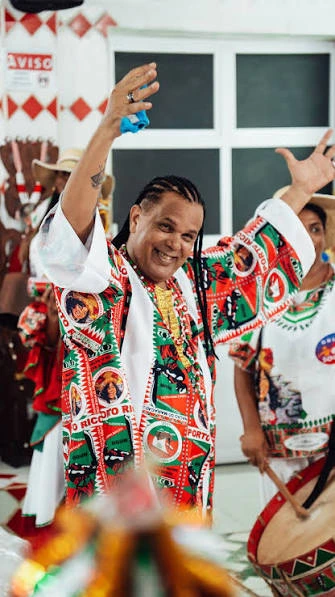
Mestre Chacon sorrindo, de braço erguido com o apito, vestindo bata estampada do Porto Rico, ao lado de um batuqueiro
Mestre Chacon
“

The foundation for studying maracatu is respect. Groups must do a lot of research, learn from the mestres, at the source, because oral tradition is the most valuable thing in this culture.

”
Respect
“

Knowing each nation, its concepts and the religious side is essential. Knowledge of candomblé is essential, even if you follow another religion. Because any day someone may put a microphone in front of you and ask what maracatu is. If you know the foundations, they will see that you know what you are doing and that you honor maracatu.

”
Foundations
“

Never use the name Nação, it carries a lot of axé. And the nations are not football teams: maracatu is one. You may like one more than another, but you owe respect to all of them.

”
The name Nação
“

I think it's great, as long as there is awareness. It is art, it is music. The nations are the nations, and everything else, as long as there is respect, comes to strengthen what we do.

On artists who bring maracatu into their music, like Nação Zumbi.

”
Maracatu in music
Na gira com o Mestre

Workshops and talks

Mestre Chacon brings the history, foundations and baques of Porto Rico to groups in Brazil and abroad. There are two activities of about 3 hours each, which can be done together:

  • Conversation circle: the oral history of maracatu de baque virado and of Porto Rico, its foundations and religiosity, with videos and dialogue with the audience, based on the book Do religioso ao profano, by Mestre Chacon.
  • Baque workshop: Porto Rico's loas, baques, virações and conventions, for beginners and advanced players.

On Saturdays, he also teaches instrument and baque workshops at the Nação's headquarters, in Pina.
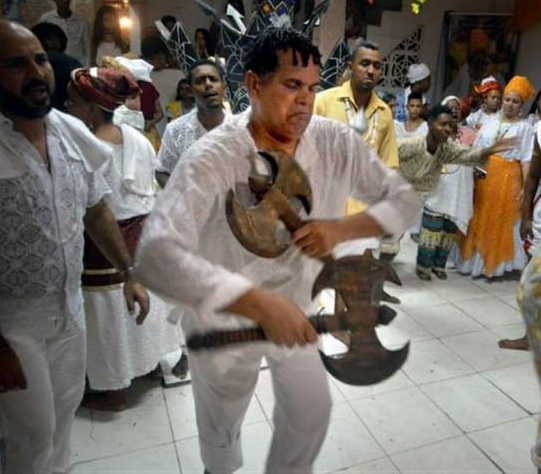
Babalorixá Chacon de Xangô com o oxê
Memory

The Mestre in photos

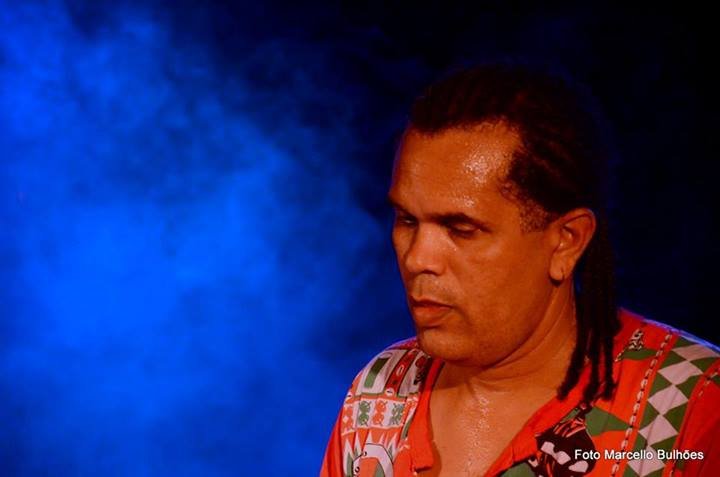
Mestre Chacon on stage.

Calling the loas.
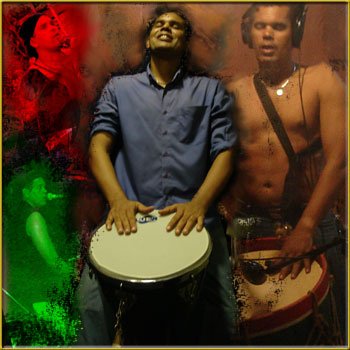
On the atabaque, an instrument he brought back to baque virado.
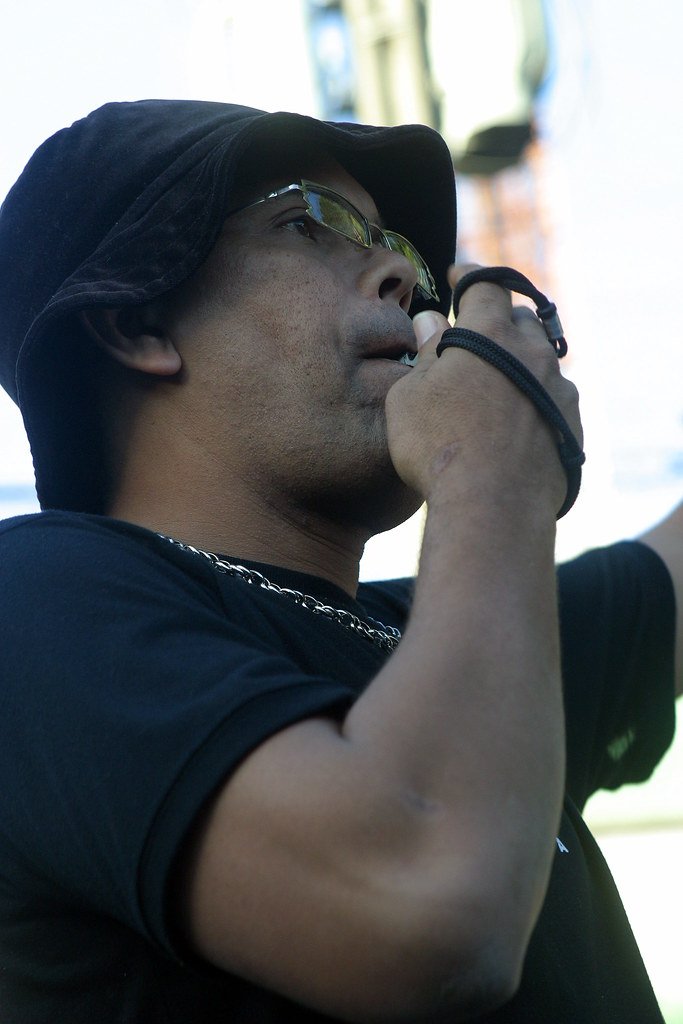
At the microphone, leading the batuque.
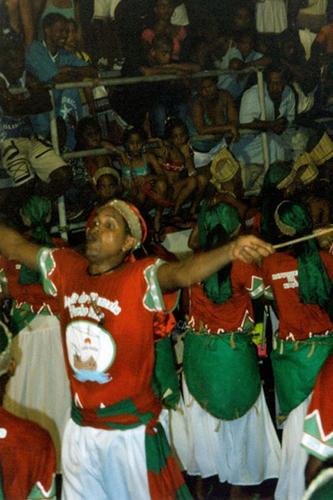
Leading the batuqueiros at Carnival.
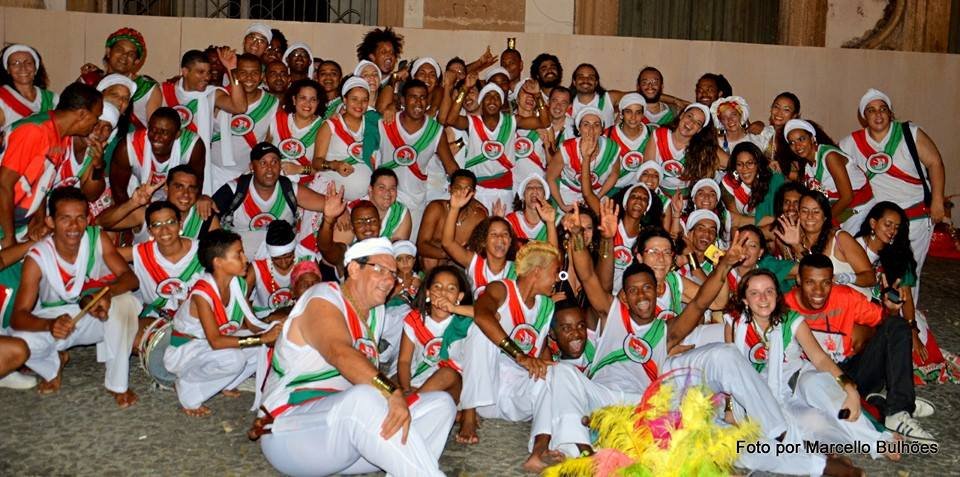
The batuqueiros gathered at the end of the 2014 parade.
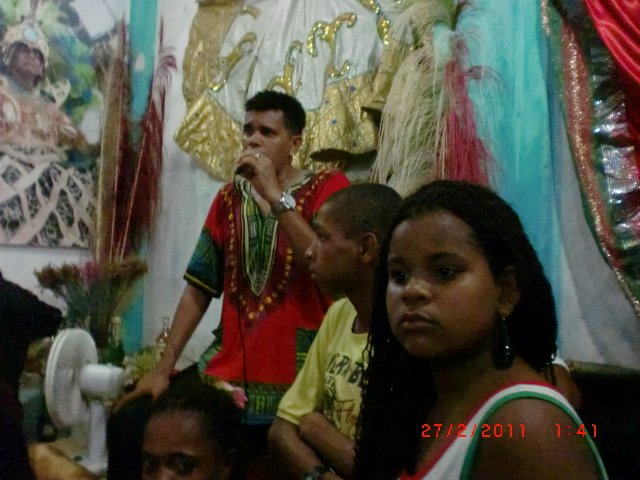
Nação Porto Rico celebration, 2011.
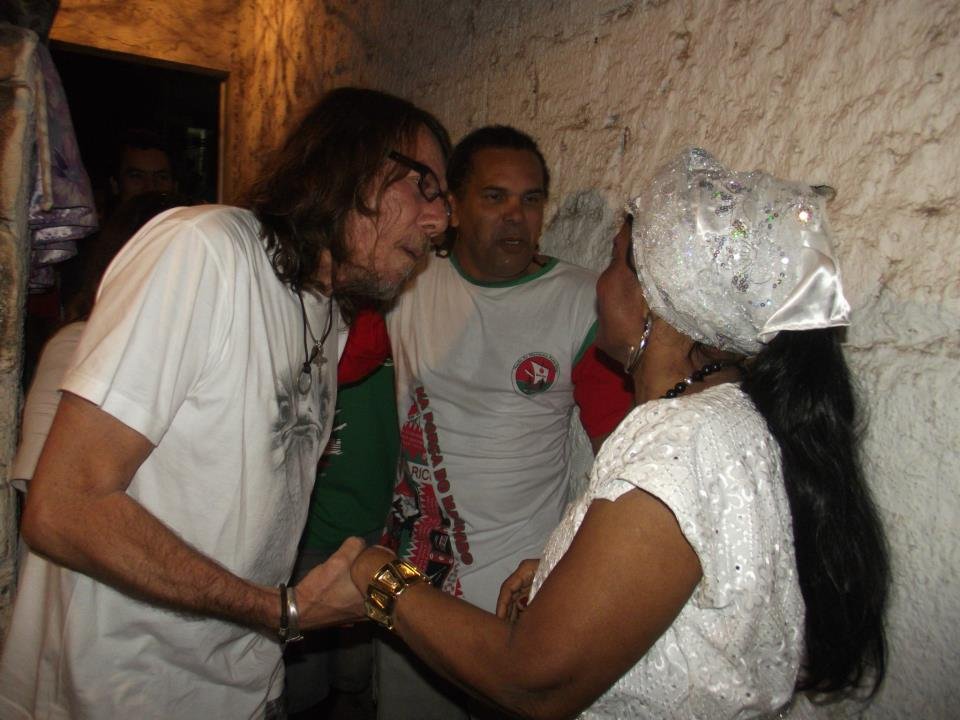
Lenine visits the Nação's headquarters and meets Mãe Elda and Mestre Chacon, 2013.
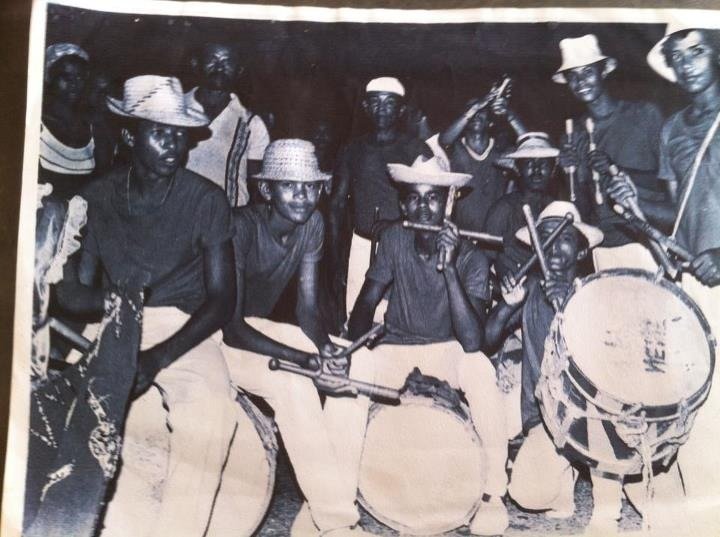
Porto Rico batuqueiros in an old photo.
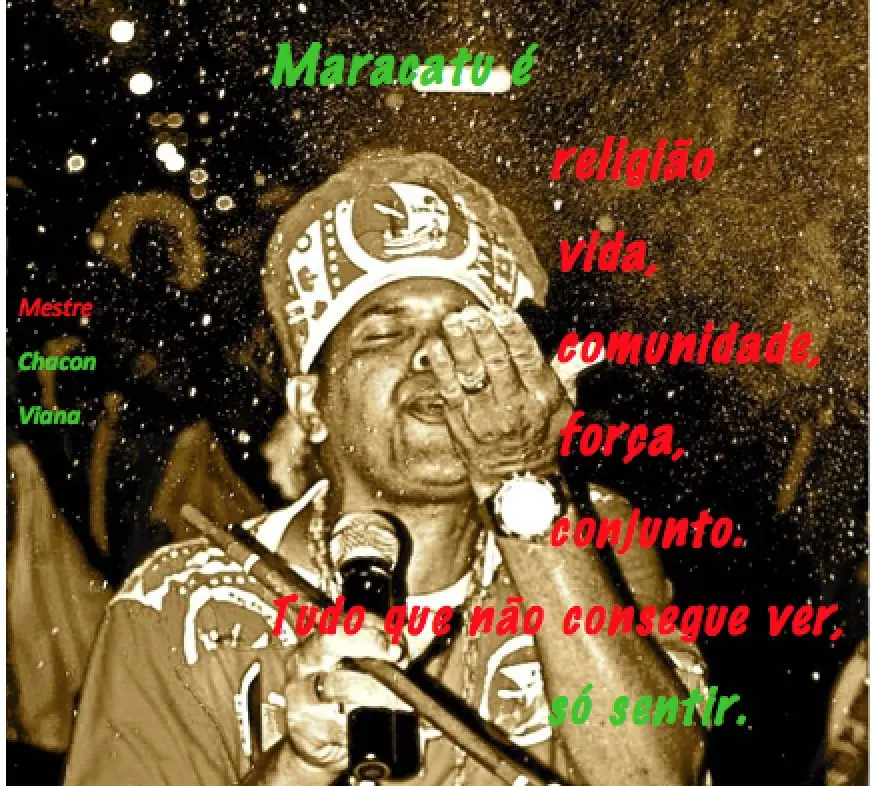
“Maracatu is religion, life, community, strength, togetherness. Everything you cannot see, only feel.”
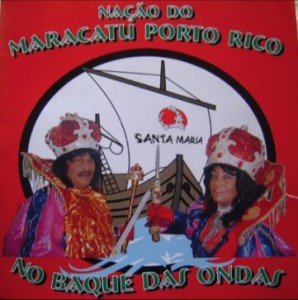
CD No Baque das Ondas, produced by the Mestre in 2002.
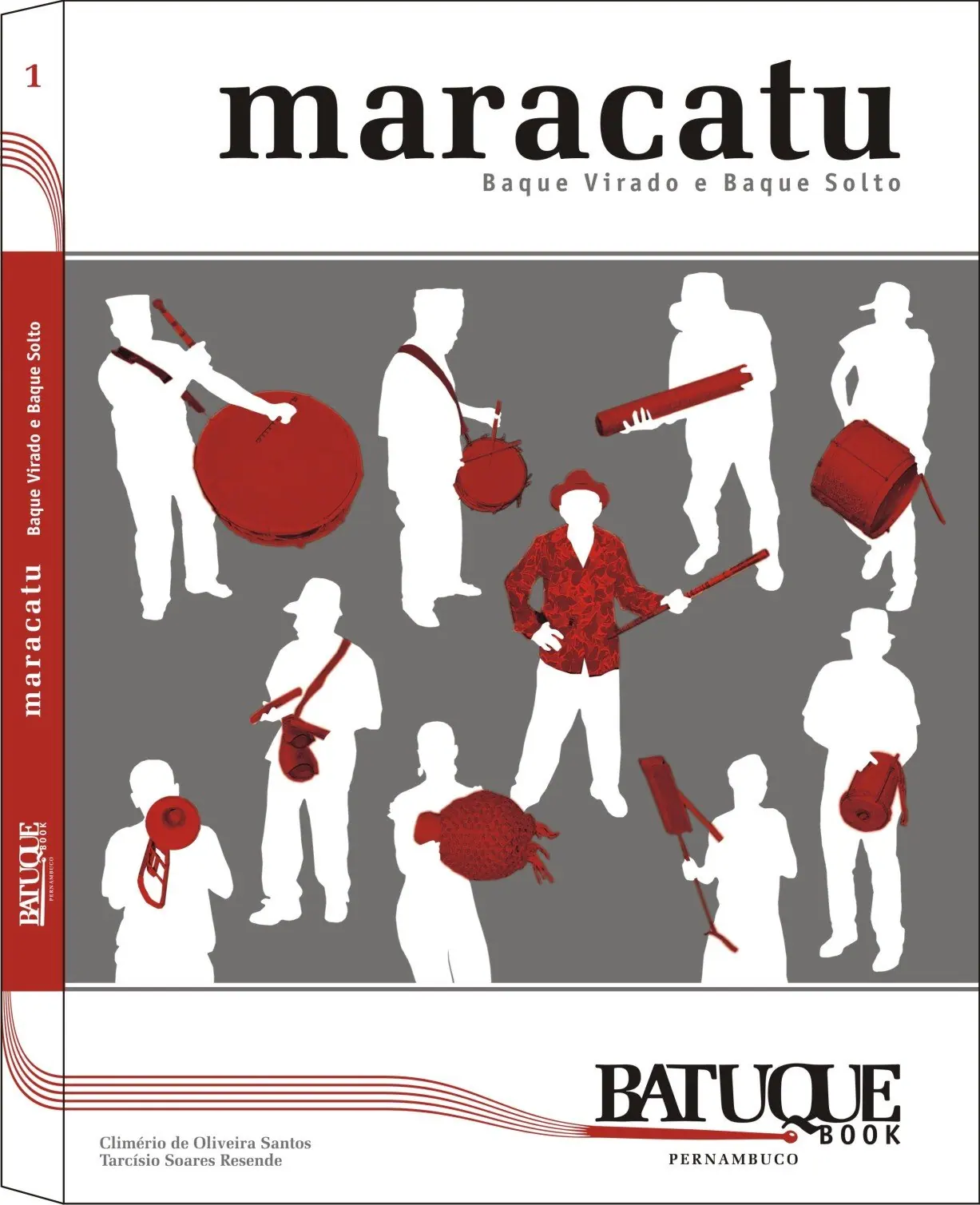
Batuque Book, a book that studied Porto Rico, 2005.
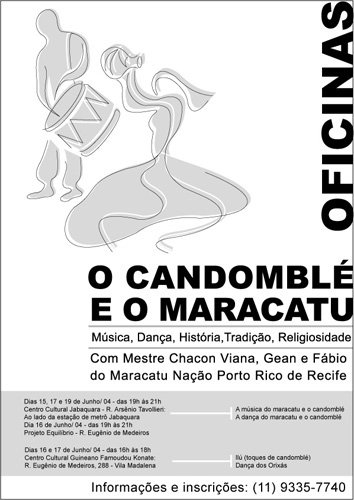
Poster for the workshops O Candomblé e o Maracatu.
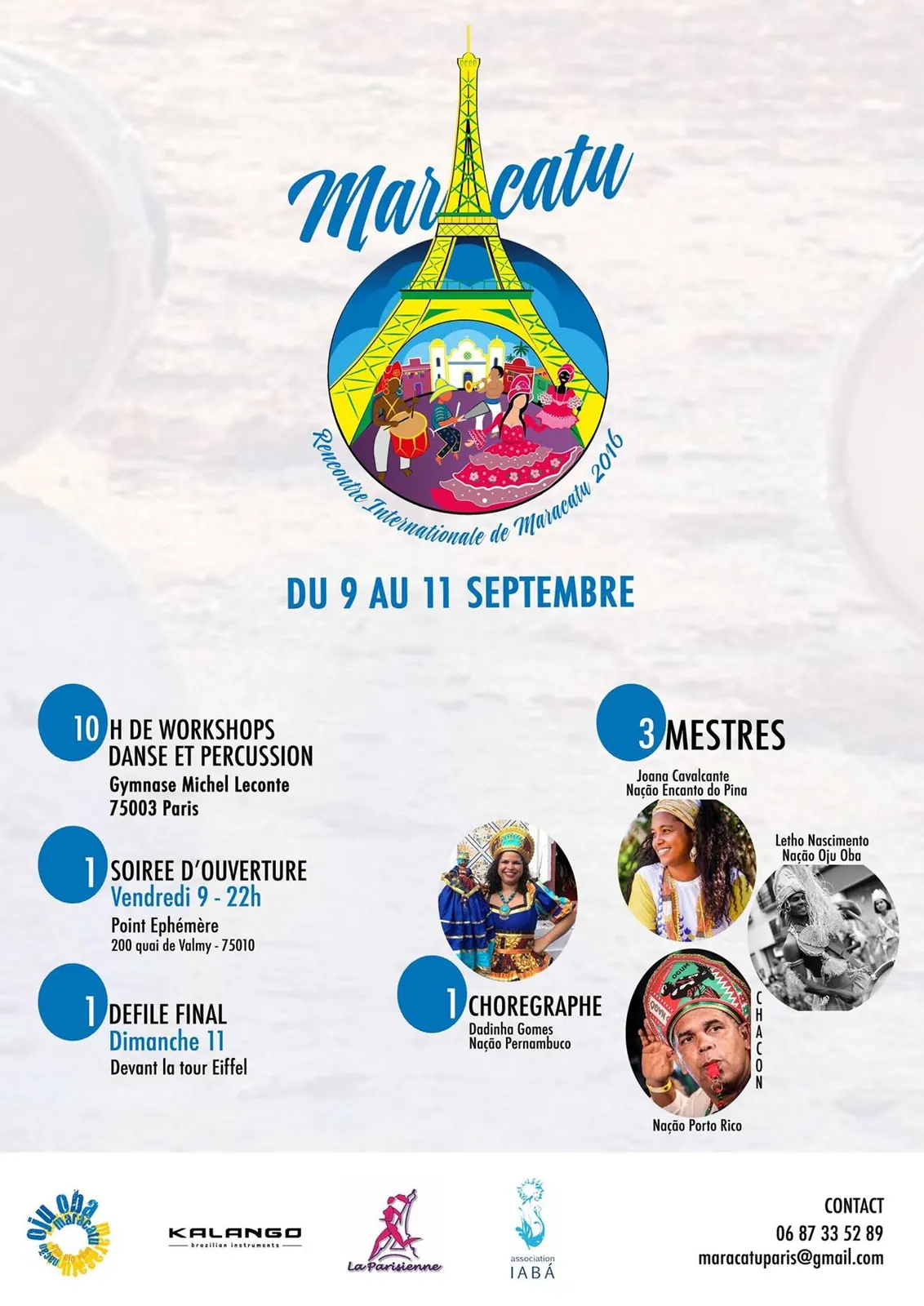
Poster for the European Maracatu Gathering in Paris, 2010.

In motion

The Mestre on video

Interview for LAHOI/UFPE. The Mestre explains and plays the traditional baques and shows the origin of Luanda from the rhythm for Xangô.

Nantes, 2008. First European Maracatu Gathering.

Santos, 2011. 1st Santos Maracatu Gathering with the Nação.

Olinda. Porto Rico at the Noite dos Tambores Silenciosos.

Noite do Dendê 2012. Interview about the celebration.

Noite do Dendê 2012. Aurora Africana.

Noite do Dendê 2012. Record of the celebration.

Noite do Dendê 2013. Mazuca da Quixaba.

Noite do Dendê 2013. Group from danças Imburana.

Noite do Dendê 2013. Afoxé Povo de Odé.

Paraty, 2014. Mazuca da Quixaba at the anniversary of Palmeira Imperial.

A pisada é essa. Maracatu Aroeira with Mestre Chacon.

At the Ilê Aiyê headquarters, in Salvador. The Porto Rico performs at the Afro bloco's court.

Japan, 2024. The Mestre takes Afro-Pernambucan culture to the Sukiyaki Meets the World festival. Report by Hub Baobá.